Want to be in the loop?
subscribe to
our notification
Business News
BANKS€™ RISK MANAGEMENT A CAUSE FOR CONCERN
Speaking at the workshop, entitled "Improving institutions for the sustainable development of Việt Nam’s banking system in the period 2016-2020", Äá»— Thị Kim Hảo, deputy director of the Banking Academy, said that recent incidents related to banks were mostly due to poorly-performing supervisory and auditing systems.
This reality indicated that bank restructuring in the 2011-2015 period did not achieve the expected results, she said.
Banking activities were potentially risky because of the lack of reliable information between banks and customers or between bankers and other shareholders, Hảo said.
Hảo noted the shortcomings of the existing three banking supervisory layers.
The first layer is the internal surveillance within banks.
Currently, banks set high targets of growth, therefore employees are forced to find ways to meet these goals.
The second layer of monitoring is the management and supervision of State agencies. However, the State Bank of Việt Nam (SBV) has not put in place a risk management framework sufficient to quantify all risks.
"Therefore, the SBV should instruct banks to not conduct business beyond their capabilities," she said
The third layer is surveillance from customers. Currently, customers can only oversee banks’ profits and operations through information being made public from banks.
However, most banks’ risk reports are incomplete. In principle, this report will be some 100-pages in length, clearly indicating what the risks are, why a solution is chosen to reduce risks, and how to deal with the consequences if problems arise.
Through her analysis, Hảo found that the supervisory system of Việt Nam’s banks had failed to properly monitor banks.
"This is also the reason leading to disclosing information unprofessionally, incompletely, and with a lack of compliance monitoring," she added.
Agreeing with Hảo, Dr LÆ°Æ¡ng Thái Bảo from the School of Banking and Finance said the Vietnamese banking system was currently displaying many weaknesses and causing significant concerns.
According to Bảo, weaknesses in banks include governance and bank information.
"Actually, in the banking market, investors are missing information. There is incomplete information that exists in the bank. So we need a monitoring mechanism specific to this industry," Bảo said.
However, watchdog agencies were described as less effective and lack the resources to monitor the activities of the nation’s banks, he said.
Based upon the fierce competition, banks pay more attention to growth and expansion, rather than governance, so in a short time bad debt has become one of the largest problems for Vietnamese banks.
Therefore, the banking system must be restructured in a healthy manner to provide greater transparency of information and improve the capacity of governance and risk management, Bảo said.
Bảo added, “Mergers and acquisitions (M&A) of banks is a correct step to reduce the number of ailing banks, as well as promote order and discipline within the system.”
Source: VNEP
Related News
VIETNAM ECONOMY INVESTMENT
FOREIGN INVESTORS SEEKING A SYNCHRONISED MANUFACTURING ECOSYSTEM
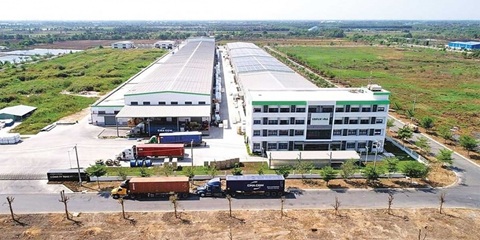
Instead of focusing only on land costs and incentives as usual, foreign investors are seeking a synchronised manufacturing ecosystem, from stable power supply and logistics to shared infrastructure and the convenience of completing residence procedures for experts to serve their long-term investment in the country.
INFRASTRUCTURE / CONSTRUCTION / LOGISTIC / PORT
DONG THAP PROVINCE STEPS UP INDUSTRIAL EXPANSION AND INFRASTRUCTURE CONNECTIVITY
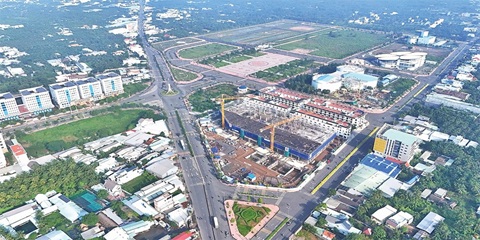
Accelerating public investment, strengthening inter-regional connectivity, and expanding industrial land are helping Dong Thap efficiently bolster competitiveness and drive economic growth. Following the 2025 merger of the former Dong Thap and Tien Giang provinces, the expanded Dong Thap province in the Mekong Delta faces mounting pressure to accelerate infrastructure development and strengthen connectivity among local economic zones, urban areas, industrial parks (IPs), and production centres.
PROPERTY / INDUSTRIAL ZONE
HCM CITY ATTRACTS US$5.7 BILLION INTO EXPORT PROCESSING AND INDUSTRIAL ZONES
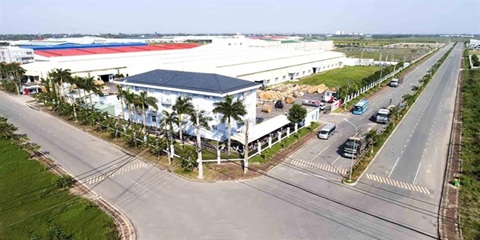
HCM City attracted US$5.7 billion in domestic and foreign investment into its export processing and industrial zones during the first nine months of 2026. The figure exceeded the city's full-year target by 31 per cent, highlighting strong momentum in high-quality industrial investment under Resolution No.10-NQ/TW. Total investment reached 131 per cent of the 2026 target of $4.25 billion and represented a 29 per cent increase compared with the same period in 2025, according to the city's Export Processing and Industrial Zones Authority (HEPZA).

BANKING / FINANCE / INSURANCE / TAX
REMITTANCES TO HCM CITY RISE NEARLY 40% IN Q3
Remittances to HCM City reached more than US$2.83 billion in the third quarter of this year, up 39.5 per cent from the previous quarter and 3.6 per cent year-on-year. This was the first quarter showing positive annual growth this year, helping narrow the decline in remittance inflows over the first nine months. According to the State Bank of Vietnam (SBV)’s Regional Branch 2, remittances transferred to HCM City through credit institutions and economic organisations totalled $2.835 billion in Q3, an increase of more than $802 million from the previous quarter.
VIETNAM ECONOMY INVESTMENT
LOCALITIES REPORT BREAKTHROUGH RESULTS IN FDI IN FIRST NINE MONTHS
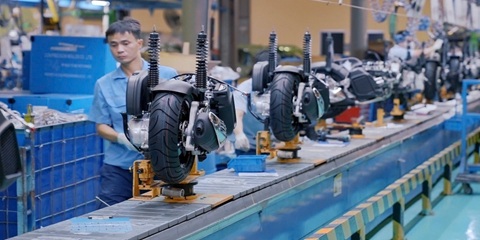
In Ho Chi Minh City, total registered capital reached $17.2 billion in the first nine months, up 4.2 times from the same period last year. The figure included more than $9.35 billion in newly registered capital and over $4.9 billion in additional capital for existing projects. Foreign investors also registered more than $2.9 billion through capital contributions and share purchases.
TECHNOLOGY
TECH SECTOR GROWTH OPENS UP OPPORTUNITIES FOR VIỆT NAM TO GO GLOBAL
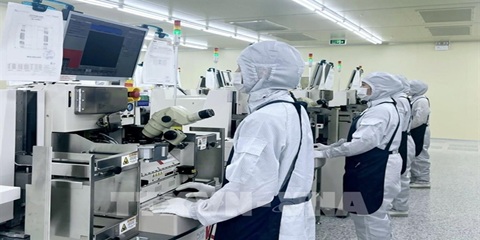
The growth of the electronics, semiconductor and high-tech sectors worldwide is opening up a variety of opportunities for Vietnamese enterprises to integrate more deeply into the global supply chain. However, to become suppliers for these corporations, domestic enterprises must meet rigorous standards regarding quality, technology, productivity and order fulfilment capabilities.
Events Sponsors






















