Want to be in the loop?
subscribe to
our notification
Business News
BANKS FACE DIFFICULTIES IN IMPLEMENTING NEW REGULATIONS RELATING TO LAND
Three amended laws relating to land do not wholly match the Law on Credit Institutions, causing many difficulties for credit institutions, according to the Việt Nam Banking Association (VNBA).
In the process of drafting three laws, the Land Law 2024, Housing Law 2023 and Real Estate Business Law 2023, and the decrees and circulars relating to them, the association, along with its member organisations and experts put forward proposals about the legal changes, said Nguyễn Quốc Hùng, VNBA vice chairman and general secretary.
However, some recommendations were written at the legal documents, but others were not, he said.
Therefore, the credit institutions have encountered many difficulties in the process of performing banking operations after these laws were took effect in August 2024.
These institutions have requested the law drafting agencies to revise these obstacles in order to ensure the safe and effective business operations of the banking system in the future, he said.
According to the deputy head of VNBA's Banking Law Club, Nguyễn Thị Phương, the 2024 Land Law, in addition to the sub-law documents, do not have any guidance on handling reclamation of land that is legally mortgaged at banks, including principles or mechanisms on guarantee and support for credit institutions.
This will directly affect the legitimate rights and interests of banks, debt recovery ability and business efficiency, she said.
In addition, allowing local areas to proactively adjust land price lists has led to a situation that some have kept the land prices unchanged, while some others have updated the price list according to new regulations.
This creates a lack of consistency over set prices, causing problems for related parties in the process of carrying out transactions.
The credit institutions also encounter difficulties relating to the rights and obligations of land users, the term of agricultural land use and the process of organising the execution of judgments.
As bad debts at credit institutions have shown a tendency to rise recently, the provisions of the amended Land Law have not supported the credit institutions in handling those debts.
According to the Vietnam Asset Management Company (VAMC)'s deputy general director, Đỗ Giang Nam, all three laws have a direct impact on banking activities in general and bad debt handling activities in particular.
For example, the Land Law does not have regulations relating to the mortgage of land lease rights in land lease contracts with annual payments. That causes difficulties for parties when they need to mortgage the land lease rights at the credit institutions. The VAMC wants to have specific instructions on this particular issue.
Under the Housing Law, the credit institutions face some obstacles in the conditions mobilising capital for housing real estate projects.
Regarding the Law on Real Estate Business, they have difficulties relating to transfer of commercial contracts of future housing products, guarantees in trading the future housing products and mortgage release before selling the future housing.
Source: VNS
Related News

INFRASTRUCTURE / CONSTRUCTION / LOGISTIC / PORT
VIỆT NAM-CAMBODIA TRADE GATHERS PACE TOWARDS $20 BILLION TARGET
Trade between Việt Nam and Cambodia continues to grow, remaining a bright spot and a key pillar of bilateral cooperation as the two countries aim to raise two-way trade to US$20 billion in the coming years. After setting a record of more than $11.3 billion last year, bilateral trade reached about $8.7 billion in the first eight months of this year, up 8.3 per cent year on year.
TECHNOLOGY
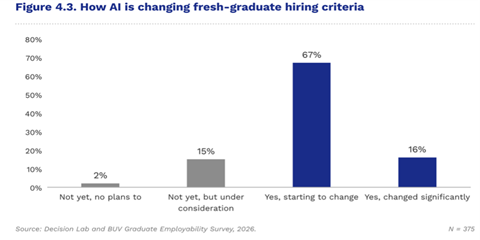
AI BEGINNING TO RESHAPE RECRUITMENT CRITERIA
Digital literacy is the only capability area in which fresh graduates meet employers’ expectations, according to a new report. Yet, it is also the standard rising fastest, as businesses increasingly expect new hires to use AI effectively in the workplace. Some 83 per cent of employers say AI has changed, or is beginning to change, their hiring criteria, while 94 per cent report higher expectations for digital and AI capabilities than they had two to three years ago.

INFRASTRUCTURE / CONSTRUCTION / LOGISTIC / PORT
ĐÀ NẴNG GREEN-LIGHTS US$105 MILLION THAI DEVELOPMENT DEAL
The central city has approved an investment proposal by Thailand’s WHA Group to develop infrastructure for the 400ha WHA Đà Nẵng Industrial Park project on two communes of Thăng Bình and Đồng Dương, with an investment of more than VNĐ2.7 trillion (US$105 million). The city said it approved WHA Industrial Development International's status as an investor in the project, which is expected to take place between 2027 and 2034.

VIETNAM ECONOMY INVESTMENT
MOBILE PHONE EXPORTS RISE 20% TO $51.8 BILLION IN FIRST NINE MONTHS
Exports of mobile phones and components rose 20 per cent year-on-year to nearly US$51.8 billion in the first nine months of 2026, with China, the US and Republic of Korea accounting for more than half of the total. Shipments to the three markets reached a combined $26.18 billion, or 50.6 per cent of total exports of the product group during the period, according to data from the Vietnam Department of Customs under the Ministry of Finance.

VIETNAM ECONOMY INVESTMENT
FRUIT AND VEGETABLE EXPORTS POISED TO HIT $10 BILLION IN 2026
Fruit and vegetable exports are on track to reach nearly US$10 billion in 2026, after rising 19.9 per cent year on year to nearly US$7.4 billion in the first nine months, driven by strong seasonal demand and abundant tropical fruit supplies. The Ministry of Agriculture and Environment said the growth reflected stronger international demand for fresh produce and processed agricultural products.
GARMENT / TEXTILE
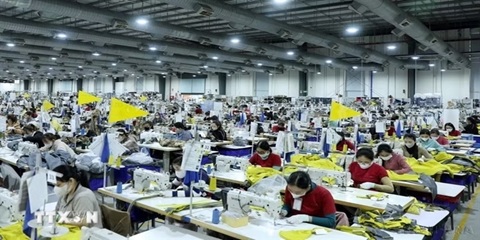
TEXTILE EXPORTS FACE DUAL CHALLENGES OF SUSTAINING ORDERS AND BOOSTING EFFICIENCY AMID GROWING COMPETITION
Data shows that the textile and garment sector maintained its growth momentum in the first nine months of this year. The industry's total export turnover reached an estimated US$35.721 billion in the first nine months of this year, up 3.3 per cent year-on-year. Despite posting encouraging export figures, Vietnamese textile and garment enterprises continue to navigate unpredictable market variables.
Events Sponsors






















