Want to be in the loop?
subscribe to
our notification
Business News
BINH DUONG REALTY MARKET ENTICES INVESTING INFLUX
In the year to date, the southern province of Binh Duong has enticed a string of foreign-led projects into its realty market, focusing on the mid-income customer segment.
In early August, TT Capital Investment Corporation and two Japanese partners - Cosmos Initia and Koterasu Group - agreed to develop affordable housing line in Binh Duong province and surrounding localities.
The consortium announced it would splash around $150 million across five years, each year introducing thousands of affordable housing units into the market.
This consortium has also pooled capital into a real estate venture in Di An city with a scale of around 2,000 apartments, each costing below VND2 billion ($83,000). The products are slated for launch before the end of Q3..
Elsewhere, Bcons Group, a business with a pipeline of social housing projects in Binh Duong, is to work with Thai’s Asset Limited to deploy 11 housing projects in the province, with a scale of nearly 9,000 apartments in the affordable housing segment.
Back in June, the developer announced expediting a scheme to build more than 2,000 affordable homes in Di An city in 2025.
In April, Kim Oanh Group inked an investment cooperation agreement to implement the One World urban area project with three Japanese partners, Sumitomo Forestry, Kumagai Gumi, and NTT Urban Development.
The project, valued more than $1 billion, connects with arterial roads such as Nguyen Thi Minh Khai and Ring Road 3 of Ho Chi Minh City.
Meanwhile, CapitaLand from Singapore also kicked-off construction of its Sycamore housing project over 19ha in Binh Duong early this year. The project aims to build around 3,500 apartments to meet housing needs for 13,000 people with a total investment value approximating $750 million.
According to Ronald Tay, CEO of CapitaLand Vietnam, the Sycamore project is a testament to their trust in Binh Duong’s real estate market.
“Not only a locality with a strategic position, a conducive business environment and quality infrastructure, Binh Duong is also one of the localities with dynamic development and strong foreign investment attraction,” said Tay.
Giang Quoc Dung, chairman of the Binh Duong Real Estate Association, noted that investors from Japan, Singapore, Thailand, and China are those paying the largest attention to the housing segments with real demands. They, therefore, have poured capital into Binh Duong, a vibrant development centre.
"The locality has multiple advantages as it is adjacent to localities with strong development as Ho Chi Minh City and Dong Nai. There is also enough available land for the development of high rises, plus a conducive investment environment and a quick legal setup," Dung said.
In addition, a proven track record of cooperation between Binh Duong and global brands such as Warburg Pincus, Sembcorp, Tokyu, CapitaLand Development, and AEON is deemed one of the factors leading to foreign-invested businesses in real estate to have practical views about the advantages of this locality.
Along with that, many local businesses want to inject capital into Binh Duong’s realty market, focusing on the affordable housing line.
For instance, in October Phat Dat Real Estate Development Corporation is to present its Thuan An 1 and Thuan An 2 high-rise residential complexes in downtown Thuan An city.
Source: VIR
Related News

CHARITY / EXHIBITION / OTHER EVENTS
INVESTMENT OPPORTUNITIES IN CA MAU PROVINCE: 96 PROJECTS AND 20 STRATEGIC PROJECTS
We are pleased to share with you information on investment projects currently seeking investors in Ca Mau Province. Should your esteemed company or association be interested, we kindly invite you to review the project information and complete the registration form via the links provided. The Ho Chi Minh City Investment and Trade Promotion Centre (ITPC) will consolidate the expressions of interest and facilitate connections with the leadership of Ca Mau Province at a meeting tentatively scheduled for 13 November 2026 in Ho Chi Minh City.

MEMBER CORNER / PROMOTIONS
BẰNG KIỀU LIVESHOW - A SYMPHONY OF LOVE UNDER THE GOLDEN GLOW
A masterclass in live music that takes the audience on a soulful journey through immortal love songs, guided by the peerless artistry and emotive storytelling of renowned singer Bằng Kiều. The highlight of the night is his seamless musical chemistry with special guest Triệu Hồng Ngọc, promising passionate and deeply resonant duets inside the magnificent Grand Ballroom.
INFRASTRUCTURE / CONSTRUCTION / LOGISTIC / PORT
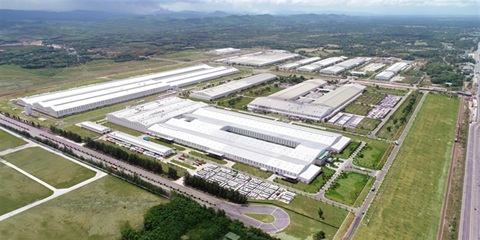
ĐÀ NẴNG GREEN-LIGHTS US$105 MILLION THAI DEVELOPMENT DEAL
The central city has approved an investment proposal by Thailand’s WHA Group to develop infrastructure for the 400ha WHA Đà Nẵng Industrial Park project on two communes of Thăng Bình and Đồng Dương, with an investment of more than VNĐ2.7 trillion (US$105 million). The city said it approved WHA Industrial Development International's status as an investor in the project, which is expected to take place between 2027 and 2034.
VIETNAM ECONOMY INVESTMENT
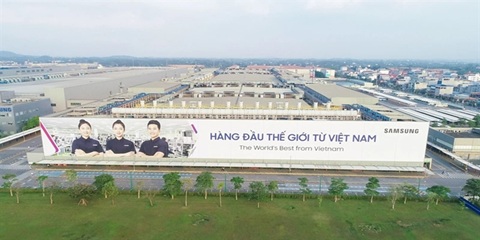
MOBILE PHONE EXPORTS RISE 20% TO $51.8 BILLION IN FIRST NINE MONTHS
Exports of mobile phones and components rose 20 per cent year-on-year to nearly US$51.8 billion in the first nine months of 2026, with China, the US and Republic of Korea accounting for more than half of the total. Shipments to the three markets reached a combined $26.18 billion, or 50.6 per cent of total exports of the product group during the period, according to data from the Vietnam Department of Customs under the Ministry of Finance.

INFRASTRUCTURE / CONSTRUCTION / LOGISTIC / PORT
VIỆT NAM-CAMBODIA TRADE GATHERS PACE TOWARDS $20 BILLION TARGET
Trade between Việt Nam and Cambodia continues to grow, remaining a bright spot and a key pillar of bilateral cooperation as the two countries aim to raise two-way trade to US$20 billion in the coming years. After setting a record of more than $11.3 billion last year, bilateral trade reached about $8.7 billion in the first eight months of this year, up 8.3 per cent year on year.
VIETNAM ECONOMY INVESTMENT
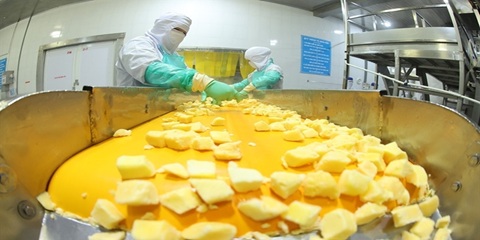
FRUIT AND VEGETABLE EXPORTS POISED TO HIT $10 BILLION IN 2026
Fruit and vegetable exports are on track to reach nearly US$10 billion in 2026, after rising 19.9 per cent year on year to nearly US$7.4 billion in the first nine months, driven by strong seasonal demand and abundant tropical fruit supplies. The Ministry of Agriculture and Environment said the growth reflected stronger international demand for fresh produce and processed agricultural products.
Events Sponsors






















