Want to be in the loop?
subscribe to
our notification
Business News
BUSINESSES INCREASE WISHES FOR SPECIALISED INDUSTRIAL PARKS
Data centres, industrial parks (IPs) reserved for high-tech production, and parks serving Chinese, the United States, Taiwanese, or Japanese investors are gradually being formed to welcome new funding waves, according to Truong An Duong, general manager of North Vietnam and Residential at Frasers Property Vietnam.
From the initial model of IPs that focused on building basic infrastructure and renting out divided land plots, specialised types of production such as research and testing centres, and exhibition and conference centres are now emerging on the market, Duong said.
“New industries such as e-commerce with requirements for data and technology infrastructure also require changes in industrial park planning,” Duong said at a VIR talk show on the issue last week.
“Over the past 5-7 years, the demand for industrial property in Vietnam has developed strongly. We benefit from the China+1 policy, the upgrading workforce, investment incentive programmes, and economic trade between Vietnam and the world, so Vietnam has great potential to engage giant global manufacturers,” Duong added.
For Frasers, projects have good occupancy rates. Enterprises that set up factories in Frasers’ system are mainly electronics and semiconductor manufacturing enterprises, Chinese-speaking countries, and Japanese and South Korean groups.
To allure supply chains with different production values and consumer goods industries, it is necessary to have specialised types such as data centres, infrastructure construction, skilled labour training, and incentives for each industry.
“Developing specialised IPs will be a trend if we want to develop deeper into the global supply chain,” Duong said. “If Vietnam intends to compete, it must have research and development facilities, data centres in IPs, and even exhibition centres for enterprises. The government must also develop services such as taxes, customs, and investment certification within IPs.”
Dinh Hoai Nam, director and head of Business Development at SLP Vietnam, said that when investing in the Vietnamese market, SLP considers Vietnam an investment bright spot on the world map.
“We will look at efficiency, not excluding any investment model, so if specialised IPs are good, we will also invest,” Nam said.
Vietnam has already specialised IPs, according to Nam, such as Sumitomo’s complexes, which are focused on by Japanese investors, and Hoa Lac, Danang, and Saigon high-tech parks, which focus on attracting IT and technology.
“However, to be able to build specialised IPs, the market itself must have enough demand and there must be an ecosystem for investors,” Nam said. “We need to let investors know that Vietnam is a place worth investing in. We and a number of other investors have the resources to develop specialised IPs, but it is important to have a suitable macro environment to create demand for investors.”
Although standard factories and warehouses will still be in high demand in the next three to five years, after that, it will be time to develop tailor-made IPs, Nam added.
Van Nguyen, transactions head for Northern Vietnam at JLL, commented that globally, the leading trend now is focusing on automation towards high-tech industries. However, Vietnam does not have specific areas planned to develop key, specialised IPs, although the advantage is that these IPs will bring a circular ecosystem.
“The upcoming development of Vietnam’s IPs will be specialised, in-depth, to position Vietnam as a progressive market to draw in high-level investors,” Van said. “However, Vietnam does not have a specific plan to develop specialised IPs. Therefore, on the macro level, consideration is needed to make a difference.”
The new trend will be on-demand tailoring, instead of ready-made built. Many Vietnamese businesses are turning to tailoring and proactively finding customers, Van said.
“The next trend after that will be automation combined with the use of highly skilled labour. Vietnam will have to implement a plan to train quality human resources as well as create key and specialised industries to be able to compete in the international arena,” Van said.
Source: VIR
Related News

CHARITY / EXHIBITION / OTHER EVENTS
INVESTMENT OPPORTUNITIES IN CA MAU PROVINCE: 96 PROJECTS AND 20 STRATEGIC PROJECTS
We are pleased to share with you information on investment projects currently seeking investors in Ca Mau Province. Should your esteemed company or association be interested, we kindly invite you to review the project information and complete the registration form via the links provided. The Ho Chi Minh City Investment and Trade Promotion Centre (ITPC) will consolidate the expressions of interest and facilitate connections with the leadership of Ca Mau Province at a meeting tentatively scheduled for 13 November 2026 in Ho Chi Minh City.

MEMBER CORNER / PROMOTIONS
BẰNG KIỀU LIVESHOW - A SYMPHONY OF LOVE UNDER THE GOLDEN GLOW
A masterclass in live music that takes the audience on a soulful journey through immortal love songs, guided by the peerless artistry and emotive storytelling of renowned singer Bằng Kiều. The highlight of the night is his seamless musical chemistry with special guest Triệu Hồng Ngọc, promising passionate and deeply resonant duets inside the magnificent Grand Ballroom.
INFRASTRUCTURE / CONSTRUCTION / LOGISTIC / PORT
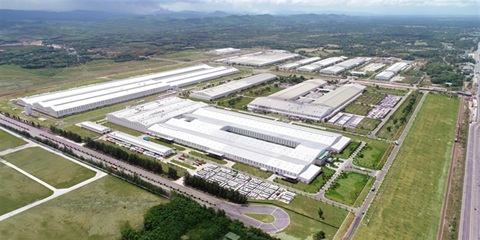
ĐÀ NẴNG GREEN-LIGHTS US$105 MILLION THAI DEVELOPMENT DEAL
The central city has approved an investment proposal by Thailand’s WHA Group to develop infrastructure for the 400ha WHA Đà Nẵng Industrial Park project on two communes of Thăng Bình and Đồng Dương, with an investment of more than VNĐ2.7 trillion (US$105 million). The city said it approved WHA Industrial Development International's status as an investor in the project, which is expected to take place between 2027 and 2034.
VIETNAM ECONOMY INVESTMENT
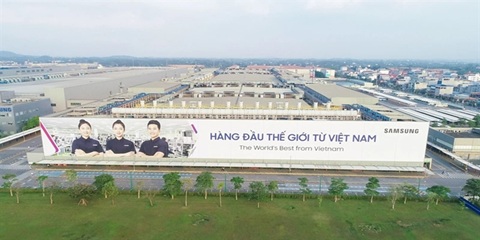
MOBILE PHONE EXPORTS RISE 20% TO $51.8 BILLION IN FIRST NINE MONTHS
Exports of mobile phones and components rose 20 per cent year-on-year to nearly US$51.8 billion in the first nine months of 2026, with China, the US and Republic of Korea accounting for more than half of the total. Shipments to the three markets reached a combined $26.18 billion, or 50.6 per cent of total exports of the product group during the period, according to data from the Vietnam Department of Customs under the Ministry of Finance.
INFRASTRUCTURE / CONSTRUCTION / LOGISTIC / PORT
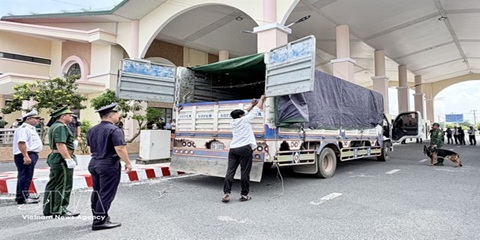
VIỆT NAM-CAMBODIA TRADE GATHERS PACE TOWARDS $20 BILLION TARGET
Trade between Việt Nam and Cambodia continues to grow, remaining a bright spot and a key pillar of bilateral cooperation as the two countries aim to raise two-way trade to US$20 billion in the coming years. After setting a record of more than $11.3 billion last year, bilateral trade reached about $8.7 billion in the first eight months of this year, up 8.3 per cent year on year.
VIETNAM ECONOMY INVESTMENT
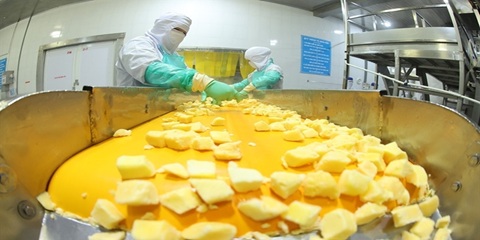
FRUIT AND VEGETABLE EXPORTS POISED TO HIT $10 BILLION IN 2026
Fruit and vegetable exports are on track to reach nearly US$10 billion in 2026, after rising 19.9 per cent year on year to nearly US$7.4 billion in the first nine months, driven by strong seasonal demand and abundant tropical fruit supplies. The Ministry of Agriculture and Environment said the growth reflected stronger international demand for fresh produce and processed agricultural products.
Events Sponsors






















