Want to be in the loop?
subscribe to
our notification
Business News
CATALYST FOR INDUSTRIAL REAL ESTATE DEVELOPMENT
The consolidation of provincial/municipal administrative boundaries in Vietnam is expected to deliver a powerful impetus to the industrial real estate market, unlocking opportunities to establish expansive industrial-urban zones, boost competitiveness and attract foreign direct investment (FDI).
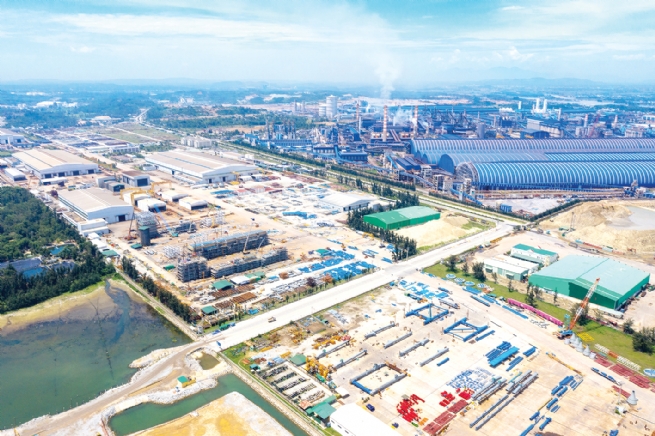
Expanding administrative boundaries allows provinces to plan larger industrial parks, providing more options for businesses
Streamlining governance, expanding development horizons
Far beyond a mere redrawing of geographical lines, the merger of administrative units aims to streamline governance structures, reduce planning fragmentation and enhance inter-provincial competitiveness. Mr. Thomas Rooney, Associate Director, Industrial Services at Savills Hanoi, emphasized that, if executed systematically, this process will pave the way for integrated urban-industrial ecosystems that are highly attractive to increasingly discerning foreign investors.
The expansion of administrative boundaries enables provinces to plan new industrial parks with larger land areas, offering greater options for businesses. By increasing available land, both domestic and international companies can more readily secure suitable locations for factories, addressing the shortage of industrial land in high-demand regions.
In practice, cities like Ho Chi Minh City (HCMC) faced significant challenges due to a lack of clean land for new industrial park development prior to consolidation. The merger of HCMC with Binh Duong and Ba Ria - Vung Tau is seen as a strategic solution, not only streamlining administrative operations but also expanding land resources, thereby facilitating the creation of modern industrial parks aligned with high-tech industry trends.
Moreover, post-merger provinces with larger territories gain the ability to designate specialized zones more effectively, fostering the development of tailored industrial complexes, such as supporting industrial parks or sector-specific parks supplying components and parts for major manufacturing industries, including automotive and semiconductor production.
According to Mr. Thomas Rooney, localities that have been magnets for investment will, through mergers and closer planning coordination, complement each other in infrastructure, labor and development strategies. Larger scale enables regions to meet higher standards in infrastructure and governance, thereby elevating their position in the global value chain.
In the northern region, for instance, the merger of Bac Giang and Bac Ninh is yielding positive results. Major investors such as Luxshare – ICT (Hong Kong) and Foxconn (Taiwan) have poured hundreds of millions of USD into high-tech projects in the area, while developers like Hoa Phat, Vinhomes and Danko Group are investing heavily in infrastructure and supporting services.
According to VCBS Research, administrative mergers lay the economic foundation for large-scale economic zones with robust models, substantial populations and ample budgets, facilitating infrastructure and amenity development. Post-merger provinces will benefit from diverse geographical features, ranging from coastal areas and plains to mountainous regions, which will support multifaceted economic growth in sectors such as logistics, industry and tourism.
Ms. Trang Bui, Country Head of Cushman & Wakefield Vietnam, affirmed: “Synchronized infrastructure investment will lead to reduced logistics costs and shorter transportation times, thereby enhancing the competitiveness of industrial parks and logistics hubs in attracting international manufacturing and export investors.” Consolidated budgets and public assets also provide a strong foundation for critical infrastructure projects, such as inter-regional highways, seaports and airports.
Moreover, provincial/municipal mergers help reduce unhealthy competition by preventing situations such as aggressive land price cuts or unregulated tax incentives. Integrated planning for industrial parks, logistics and transportation supports the development of mega urban-industrial complexes with modern digital infrastructure (IoT, 5G), robust supporting business ecosystems, and comprehensive amenities, including R&D centers, housing, healthcare and education facilities.
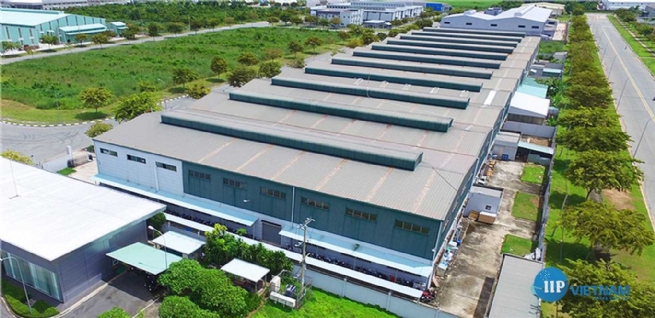
The consolidation of administrative boundaries is set to boost Vietnam’s industrial real estate market
Short-term challenges, long-term gains
The realignment of administrative boundaries will inevitably impact various aspects, from land-use planning and investment licensing to legal procedures related to environmental and construction regulations. Mr. Thomas Rooney noted that in the short term, businesses may face challenges due to changes in administrative oversight and policies that have yet to be fully synchronized across merged localities. However, in the long run, this presents a significant opportunity to establish a more transparent and efficient legal framework. Streamlined procedures in newly consolidated administrative regions will save time and bolster investor confidence.
“For industrial real estate, stability and clarity in planning are critical. Unified procedures and policies will pave the way for large-scale industrial parks integrated with logistics infrastructure, satellite urban areas and inter-regional transportation networks,” Rooney added.
A key factor is the impact on the labor force, which forms the backbone of industrial real estate competitiveness. Boundary changes may affect workers’ residency plans, administrative registrations and transportation connectivity. This could pose a hurdle if not adequately prepared for, but it also offers a chance to redesign labor supply networks on a regional, inter-provincial scale.
If mergers are executed in tandem with infrastructure investments - particularly in ring roads, seaports, airports and digital infrastructure - industrial parks will no longer be constrained by administrative boundaries. Businesses will gain access to a broader labor pool from multiple localities, optimizing operational costs. The development of inter-regional infrastructure will also drive a shift away from traditional industrial markets, where limited supply and rising investment costs are becoming barriers. Emerging localities with abundant land, lower costs and improved infrastructure stand to rise as new industrial hubs.
According to Rooney, the transition period, expected to span at least two to three years, will be a critical time. Businesses must proactively stay informed, build relationships with new local authorities and flexibly adjust their land-use strategies.
For governing bodies, clear and transparent communication about the transition roadmap is paramount. Proactive engagement with businesses and the provision of support mechanisms, especially for small and medium-sized enterprises, will be crucial in minimizing disruptions and sustaining the momentum of investment inflows. Administrative restructuring should not become an obstacle but rather serve as a springboard toward a more consistent, equitable and efficient investment environment.
“Provincial/municipal mergers represent a landmark administrative reform, directly shaping Vietnam’s development landscape. With a long-term vision and synchronized efforts, this could become a new catalyst, propelling Vietnam’s industrial real estate to expand and play a strategic role in the global supply chain,” Rooney concluded.
Source: VCCI
Related News

CHARITY / EXHIBITION / OTHER EVENTS
INVESTMENT OPPORTUNITIES IN CA MAU PROVINCE: 96 PROJECTS AND 20 STRATEGIC PROJECTS
We are pleased to share with you information on investment projects currently seeking investors in Ca Mau Province. Should your esteemed company or association be interested, we kindly invite you to review the project information and complete the registration form via the links provided. The Ho Chi Minh City Investment and Trade Promotion Centre (ITPC) will consolidate the expressions of interest and facilitate connections with the leadership of Ca Mau Province at a meeting tentatively scheduled for 13 November 2026 in Ho Chi Minh City.

MEMBER CORNER / PROMOTIONS
BẰNG KIỀU LIVESHOW - A SYMPHONY OF LOVE UNDER THE GOLDEN GLOW
A masterclass in live music that takes the audience on a soulful journey through immortal love songs, guided by the peerless artistry and emotive storytelling of renowned singer Bằng Kiều. The highlight of the night is his seamless musical chemistry with special guest Triệu Hồng Ngọc, promising passionate and deeply resonant duets inside the magnificent Grand Ballroom.
INFRASTRUCTURE / CONSTRUCTION / LOGISTIC / PORT
ĐÀ NẴNG GREEN-LIGHTS US$105 MILLION THAI DEVELOPMENT DEAL
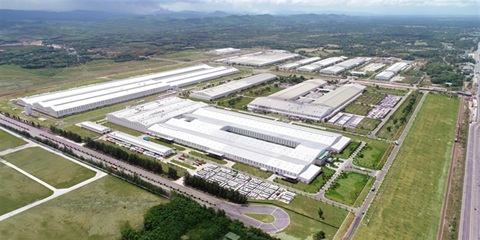
The central city has approved an investment proposal by Thailand’s WHA Group to develop infrastructure for the 400ha WHA Đà Nẵng Industrial Park project on two communes of Thăng Bình and Đồng Dương, with an investment of more than VNĐ2.7 trillion (US$105 million). The city said it approved WHA Industrial Development International's status as an investor in the project, which is expected to take place between 2027 and 2034.
VIETNAM ECONOMY INVESTMENT
MOBILE PHONE EXPORTS RISE 20% TO $51.8 BILLION IN FIRST NINE MONTHS
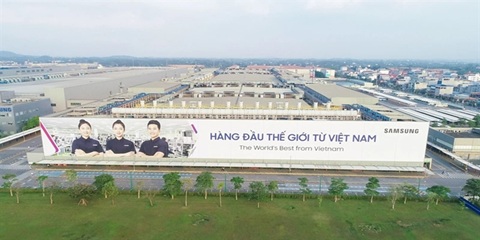
Exports of mobile phones and components rose 20 per cent year-on-year to nearly US$51.8 billion in the first nine months of 2026, with China, the US and Republic of Korea accounting for more than half of the total. Shipments to the three markets reached a combined $26.18 billion, or 50.6 per cent of total exports of the product group during the period, according to data from the Vietnam Department of Customs under the Ministry of Finance.
INFRASTRUCTURE / CONSTRUCTION / LOGISTIC / PORT
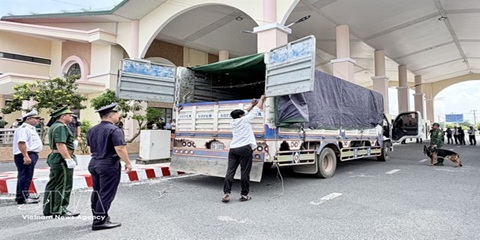
VIỆT NAM-CAMBODIA TRADE GATHERS PACE TOWARDS $20 BILLION TARGET
Trade between Việt Nam and Cambodia continues to grow, remaining a bright spot and a key pillar of bilateral cooperation as the two countries aim to raise two-way trade to US$20 billion in the coming years. After setting a record of more than $11.3 billion last year, bilateral trade reached about $8.7 billion in the first eight months of this year, up 8.3 per cent year on year.
VIETNAM ECONOMY INVESTMENT
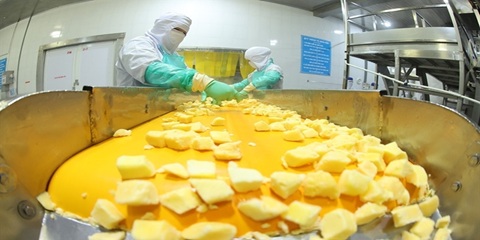
FRUIT AND VEGETABLE EXPORTS POISED TO HIT $10 BILLION IN 2026
Fruit and vegetable exports are on track to reach nearly US$10 billion in 2026, after rising 19.9 per cent year on year to nearly US$7.4 billion in the first nine months, driven by strong seasonal demand and abundant tropical fruit supplies. The Ministry of Agriculture and Environment said the growth reflected stronger international demand for fresh produce and processed agricultural products.
Events Sponsors






















