Want to be in the loop?
subscribe to
our notification
Business News
CEMENT INDUSTRY EYES RECOVERY IN 2025 AFTER YEARS OF GLUT
Cement industry is seeing signs of recovery this year after two years of glut caused by oversupply and weak domestic demand, driven by hastened public investment in infrastructure development and lower input costs.
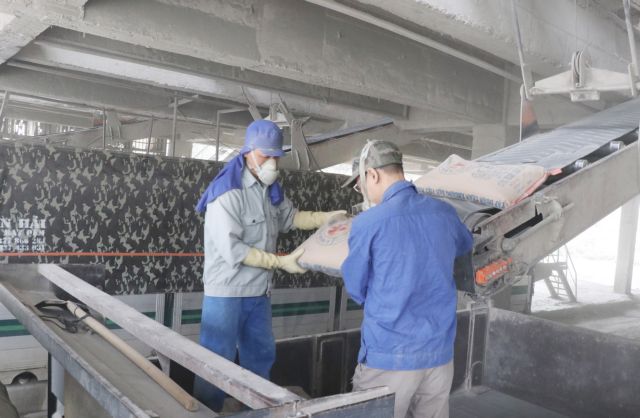
Cement production at La Hiên Cement Joint Stock Company. Cement industry is seeing signs of recovery this year after two years of glut. — VNA/VNS Photo Hoàng Nguyen
HÀ NỘI — The cement industry is showing signs of recovery this year after two years of oversupply and weak domestic demand, driven by accelerated public investment in infrastructure development and lower input costs.
According to the Ministry of Construction, the sector recorded strong growth in the first six months of the year, with output reaching 49.8 million tonnes, up 18 per cent, and sales rising 14 per cent to 54 million tonnes.
Domestic sales climbed 18 per cent to 37.5 million tonnes, highlighting a solid rebound in local demand. Exports in January–June rose 6 per cent to 17 million tonnes, led by a 19 per cent increase in clinker shipments, generating total revenue of US$635 million, up 1.7 per cent. Key markets included the Philippines, the US, Singapore and Malaysia.
Export prices, however, remain under pressure from fierce competition, forcing producers to maintain prices at late-2024 levels to secure orders. Cement and clinker inventories stood at around 4.5 million tonnes, equivalent to 20 days of production.
Falling input costs have improved margins, though high electricity prices continue to weigh on producers. Imported coal prices, a major input, dropped sharply to US$98.6 per tonne, 22.6 per cent lower than the same period last year. Meanwhile, average electricity prices increased by 4.8 per cent from May 10.
Several producers posted significant profit growth. VICEM Hà Tiên reported an after-tax profit of VNĐ112.3 billion, 2.45 times higher than last year, while VICEM Bỉm Sơn earned nearly VNĐ64.2 billion, up 150 per cent. VICEM Bút Sơn recorded a profit of VNĐ12.4 billion.
Public investment and a gradual recovery in construction are expected to remain the major growth drivers for the cement industry this year, said Nguyễn Văn Thắng, director of construction services company Gemtec.
Exports in the coming months will depend largely on demand from South Asia and Southeast Asia, as well as the impact of trade protectionism and transportation costs.
Industry expert Phạm Ngọc Trung noted that the sector should prioritise product restructuring and energy conversion. Reducing clinker proportions, producing more high-added-value cement products, and adopting alternative energy sources would significantly cut costs and create sustainable competitive advantages, he said.
FPT Securities forecast domestic cement demand to grow by 2.38 per cent annually during 2024–39, supported by positive housing construction prospects. However, export growth is unlikely to be as optimistic, with weak demand from China and rising protectionism weighing on the outlook.
Việt Nam currently operates about 90 cement production lines, with an annual capacity of 106 million tonnes. — VNS
Source: VNS
Related News

MEMBER CORNER / PROMOTIONS
BẰNG KIỀU LIVESHOW - A SYMPHONY OF LOVE UNDER THE GOLDEN GLOW
A masterclass in live music that takes the audience on a soulful journey through immortal love songs, guided by the peerless artistry and emotive storytelling of renowned singer Bằng Kiều. The highlight of the night is his seamless musical chemistry with special guest Triệu Hồng Ngọc, promising passionate and deeply resonant duets inside the magnificent Grand Ballroom.

INFRASTRUCTURE / CONSTRUCTION / LOGISTIC / PORT
ĐÀ NẴNG GREEN-LIGHTS US$105 MILLION THAI DEVELOPMENT DEAL
The central city has approved an investment proposal by Thailand’s WHA Group to develop infrastructure for the 400ha WHA Đà Nẵng Industrial Park project on two communes of Thăng Bình and Đồng Dương, with an investment of more than VNĐ2.7 trillion (US$105 million). The city said it approved WHA Industrial Development International's status as an investor in the project, which is expected to take place between 2027 and 2034.

VIETNAM ECONOMY INVESTMENT
MOBILE PHONE EXPORTS RISE 20% TO $51.8 BILLION IN FIRST NINE MONTHS
Exports of mobile phones and components rose 20 per cent year-on-year to nearly US$51.8 billion in the first nine months of 2026, with China, the US and Republic of Korea accounting for more than half of the total. Shipments to the three markets reached a combined $26.18 billion, or 50.6 per cent of total exports of the product group during the period, according to data from the Vietnam Department of Customs under the Ministry of Finance.

INFRASTRUCTURE / CONSTRUCTION / LOGISTIC / PORT
VIỆT NAM-CAMBODIA TRADE GATHERS PACE TOWARDS $20 BILLION TARGET
Trade between Việt Nam and Cambodia continues to grow, remaining a bright spot and a key pillar of bilateral cooperation as the two countries aim to raise two-way trade to US$20 billion in the coming years. After setting a record of more than $11.3 billion last year, bilateral trade reached about $8.7 billion in the first eight months of this year, up 8.3 per cent year on year.

VIETNAM ECONOMY INVESTMENT
FRUIT AND VEGETABLE EXPORTS POISED TO HIT $10 BILLION IN 2026
Fruit and vegetable exports are on track to reach nearly US$10 billion in 2026, after rising 19.9 per cent year on year to nearly US$7.4 billion in the first nine months, driven by strong seasonal demand and abundant tropical fruit supplies. The Ministry of Agriculture and Environment said the growth reflected stronger international demand for fresh produce and processed agricultural products.
GARMENT / TEXTILE
TEXTILE EXPORTS FACE DUAL CHALLENGES OF SUSTAINING ORDERS AND BOOSTING EFFICIENCY AMID GROWING COMPETITION
Data shows that the textile and garment sector maintained its growth momentum in the first nine months of this year. The industry's total export turnover reached an estimated US$35.721 billion in the first nine months of this year, up 3.3 per cent year-on-year. Despite posting encouraging export figures, Vietnamese textile and garment enterprises continue to navigate unpredictable market variables.
Events Sponsors






















