Want to be in the loop?
subscribe to
our notification
Business News
CLEAR LEGAL FRAMEWORK NEEDED TO UNLOCK DIGITAL ASSET POTENTIAL
The past decade has seen remarkable advancements in technology worldwide, particularly in digital assets such as blockchain, cryptocurrencies, asset tokenization and decentralized finance (DeFi). Once unfamiliar, digital assets have now become integral to the global financial system. Leading nations in this field not only to drive innovation but also establish a strategic edge in the global economy.
Much development potential
Mr. Nguyen Duy Hung, Chairman of the Board of Directors of SSI Securities Corporation, said that amid the global trends in technology and the digital asset market, Vietnam is emerging as a notable player, driven by its young, dynamic workforce and strong enthusiasm for innovation. According to recent research by Forbes, Vietnam ranks second globally in digital asset ownership and interest. Additionally, data from the 10 largest global exchanges participating in the Vietnam Tech Impact Summit 2024 (VTIS 2024) reveals that Vietnam ranks among the top four markets worldwide by trading volume. Digital assets have transcended being mere technological solutions, becoming integral to the daily lives of families across the country.
According to Mr. Truong Gia Binh, Chairman of the Board of Directors of FPT Corporation, Vietnam has a lot of potential to develop in the field of information technology. Artificial intelligence (AI) is having a profound impact on the labor market, requiring people to adapt to this change by learning and improving skills, mastering AI and technology in the working process. In particular, Vietnam has abundant human resources who are ready to learn new things.
He emphasized that the revolution called digital transformation marks the era of the country's rise, so that the Vietnamese people can stand on par with advanced nations in the world. Vietnam has expanded diplomacy and trade connections with many countries in the world. “Opportunities are open to us, the important thing is whether we can seize them or not. The most important of these is data, because all technologies develop around data. Data is a valuable resource for Vietnam and the whole world. Data is the fuel of the future. Whoever knows how to exploit, process and use it can conquer new heights. A new world order is established when countries control data better,” added Binh.
Mr. Truong Gia Binh emphasized that Vietnam holds a prominent position and is shining brightly on the global technology map. Vietnam ranks second after India in software exports and has a technology workforce that many countries do not have. Many businesses have chosen Vietnam as their second home and many companies from other countries have chosen Vietnam as their home.
Transparency and clarity of legal framework - Key development
Vietnam is a country with a young population that loves technology and is willing to experiment with new trends. This creates favorable conditions for Vietnam to become a center for digital asset development in the region. According to Mr. Nguyen Duy Hung, to maximize the potential of digital assets, a core factor is transparency and clarity in the legal framework. This is the fundamental factor that helps investors, businesses and the community to develop in a safe and sustainable environment.
However, the current reality shows that due to the lack of a clear legal framework, this field is still facing many challenges. Enterprises in the field of blockchain and digital assets in Vietnam still have to operate in a lack of direction, causing them to lose their competitive advantage compared to neighboring countries such as Singapore or Thailand. In addition, the lack of regulations leads to the inability to protect users from fraudulent or non-transparent activities. Not to mention while the opportunities are gradually disappearing, foreign investors and large technology corporations tend to choose other countries with more favorable legal environments.
Building a legal framework for digital assets in Vietnam is not only a need for businesses but also a necessary condition to promote the development of the technology industry in particular and the economy in general. Therefore, according to Mr. Nguyen Duy Hung, SSI recommends that the Government soon issue a clear and transparent legal framework to regulate activities related to digital assets, creating trust for investors and market participants. Support innovative businesses in the field of blockchain and digital technology through investment incentives, research funding and international cooperation.
In addition, it is necessary to build flexible management mechanisms to both protect users and not lose creativity - the core of digital assets. At the same time, it is needed to strengthen international cooperation in the field of digital assets, take advantage of the experience of developed countries to build an effective legal framework, suitable for the characteristics of Vietnam.
If these bottlenecks can be resolved, according to Mr. Nguyen Duy Hung, with a strategic vision and support from the Government, Vietnam can completely become a center for innovation in digital assets in the region. This is not only an opportunity for Vietnam to catch up with global trends but also a way to raise the country's position on the world technology map.
The Government has reportedly submitted the Law on Digital Technology Industry to the National Assembly, including four articles that define the concept, determination criteria, management principles, and state management responsibilities for digital assets. In the review report, the Committee for Science, Technology and Environment said that the provisions on digital assets in the draft Law are necessary. However, digital asset management is a new and complicated issue, so it needs to be carefully considered. In particular, the Government needs to study the classification of digital assets and develop corresponding management regulations.
Source: VCCI
Related News
MEMBER CORNER / PROMOTIONS
A CULINARY MASTERPIECE
Don't need a special occasion to treat yourself to a perfect Chinese dining experience. This October, Ngan Dinh Restaurant introduces an exquisite three-dish menu, promising to satisfy diners who appreciate culinary innovation and refined flavors. Enjoy 20% OFF a glass of house red/white wine, or Imported German Veltins Draught Beer/Maisel's Weisse Dunkel when ordering any of the above dishes!

MEMBER CORNER / PROMOTIONS
ONE YEAR OF PRIME MOMENTS — LET’S CELEBRATE!
Olivia’s Prime Saigon is turning one, and we’d love to celebrate this special milestone with you! Order any featured steak size and enjoy all its designated complimentary pasta, side dishes and sauces — with a combined value of up to 80% of your steak price! Thank you for being part of our journey. Here’s to great steaks, wonderful company, and many more prime moments together!
MEMBER CORNER / PROMOTIONS
SENTRYSAFE - PROTECT WHAT MATTERS MOST
From cash, important documents and records to valuable belongings, a quality safe gives you greater peace of mind against unexpected risks. SentrySafe - a trusted safe brand from the USA, suitable for homes, offices and various storage needs. Contact Sen Wai Vietnam for expert advice and to find the right safe for your needs.

MEMBER CORNER / PROMOTIONS
50% DISCOUNT FOR HKBAV MEMBER: EUGENE ONEGIN - EIFMAN BALLET OF ST. PETERSBURG WORLD TOUR 2026
Adapted from the classic novel in verse by acclaimed Russian poet Alexander Pushkin, Eugene Onegin explores timeless themes of love, pride, choices, and irreversible regret. Eifman's distinctive language of psychological ballet is brought to life through Tchaikovsky's music alongside contemporary rock by Alexander Sitkovetsky, creating an extraordinary artistic experience.
MEMBER CORNER / PROMOTIONS
COSMOPARK – ENERGY ADVANTAGES FOR POWER-INTENSIVE INDUSTRIES
As global corporations place increasing emphasis on energy security, renewable energy adoption, and carbon emissions reduction, electricity is no longer viewed merely as a component of technical infrastructure. For high-tech projects, data centers, and large-scale manufacturing facilities, reliable energy infrastructure has become a critical factor in investment location decisions.
VIETNAM ECONOMY INVESTMENT
FOREIGN INVESTORS TO BE WIDENED FOR MARKET ACCESS
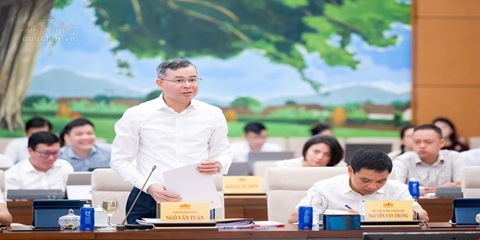
Vietnam is moving to widen market access, improve investment incentives, and streamline procedures, with greater support tied to investors’ actual commitments and results, as part of the law on amending and supplementing a number of articles of the Law on Investment. The proposal was mentioned at the sixth session of the National Assembly Standing Committee in Hanoi on September 30, on amending the Law on Investment.
Events Sponsors






















