Want to be in the loop?
subscribe to
our notification
Business News
CONDOTEL PROPERTY MARKET IN URGENT NEED OF NEW REGULATIONS, STANDARDS
A legal framework covering condotel properties is urgently needed to protect the rights of both developers and buyers and to ensure sustainable development.
The term condotel refers to a combined condominium and hotel building that is owned like a condo but operates like a hotel.
The boom in condotel development began several years ago, yet the property concept is not mentioned in legal documents in Việt Nam, causing potential conflict.
More importantly, condotels are not entitled to a land-use right certificate unless they are considered a condominium under the current law, according to experts.
In April, Prime Minister Nguyễn Xuân Phúc ordered the Ministry of Construction to issue regulations on management and operation of condotels and officetels before the third quarter of this year.
Minister of Construction Phạm Hồng Hà said at the time that the ministry would work with the Ministry of Natural Resources and Environment to complete regulations on condotels and officetels, but nothing has been issued.
The construction ministry is responsible for revising standards and regulations for condotels and officetels.
Nguyễn Trọng Ninh, head of the construction ministry’s Housing and Real Estate Market Management Department, said that a legal framework for condotels and officetels is urgently needed, especially because of increasing tourist arrivals.
New concept
Kevin Hawkins, co-executive partner of ZICO Law Việt Nam, said that condotels had dominated the property market in Việt Nam in recent years.
The owner of a condotel can either operate it themselves or leave it under the management of the developer and receive a profit.
In the former option, the owner may use the condotel as a tourist accommodation or rent it out as a hotel room. In the second option, the authorised manager of the condotel will lease it as a hotel room and receive a management fee, while the owner receives the profit.
In condotels, the developers often pre-sell units and then use the money from buyers to complete the project construction, according to Hawkins.
“To make it an attractive investment, the developers in turn promise buyers a substantial profit for leasing the units as hotel rooms,” he said.
Since there is no definition for this new type of real estate under Vietnamese law, potential buyers are likely to be confused.
They commonly mistake a condotel for a condominium, which can be used for a permanent residence. And the pre-sale of condotels resembles the sale of a residential house, Hawkins said.
Experts doubt the developers’ profit commitments to buyers, saying that tourism is a seasonal industry with fluctuation in revenue. And more significantly, there are no regulations that require developers to set aside the payments from the “rental pool” to buyers in some form of escrow account or provide a guarantee for such payment.
In a related matter, the developer of condotel complex Cocobay Đà Nẵng has announced that buyers will no longer be paid the annual returns it had promised because it has faced financial difficulties.
Similarly, the Empire Group has informed its 1,700 buyers that it will stop paying them the 12 per cent annuity beginning next year.
When it sold the units in 2016, the company committed to pay at least 12 per cent of the cost of units for eight consecutive years, a rate considered too high at the time.
Nguyễn Đức Thành, the company’s chairman, said the project had faced financial turmoil since August 2017 and become worse because of legal challenges facing this property segment.
Banks have not provided credit because of the legal issues, while contractors started to pull out of the project and foreign partners ceased their partnership with the group.
Cocobay is a 51-ha hospitality and entertainment complex in Ngũ Hành Sơn District in Đà Nẵng. Construction began in 2016 at a cost of around $5 billion.
In the first half of this year, 11,855 condotel units came on the market, led by the coastal markets of Nha Trang, Đà Nẵng, Phú Quốc and Quảng Bình, but only 25 per cent of them have been bought, according to the Việt Nam Association of Realtors.
Lê Hoàng Châu, chairman of the HCM City Real Estate Association, said: “A guaranteed return is one of the biggest factors that attract condotel buyers”.
But the guarantee is essentially a sophisticated marketing “trick” because there is no solid legal basis to protect consumers when there is a violation, he added.
Source: VNS
Related News

INFRASTRUCTURE / CONSTRUCTION / LOGISTIC / PORT
VIỆT NAM-CAMBODIA TRADE GATHERS PACE TOWARDS $20 BILLION TARGET
Trade between Việt Nam and Cambodia continues to grow, remaining a bright spot and a key pillar of bilateral cooperation as the two countries aim to raise two-way trade to US$20 billion in the coming years. After setting a record of more than $11.3 billion last year, bilateral trade reached about $8.7 billion in the first eight months of this year, up 8.3 per cent year on year.
TECHNOLOGY
AI BEGINNING TO RESHAPE RECRUITMENT CRITERIA
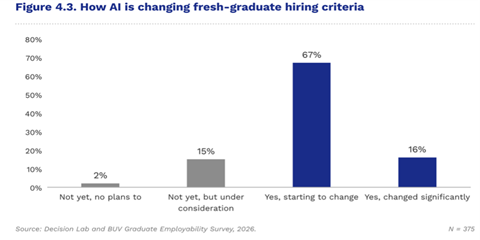
Digital literacy is the only capability area in which fresh graduates meet employers’ expectations, according to a new report. Yet, it is also the standard rising fastest, as businesses increasingly expect new hires to use AI effectively in the workplace. Some 83 per cent of employers say AI has changed, or is beginning to change, their hiring criteria, while 94 per cent report higher expectations for digital and AI capabilities than they had two to three years ago.

INFRASTRUCTURE / CONSTRUCTION / LOGISTIC / PORT
ĐÀ NẴNG GREEN-LIGHTS US$105 MILLION THAI DEVELOPMENT DEAL
The central city has approved an investment proposal by Thailand’s WHA Group to develop infrastructure for the 400ha WHA Đà Nẵng Industrial Park project on two communes of Thăng Bình and Đồng Dương, with an investment of more than VNĐ2.7 trillion (US$105 million). The city said it approved WHA Industrial Development International's status as an investor in the project, which is expected to take place between 2027 and 2034.

VIETNAM ECONOMY INVESTMENT
MOBILE PHONE EXPORTS RISE 20% TO $51.8 BILLION IN FIRST NINE MONTHS
Exports of mobile phones and components rose 20 per cent year-on-year to nearly US$51.8 billion in the first nine months of 2026, with China, the US and Republic of Korea accounting for more than half of the total. Shipments to the three markets reached a combined $26.18 billion, or 50.6 per cent of total exports of the product group during the period, according to data from the Vietnam Department of Customs under the Ministry of Finance.

VIETNAM ECONOMY INVESTMENT
FRUIT AND VEGETABLE EXPORTS POISED TO HIT $10 BILLION IN 2026
Fruit and vegetable exports are on track to reach nearly US$10 billion in 2026, after rising 19.9 per cent year on year to nearly US$7.4 billion in the first nine months, driven by strong seasonal demand and abundant tropical fruit supplies. The Ministry of Agriculture and Environment said the growth reflected stronger international demand for fresh produce and processed agricultural products.
GARMENT / TEXTILE
TEXTILE EXPORTS FACE DUAL CHALLENGES OF SUSTAINING ORDERS AND BOOSTING EFFICIENCY AMID GROWING COMPETITION
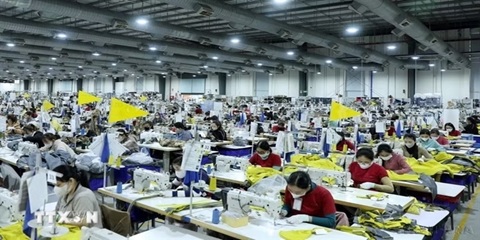
Data shows that the textile and garment sector maintained its growth momentum in the first nine months of this year. The industry's total export turnover reached an estimated US$35.721 billion in the first nine months of this year, up 3.3 per cent year-on-year. Despite posting encouraging export figures, Vietnamese textile and garment enterprises continue to navigate unpredictable market variables.
Events Sponsors






















