Want to be in the loop?
subscribe to
our notification
Business News
CORPORATE GOVERNANCE KEY TO ATTRACTING INTERNATIONAL INVESTMENT
Strengthening corporate governance (CG) standards has become essential for building investor confidence, particularly as environmental, social and governance (ESG) principles gain global prominence.
Robust CG practices are recognised by market insiders not only for enhancing the value of Vietnamese businesses, but also for fostering a transparent and stable business environment, thereby attracting sustainable capital from both domestic and international investors.
Corporate governance, as the governance component of ESG, is increasingly regarded as a key measure of a company’s competitiveness and its ability to gain trust from markets and partners. It also serves as a vital tool to assess businesses' commitment to managing environmental and social impacts, while ensuring transparency and accountability in the pursuit of sustainable development goals.
Research by McKinsey and the World Bank indicates that companies with strong governance are valued 10–20 per cent higher and enjoy 10–15 per cent lower capital costs when raising funds.
These figures underscore the long-term value that effective governance delivers, not only for businesses but also for broader community growth.
At a recent forum in HCM City focused on attracting responsible investors, Vũ Quang Thịnh, CEO of Dynam Capital, highlighted a significant shift in global investment trends over the past two decades.
"The responsible investment market is currently valued at US$158 trillion and improving corporate governance has become a top priority for investors looking to mitigate risks,” Thịnh said.
Despite these advantages, corporate governance standards in Việt Nam remain among the lowest in ASEAN, according to the ASEAN Corporate Governance Scorecard (ACGS). The Vietnam Institute of Directors (VIOD) has stressed the urgent need for targeted initiatives to elevate governance standards and strengthen investor trust.
In response, VIOD launched the 'VNCG50' Corporate Governance Scorecard, a framework adapted from the ACGS but tailored to Việt Nam’s unique circumstances. This initiative aims to help leading companies adopt best practices in governance, contributing to the overall improvement of national CG standards.
Chairwoman of VIOD, Hà Thu Thanh, said that CG was not only crucial for attracting investment but also one of the seven pillars of corporate competitiveness. Senior leaders, particularly board chairs, would play a decisive role in guiding companies to embrace the highest standards of governance, including ESG principles.
Governance’s role in upgrading market status
At a recent conference on "Enhancing Corporate Governance Capacity for Listed Companies", Vũ Thị Chân Phương, Chairwoman of the State Securities Commission (SSC), emphasised the pivotal role of CG in boosting business efficiency.
Phương noted that strong CG practices would reduce capital costs, enhance enterprise value and improve market credibility.
The SSC views enhanced governance as a cornerstone for upgrading Việt Nam’s stock market from frontier to emerging market status, according to Phương. Achieving this milestone requires companies to adhere to stricter financial reporting and governance standards that meet international investor expectations.
Compliance with such standards not only strengthens investor confidence but also mitigates risks of misinformation and fraud, enhances stock liquidity and attracts foreign capital.
Chairman of FPT Group, Trương Gia Bình, shared insights into how his company leveraged information technology, green transformation and artificial intelligence to improve governance.
“Effective governance requires the use of technology to optimise management processes while meeting increasingly stringent global investor demands,” Bình explained.
FPT employs a real-time data-driven governance system, enabling swift and precise decision-making. In 2023, the group implemented 42 internal digital transformation projects, saving VNĐ617 billion (US$24 million) in costs.
Centralised data management has optimised operational efficiency, enhanced employee and customer experiences and fostered sustainable growth, according to Bình. Most of FPT’s governance and operational activities have been digitised, ranging from task assignments to invoice processing and internal management.
In 2023, the company processed over 100,000 electronic contracts, representing 39 per cent of its total contracts, a 6.6 per cent increase from 2022. These efforts reaffirm FPT’s position as a pioneer in digital transformation in Việt Nam.
Source: VNS
Related News

CHARITY / EXHIBITION / OTHER EVENTS
INVESTMENT OPPORTUNITIES IN CA MAU PROVINCE: 96 PROJECTS AND 20 STRATEGIC PROJECTS
We are pleased to share with you information on investment projects currently seeking investors in Ca Mau Province. Should your esteemed company or association be interested, we kindly invite you to review the project information and complete the registration form via the links provided. The Ho Chi Minh City Investment and Trade Promotion Centre (ITPC) will consolidate the expressions of interest and facilitate connections with the leadership of Ca Mau Province at a meeting tentatively scheduled for 13 November 2026 in Ho Chi Minh City.

MEMBER CORNER / PROMOTIONS
BẰNG KIỀU LIVESHOW - A SYMPHONY OF LOVE UNDER THE GOLDEN GLOW
A masterclass in live music that takes the audience on a soulful journey through immortal love songs, guided by the peerless artistry and emotive storytelling of renowned singer Bằng Kiều. The highlight of the night is his seamless musical chemistry with special guest Triệu Hồng Ngọc, promising passionate and deeply resonant duets inside the magnificent Grand Ballroom.
INFRASTRUCTURE / CONSTRUCTION / LOGISTIC / PORT
ĐÀ NẴNG GREEN-LIGHTS US$105 MILLION THAI DEVELOPMENT DEAL
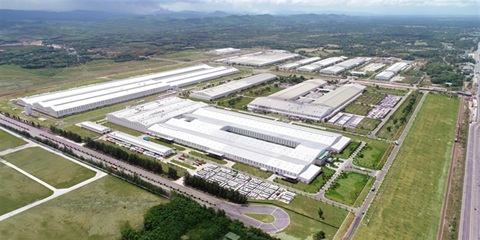
The central city has approved an investment proposal by Thailand’s WHA Group to develop infrastructure for the 400ha WHA Đà Nẵng Industrial Park project on two communes of Thăng Bình and Đồng Dương, with an investment of more than VNĐ2.7 trillion (US$105 million). The city said it approved WHA Industrial Development International's status as an investor in the project, which is expected to take place between 2027 and 2034.
VIETNAM ECONOMY INVESTMENT
MOBILE PHONE EXPORTS RISE 20% TO $51.8 BILLION IN FIRST NINE MONTHS
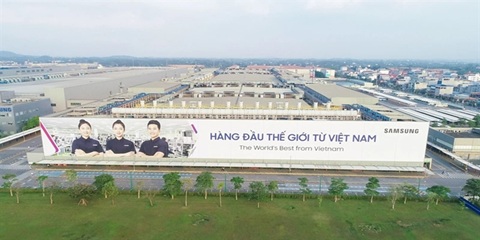
Exports of mobile phones and components rose 20 per cent year-on-year to nearly US$51.8 billion in the first nine months of 2026, with China, the US and Republic of Korea accounting for more than half of the total. Shipments to the three markets reached a combined $26.18 billion, or 50.6 per cent of total exports of the product group during the period, according to data from the Vietnam Department of Customs under the Ministry of Finance.

INFRASTRUCTURE / CONSTRUCTION / LOGISTIC / PORT
VIỆT NAM-CAMBODIA TRADE GATHERS PACE TOWARDS $20 BILLION TARGET
Trade between Việt Nam and Cambodia continues to grow, remaining a bright spot and a key pillar of bilateral cooperation as the two countries aim to raise two-way trade to US$20 billion in the coming years. After setting a record of more than $11.3 billion last year, bilateral trade reached about $8.7 billion in the first eight months of this year, up 8.3 per cent year on year.

VIETNAM ECONOMY INVESTMENT
FRUIT AND VEGETABLE EXPORTS POISED TO HIT $10 BILLION IN 2026
Fruit and vegetable exports are on track to reach nearly US$10 billion in 2026, after rising 19.9 per cent year on year to nearly US$7.4 billion in the first nine months, driven by strong seasonal demand and abundant tropical fruit supplies. The Ministry of Agriculture and Environment said the growth reflected stronger international demand for fresh produce and processed agricultural products.
Events Sponsors






















