Want to be in the loop?
subscribe to
our notification
Business News
CREDIT REDIRECTED TO PRODUCTION, BUSINESS
“After the steep rise in 2015, credit to construction, real estate and BOT projects can be levelled off this year due to both market conditions and the orientation from the central bank,” the analysts said.
The central bank this year would issue the amended Circular No 36, which is aimed at ensuring the safety of the banking system, curbing the risk of a real estate bubble and orienting the credit flow to production and business.
According to the draft amendments, banks and foreign bank branches must reduce the proportion of short-term funding from 60 per cent to 40 per cent and from 200 per cent to 80 per cent at non-banking financial institutions. It also requires an increase in risk ratios for receivables from real estate activities from 150 per cent to 250 per cent.
According to the central bank, since 2015, the real estate market has been in a period of recovery with the help of various support measures, including the VND30 trillion (US$1.3 billion) housing credit support package and the reduction of the ratio of short-term loans to medium- and long-term loans from 250 to 150 per cent, thus allowing banks to extend medium- and long-term credit.
Moreover, the increase in medium- and long-term outstanding credit will put pressure on interest rates. The International Monetary Fund has warned Viet Nam about its outstanding credit for real estate.
Deputy Chief Inspector of the State Bank of Viet Nam Pham Huyen Anh said that as long-term investment was needed for business and production activities, including bank operations, medium- and long-term loans must flow to safer purposes and follow the direction of the country’s socio-economic development plan.
According to VCBS, the upcoming policy to tighten lending on real estate will slow down credit growth, contributing to easing of liquidity, reducing pressure on interest rates and stabilising them in accordance with the government’s orientation.
“The amendment can cause a negative impact on commercial banks in the short term such as pressure on medium- and long-term capital mobilisation. However, in the long term, the banking system will become more safe and credit will flow to production and business that are short of capital despite creating high value for the economy,” the analysts said.
According to VCBS, the interest rate this year is under pressure as credit might continuously outstrip deposits while inflation is expected to be higher than last year at 2.5 per cent.
VCBS forecast that with a rise of less than 50 percentage points, the deposit interest rate this year would touch the cap of 5.5 per cent set for short-term tenors by the central bank.
Head of VCBS’s analysis division Tran Tuan Anh also expected the central bank to continuously keep a cap in order to control the lending interest rate and orient credit institutions to restructure their capital source with a rise in long-term deposits in context of rising needs for medium- and long-term loans.
Source: VNS
Related News
VIETNAM ECONOMY INVESTMENT
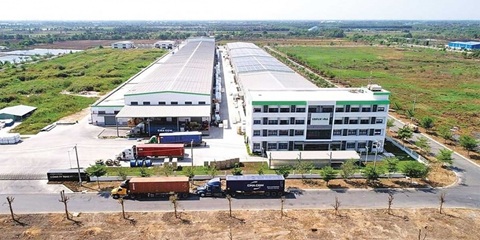
FOREIGN INVESTORS SEEKING A SYNCHRONISED MANUFACTURING ECOSYSTEM
Instead of focusing only on land costs and incentives as usual, foreign investors are seeking a synchronised manufacturing ecosystem, from stable power supply and logistics to shared infrastructure and the convenience of completing residence procedures for experts to serve their long-term investment in the country.
INFRASTRUCTURE / CONSTRUCTION / LOGISTIC / PORT
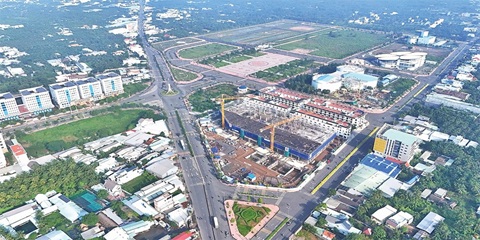
DONG THAP PROVINCE STEPS UP INDUSTRIAL EXPANSION AND INFRASTRUCTURE CONNECTIVITY
Accelerating public investment, strengthening inter-regional connectivity, and expanding industrial land are helping Dong Thap efficiently bolster competitiveness and drive economic growth. Following the 2025 merger of the former Dong Thap and Tien Giang provinces, the expanded Dong Thap province in the Mekong Delta faces mounting pressure to accelerate infrastructure development and strengthen connectivity among local economic zones, urban areas, industrial parks (IPs), and production centres.
PROPERTY / INDUSTRIAL ZONE
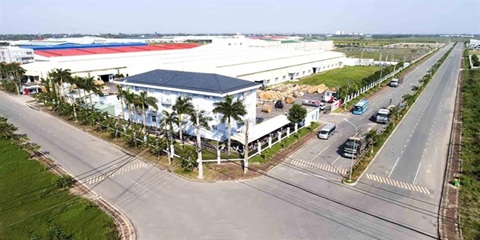
HCM CITY ATTRACTS US$5.7 BILLION INTO EXPORT PROCESSING AND INDUSTRIAL ZONES
HCM City attracted US$5.7 billion in domestic and foreign investment into its export processing and industrial zones during the first nine months of 2026. The figure exceeded the city's full-year target by 31 per cent, highlighting strong momentum in high-quality industrial investment under Resolution No.10-NQ/TW. Total investment reached 131 per cent of the 2026 target of $4.25 billion and represented a 29 per cent increase compared with the same period in 2025, according to the city's Export Processing and Industrial Zones Authority (HEPZA).

BANKING / FINANCE / INSURANCE / TAX
REMITTANCES TO HCM CITY RISE NEARLY 40% IN Q3
Remittances to HCM City reached more than US$2.83 billion in the third quarter of this year, up 39.5 per cent from the previous quarter and 3.6 per cent year-on-year. This was the first quarter showing positive annual growth this year, helping narrow the decline in remittance inflows over the first nine months. According to the State Bank of Vietnam (SBV)’s Regional Branch 2, remittances transferred to HCM City through credit institutions and economic organisations totalled $2.835 billion in Q3, an increase of more than $802 million from the previous quarter.
VIETNAM ECONOMY INVESTMENT
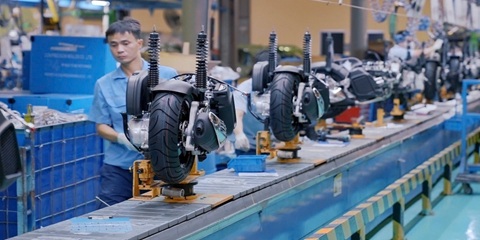
LOCALITIES REPORT BREAKTHROUGH RESULTS IN FDI IN FIRST NINE MONTHS
In Ho Chi Minh City, total registered capital reached $17.2 billion in the first nine months, up 4.2 times from the same period last year. The figure included more than $9.35 billion in newly registered capital and over $4.9 billion in additional capital for existing projects. Foreign investors also registered more than $2.9 billion through capital contributions and share purchases.

TECHNOLOGY
TECH SECTOR GROWTH OPENS UP OPPORTUNITIES FOR VIỆT NAM TO GO GLOBAL
The growth of the electronics, semiconductor and high-tech sectors worldwide is opening up a variety of opportunities for Vietnamese enterprises to integrate more deeply into the global supply chain. However, to become suppliers for these corporations, domestic enterprises must meet rigorous standards regarding quality, technology, productivity and order fulfilment capabilities.
Events Sponsors






















