Want to be in the loop?
subscribe to
our notification
Business News
CUSTOMS SECTOR FOCUSES ON CPTPP IMPLEMENTATION
Việt Nam’s customs sector will help businesses carry out procedures while implementing the Comprehensive and Progressive Agreement for Trans-Pacific Partnership (CPTPP), said a leader of General Department of Vietnam Customs.
Speaking at a workshop in HCM City yesterday, General Director of Vietnam Customs Nguyễn Dương Thái said the sector would reform administrative procedures, modernise customs, improve the business environment and enhance national competitiveness.
Thái said the Ministry of Finance had recently submitted to the Government a draft decree on preferential export tariffs and special preferential import tariffs under the CPTPP agreement for 2019-22.
“Our department is also finalising amendments and supplements to Circular 38/2018/TT-BTC on inspection and identification of goods origin, which is expected to be completed in June this year and will be submitted to the finance ministry for approval,” Thái added.
Thái said there were some notable issues brought by the deal, including the fact CPTPP members committed to eliminating 97 per cent to 100 per cent of tariff lines for goods imported from Việt Nam.
“In contrast, Việt Nam also pledged to eliminate tariffs on 86.5 per cent of tariff lines on imported goods from member countries within three years, but still maintains tariff quotas on some items such as sugar, eggs, salt and used cars,” Thái said.
He said the CPTPP inherited its advanced rules of origin and origin procedure from the Trans-Pacific Partnership, encouraging the integration of member countries and aiming to form a complete supply chain.
Meanwhile, Thái said the procedure for certification of origin would be simplified, as the deal allows the origin of goods to be certified by manufacturers, exporter or importers.
Traditionally, the certificate of origin must be issued by the competent authority of the exporting country or the manufacturing country, Thái said.
At the workshop, experts discussed tax policies and customs procedures as well as rules of origin of goods in the CPTPP.
Director of the finance ministry’s International Cooperation Department Vũ Như Thăng said that when Việt Nam joins the CPTPP, its exports to the 10 ten member countries would enjoy import tax incentives.
“This is a good condition for Vietnamese enterprises to access new markets, especially its advantageous products such as seafood, textiles, footwear and agricultural products. However, opportunities also come with challenges as businesses have to compete with goods of importing countries in Việt Nam,” Thăng said.
Trần Văn Công, Deputy Director of the Ministry of Agriculture and Rural Development’s Agro Processing and Market Development Authority, said Việt Nam needed to step up the building of a national standards and regulations system, trademarks and national brands.
Authorities needed to have a plan for the cuts of import and export taxes of members in CPTPP for Vietnamese goods so that enterprises could have timely response plans, Công said.
The CPTPP agreement gathers 11 member countries, namely Australia, Brunei, Canada, Chile, Japan, Malaysia, Mexico, New Zealand, Peru, Singapore and Việt Nam.
The deal took effect from December 30, 2018, while Việt Nam ratified the agreement on January 14, 2019.
Under the trade pact, Việt Nam’s GDP is expected to increase by 1.32 per cent annually, while export turnover may increase 4.04 per cent and import turnover by 3.8 per cent.
Source: VNS
Related News
MEMBER CORNER / PROMOTIONS
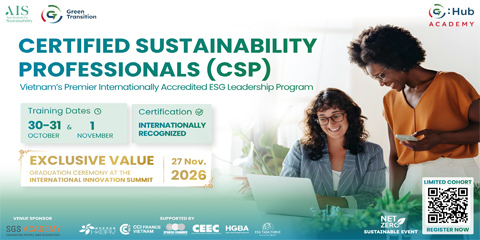
HCMC | CERTIFIED SUSTAINABILITY PROFESSIONAL (CSP) TRAINING | REGISTRATION OPEN
As sustainability becomes deeply embedded in corporate strategy and supply-chain operations across Vietnam, Hong Kong Business Association Vietnam is pleased to endorse the upcoming Certified Sustainability Professional (CSP) training program by the Asia Institute for Sustainability (AIS) - a premier internationally recognized ESG credential in Vietnam.
VIETNAM ECONOMY INVESTMENT
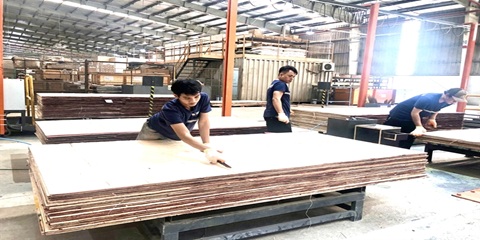
HCM CITY SAYS HOW IT PLANS TO ACHIEVE 10-11% ANNUAL EXPORT GROWTH FOR REST OF DECADE
The southern economic hub aims to strengthen its role as the country’s largest import-export centre while developing into a regional transhipment centre in Southeast Asia, supported by green and digital transformation and a circular economy. HCM City has outlined measures to expand production capacity, cut logistics costs, diversify export markets, and help businesses meet increasingly stringent international standards as it targets average annual export growth of 10-11 per cent through 2030.
VIETNAM ECONOMY INVESTMENT
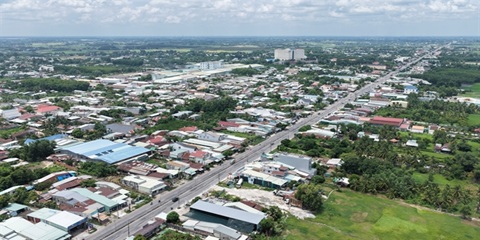
HCM CITY LEADS ECONOMIC RESTRUCTURING IN SOUTHEAST REGION
According to Associate Professor, Dr Vũ Tuấn Hưng, director of the Institute of Social Sciences of the Southern Region, the Southeast is a strategically important socio-economic space in Việt Nam’s development given its advantages in location, industry, trade, services, logistics, science and technology, urbanisation and human resources.
TECHNOLOGY
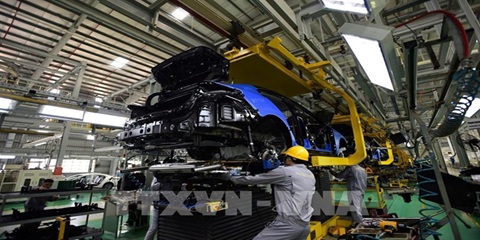
DIGITAL TRANSFORMATION TURNED INTO PRACTICAL TOOLS FOR PEOPLE, BUSINESSES
Việt Nam is moving its digital transformation agenda beyond policy frameworks and individual technology platforms towards practical applications that address everyday needs, as authorities seek measurable outcomes from science, technology and innovation. Under Politburo Resolution No. 57-NQ/TW issued on December 22, 2024, the implementation is increasingly shifting from simply completing assigned tasks towards developing concrete products and services for citizens and businesses.
TECHNOLOGY
APPLYING TECHNOLOGY FOR ECONOMIC TRANSFORMATION
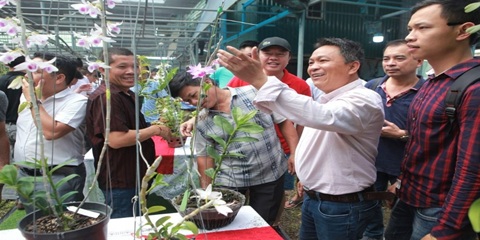
Having completed its new rural development program, Hanoi is shifting its focus toward improving development quality and building smart, sustainable rural areas. The transformation of Dong La orchid-growing village in An Khanh, a western commune of Hanoi, shows how digital technology is becoming a driver of production, market expansion, and higher incomes for local residents.

MEMBER CORNER / PROMOTIONS
VIGLACERA HONORED AS THE "LEADING GREEN INDUSTRIAL REAL ESTATE DEVELOPER 2026"
Organized by the Vietnam Investment Review, this prestigious awards program recognizes industry pioneers advancing eco-industrial parks, clean energy transition, and rigorous ESG standards. Outperforming competitors through a rigorous evaluation, Viglacera Corporation – JSC proudly ranked among the Top 5 highest-positioned enterprises in the Leading Green Industrial Real Estate Developers 2026 category, reinforcing its premier position in Vietnam’s industrial real estate sector.
Events Sponsors






















