Want to be in the loop?
subscribe to
our notification
Business News
DEEP C IMPLEMENTS LARGE-SCALE ECO-INDUSTRIAL PARK MODEL
Since 2020, with financial support from the Swiss government, the Ministry of Planning and Investment has coordinated with the UN Industrial Development Organization to implement a project to implement eco-IPs in Vietnam according to the approach from the Global Eco-IP Programme. DEEP C was selected as one of the pilot IPs to join the programme.
On August 21, the project’s technical support team conducted a resource efficiency and clean production (RECP) assessment for 19 enterprises and factories at DEEP C.
The team found that there were 139 RECP opportunities related to electricity, fossil fuel, and water saving at DEEP C IZs. The zones have availed of 53 RECP opportunities, equal to 38 per cent, and envisage to implement 33 others.
The company currently encompasses five such zones engaging 3,400 hectares of land located in the northern city of Haiphong and the neighbouring province of Quang Ninh. These areas are seamlessly connected, creating a large ecosystem to apply the eco-IP model, attracting more than 170 projects in production and logistics with capital reaching over $7.5 billion.
Assessment results found that DEEP C had saved over $800,000 per year from implemented and planned RECP solutions, with a total potential savings of $2.56 million per year, and reduced electricity consumption by 1,828MWh per year. This included renewable energy opportunities, with a total potential savings reaching 27,950MWh per year.
DEEP C also saved 5,550 gigajoule (GJ) per year out of a total potential of 105,193GJ per year; reduced water consumption by over 90,300cu.m per year out of a total potential of 122,300cu.m per year; and reduced greenhouse gas emissions by 1,500 tonnes out of a total potential of 28,300 tonnes CO2 per year.
The cluster achieved almost half of the indicators of the international framework for eco-IPs in 2020. Leveraging the project support, by the end of 2023, it had achieved 83 per cent of the indicators of the international framework for eco-IPs and has the potential to reach 100 per cent in the forthcoming years.
Last year, 15 customers in DEEP C IZs implemented RECP solutions to efficiently use water resources and optimise energy. These efforts saved approximately 5.8 million kWh of electricity, 90,000cu.m of water, and reduced 10,588 tonnes of CO2 equivalent.
For example, tesa Haiphong Co., Ltd., a secondary investor in DEEP C IZ, was the first unit in the complex to successfully build wadi concepts in the infrastructure area. A wadi is a dry riverbed or valley that helps mitigate flood effects amid bad weather.
“The journey to an eco-IP is not an easy one, but one of hard work, seriousness, and great responsibility to the community. It is a difficult task, requiring not only perseverance, effort and time but also finance,” said Bruno Jaspaert, CEO of DEEP C IZs.
“The difference between conventional and sustainable investment is the time factor. Therefore, we hope that the Vietnamese government can consider preferential policies for eco-IPs, such as extending land lease terms for infrastructure investors who successfully build them,” he added.
Meanwhile, in July, DEEP C published its latest annual sustainability report, which serves as an important tool for measuring, monitoring, evaluating, and planning sustainable development strategies for its industrial zones. It was also the first industrial zone developer in Vietnam to apply international reporting standards, making operations transparent and setting a clear sustainable development roadmap.
“Currently, Vietnam is not ready to meet these standards fully. When investors come to DEEP C, many parts of the work that we have prepared for them, so they can include that content in their sustainability report. The key point is investors do not come to DEEP C because we offer the cheapest land rental price,” Jaspaert said.
“Investors come to us without having to negotiate on price reduction, they come because we are greener, we meet the requirements that investors are looking for.”
DEEP C has implemented carbon certification and sustainable development initiatives, and investors just need to focus on production. Investors can consider participating in DEEP C initiatives such as registering to participate in a renewable energy programme, or participating in DEEP C Farm project, or waste recycling and reprocessing chain, said Jaspaert.
Source: VIR
Related News
INFRASTRUCTURE / CONSTRUCTION / LOGISTIC / PORT
VIỆT NAM-CAMBODIA TRADE GATHERS PACE TOWARDS $20 BILLION TARGET
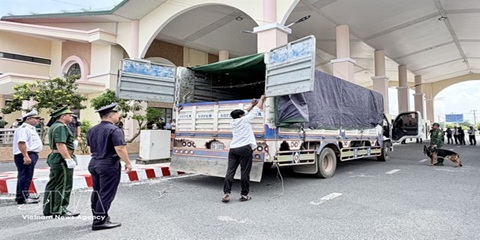
Trade between Việt Nam and Cambodia continues to grow, remaining a bright spot and a key pillar of bilateral cooperation as the two countries aim to raise two-way trade to US$20 billion in the coming years. After setting a record of more than $11.3 billion last year, bilateral trade reached about $8.7 billion in the first eight months of this year, up 8.3 per cent year on year.
TECHNOLOGY
AI BEGINNING TO RESHAPE RECRUITMENT CRITERIA
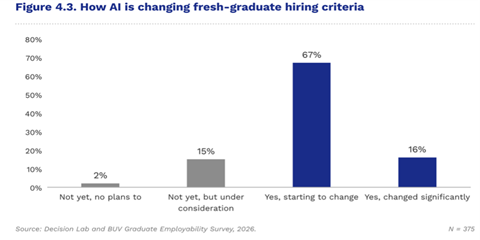
Digital literacy is the only capability area in which fresh graduates meet employers’ expectations, according to a new report. Yet, it is also the standard rising fastest, as businesses increasingly expect new hires to use AI effectively in the workplace. Some 83 per cent of employers say AI has changed, or is beginning to change, their hiring criteria, while 94 per cent report higher expectations for digital and AI capabilities than they had two to three years ago.
INFRASTRUCTURE / CONSTRUCTION / LOGISTIC / PORT
ĐÀ NẴNG GREEN-LIGHTS US$105 MILLION THAI DEVELOPMENT DEAL
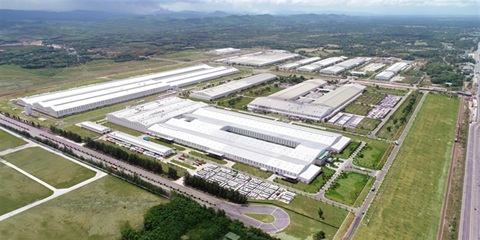
The central city has approved an investment proposal by Thailand’s WHA Group to develop infrastructure for the 400ha WHA Đà Nẵng Industrial Park project on two communes of Thăng Bình and Đồng Dương, with an investment of more than VNĐ2.7 trillion (US$105 million). The city said it approved WHA Industrial Development International's status as an investor in the project, which is expected to take place between 2027 and 2034.
VIETNAM ECONOMY INVESTMENT
MOBILE PHONE EXPORTS RISE 20% TO $51.8 BILLION IN FIRST NINE MONTHS
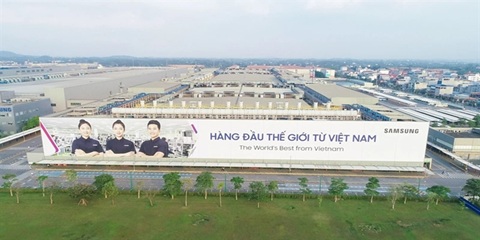
Exports of mobile phones and components rose 20 per cent year-on-year to nearly US$51.8 billion in the first nine months of 2026, with China, the US and Republic of Korea accounting for more than half of the total. Shipments to the three markets reached a combined $26.18 billion, or 50.6 per cent of total exports of the product group during the period, according to data from the Vietnam Department of Customs under the Ministry of Finance.
VIETNAM ECONOMY INVESTMENT
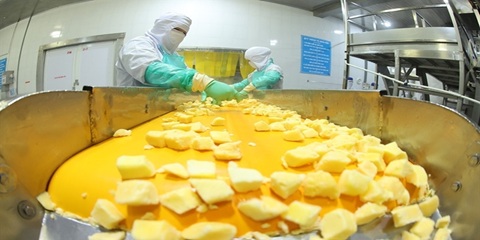
FRUIT AND VEGETABLE EXPORTS POISED TO HIT $10 BILLION IN 2026
Fruit and vegetable exports are on track to reach nearly US$10 billion in 2026, after rising 19.9 per cent year on year to nearly US$7.4 billion in the first nine months, driven by strong seasonal demand and abundant tropical fruit supplies. The Ministry of Agriculture and Environment said the growth reflected stronger international demand for fresh produce and processed agricultural products.
GARMENT / TEXTILE
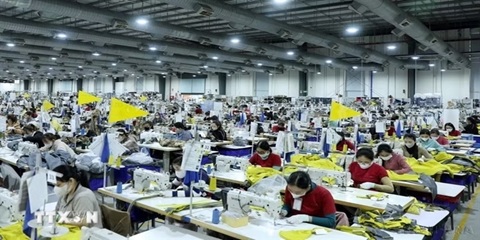
TEXTILE EXPORTS FACE DUAL CHALLENGES OF SUSTAINING ORDERS AND BOOSTING EFFICIENCY AMID GROWING COMPETITION
Data shows that the textile and garment sector maintained its growth momentum in the first nine months of this year. The industry's total export turnover reached an estimated US$35.721 billion in the first nine months of this year, up 3.3 per cent year-on-year. Despite posting encouraging export figures, Vietnamese textile and garment enterprises continue to navigate unpredictable market variables.
Events Sponsors






















