Want to be in the loop?
subscribe to
our notification
Business News
DEEP C INDUSTRIAL ZONES - STRONG MAGNETISM TO FOREIGN INVESTORS
As among the most advantageous industrial zones in Hai Phong city, DEEP C industrial zones are located adjacent to the Hanoi-Hai Phong-Quang Ninh Expressway and to Lach Huyen International Port (capable of accommodating ships of up to 40,000 DWT). DEEP C industrial zones have synchronous infrastructure, attractive investment incentives, a friendly investment environment and reliable and conscientious support which has produced a strong appeal to investors, especially foreigners.

Focused investment
Mr. Bruno Jaspaert, General Director of DEEP C, said, DEEP C was formerly known as Dinh Vu Industrial Zone (DVIZ). Over 23 years of development, DEEP C has turned Dinh Vu - Cat Hai Peninsula from a deserted swamp into a modern industrial zone with more than 100 FDI investors from many countries like Japan, South Korea, the United States and Germany. Currently, the industrial zone has now expanded, from an original area of 161 ha to more than 3,000 ha to form DEEP C Industrial Zones. Therefore, Dinh Vu Industrial Zone today is also known as “DEEP C Hai Phong I”.
With a well-prepared plan, DEEP C has experienced a significant change. Previously, more than 50% of investors in DEEP C Hai Phong I were Vietnamese, but most tenants are now foreign investors. So, what matters is how to attract FDI projects. In addition to land, they need support services for sustainable development. Therefore, what convinces FDI investors is the current infrastructure system and services that DEEP C can put in place to meet development needs in 20-30 years. Apart from the land fund to attract industrial investors, DEEP C also reserves land for green spaces, plans to grow mangrove forests in that region and plans to use renewable electricity for manufacturing in the industrial zones.
Positive effects
As soon as DEEP C Hai Phong I, covering 541 ha, was planned and its infrastructure invested, many investors came to study the location. To date, DEEP C Hai Phong I has almost leased out its rentable land to more than 100 projects. The remaining area of 10-12 hectares was also registered by investors. In DEEP C Hai Phong I, the petrochemical section has attracted 30 projects engaged in different fields like chemical, lubricant and LPG storage facilities to form a fuel supply center for resident projects. With a system of liquid cargo jetties designed to receive vessels of 10,000 - 20,000 DWT, tenants in the petrochemical section can directly use this facility and pipe racks for chemical and petrochemical trading. This is an attractive feature of DEEP C Hai Phong I. The unique idea of a shared liquid cargo jetty system not only makes DEEP C different from other industrial zones, but also helps tenants save costs and resources as they do not need to invest in building their own facilities.
Mr. Bruno Jaspaert added that DEEP C is focusing on developing DEEP C Hai Phong II (645 ha) in Nam Dinh Vu Peninsula, directly connected to Lach Huyen deep-water port and located in the center of Dinh Vu-Cat Hai Economic Zone. This is a general economic zone - a multi-sector marine economic center that meets social and economic development needs of Hai Phong City, the northern coastal region and the whole country. As a result, DEEP C Hai Phong II is attracting a new FDI wave, particularly automobile and electronic equipment manufacturing projects and different production complexes. In fact, Hai Phong has a lot of potential to become a "high-tech electronics center" as it lies near the south of China and easily imports materials from Guangdong and Shenzhen of China for product assembling in Hai Phong and exports to other countries in the world through Lach Huyen deep-water port. In the next three years, there will be a strong FDI inflow in electronics here.
DEEP C Hai Phong III, covering 520 ha in the Lach Huyen Port area, is likely to become an international logistics center for cargo import and export. Therefore, DEEP C is planning to invest in constructing a bulk terminal to connect with Cat Ba area. That development may take many years but a potential FDI investor is studying the site and may start investing early next year. In addition, DEEP C pays attention to investing in infrastructure for industrial zone development in Kien Thuy district, a component of Hai Phong industrial zone development plan.
Mr. Bruno Jaspaert frankly said, “Despite the great support of Hai Phong City in the past time, I hope that the city will have more reforms and innovation in the coming time, including investing in bonded warehouses, simplifying customs procedures, developing and attracting high-quality human resources, attracting international universities to invest in the city, improving education and training quality, and increasing power supply for manufacturing in industrial parks to make Hai Phong a modern industrial and logistics center of the region and the country, as per Resolution 45/NQ-TW of the Politburo.”
23 years of continuous innovation and development is a testament to DEEP C’s outstanding efforts to generate a friendly investment environment, provide reliable and dedicated support for partners to do business here and actively contribute to local socioeconomic development.
Source: VCCI
Related News
INFRASTRUCTURE / CONSTRUCTION / LOGISTIC / PORT
VIỆT NAM-CAMBODIA TRADE GATHERS PACE TOWARDS $20 BILLION TARGET
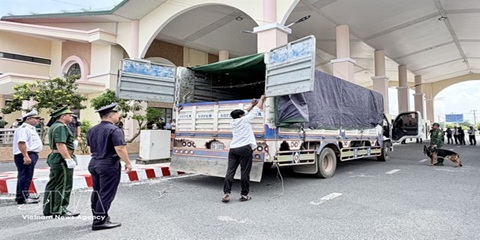
Trade between Việt Nam and Cambodia continues to grow, remaining a bright spot and a key pillar of bilateral cooperation as the two countries aim to raise two-way trade to US$20 billion in the coming years. After setting a record of more than $11.3 billion last year, bilateral trade reached about $8.7 billion in the first eight months of this year, up 8.3 per cent year on year.
TECHNOLOGY
AI BEGINNING TO RESHAPE RECRUITMENT CRITERIA
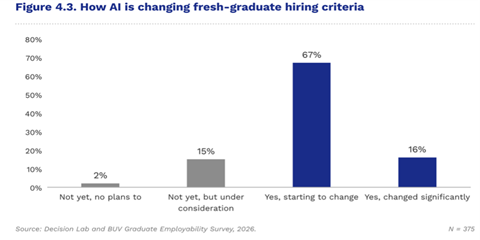
Digital literacy is the only capability area in which fresh graduates meet employers’ expectations, according to a new report. Yet, it is also the standard rising fastest, as businesses increasingly expect new hires to use AI effectively in the workplace. Some 83 per cent of employers say AI has changed, or is beginning to change, their hiring criteria, while 94 per cent report higher expectations for digital and AI capabilities than they had two to three years ago.
INFRASTRUCTURE / CONSTRUCTION / LOGISTIC / PORT
ĐÀ NẴNG GREEN-LIGHTS US$105 MILLION THAI DEVELOPMENT DEAL
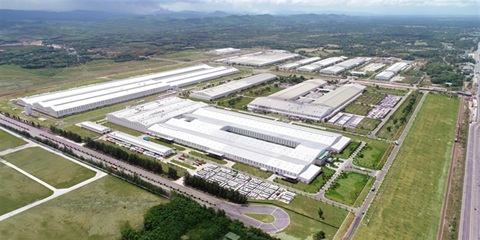
The central city has approved an investment proposal by Thailand’s WHA Group to develop infrastructure for the 400ha WHA Đà Nẵng Industrial Park project on two communes of Thăng Bình and Đồng Dương, with an investment of more than VNĐ2.7 trillion (US$105 million). The city said it approved WHA Industrial Development International's status as an investor in the project, which is expected to take place between 2027 and 2034.
VIETNAM ECONOMY INVESTMENT
MOBILE PHONE EXPORTS RISE 20% TO $51.8 BILLION IN FIRST NINE MONTHS
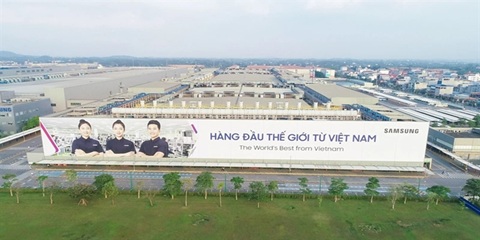
Exports of mobile phones and components rose 20 per cent year-on-year to nearly US$51.8 billion in the first nine months of 2026, with China, the US and Republic of Korea accounting for more than half of the total. Shipments to the three markets reached a combined $26.18 billion, or 50.6 per cent of total exports of the product group during the period, according to data from the Vietnam Department of Customs under the Ministry of Finance.
VIETNAM ECONOMY INVESTMENT
FRUIT AND VEGETABLE EXPORTS POISED TO HIT $10 BILLION IN 2026
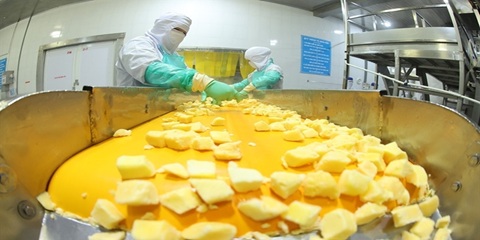
Fruit and vegetable exports are on track to reach nearly US$10 billion in 2026, after rising 19.9 per cent year on year to nearly US$7.4 billion in the first nine months, driven by strong seasonal demand and abundant tropical fruit supplies. The Ministry of Agriculture and Environment said the growth reflected stronger international demand for fresh produce and processed agricultural products.
GARMENT / TEXTILE
TEXTILE EXPORTS FACE DUAL CHALLENGES OF SUSTAINING ORDERS AND BOOSTING EFFICIENCY AMID GROWING COMPETITION
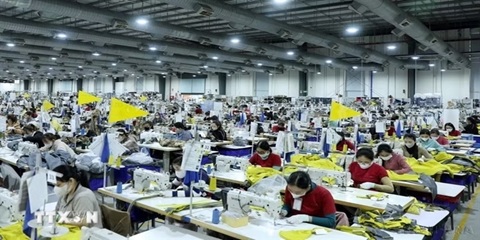
Data shows that the textile and garment sector maintained its growth momentum in the first nine months of this year. The industry's total export turnover reached an estimated US$35.721 billion in the first nine months of this year, up 3.3 per cent year-on-year. Despite posting encouraging export figures, Vietnamese textile and garment enterprises continue to navigate unpredictable market variables.
Events Sponsors






















