Want to be in the loop?
subscribe to
our notification
Business News
DEVELOPERS MANIPULATE HOUSING FUND
Duc said that the trend had become popular since the Government relaxed conditions for low-income earners to lease or purchase affordable housing.
Few developers want to invest in low-cost housing because of low returns . This led the Government to offer incentives to get them involved in affordable housing, according to Kinh te & Do thi (Economic and Urban) newspaper.
In 2013, Viet Nam implemented a VND30 trillion (US$1.43 billion) national real-estate bailout package, offering preferential yearly interest of six per cent for low-income citizens to lease or buy homes.
The homes must measure less than 70 sq.m and cost less than VND15 million ($714 ) per sq.m.
There are also provisions allowing developers to get preferential loans to build the low-cost houses.
Since last November, low-income earners purchasing privately-built houses worth VND1.05 billion ($50,000 ) or less in approved urban projects have been entitled to financial assistance from the $1.43 billion national real-estate bailout programme.
Duc said that some developers undercharged for premises in written contracts so that they and the buyers qualified for the bailout package.
However, buyers still had to pay the real price of the premises.
Duc said that it was difficult to apprehend those committing the fraud as both parties colluded with each other to hide the real price.
Violations were recently detected in high-end housing projects, where the contract prices written down were much lower than they should have been.
Last week, the media reported that tens or billions of Vietnamese dong from the bailout package had been misused by home buyers and developers circumventing the law.
A home buyer in Ha Noi's Ha Dong District said that he spent almost VND1.2 billion ($55,000 ) to buy a 61sq.m apartment with a dining room, two bedrooms and two toilets, but the contract only showed VND 590 million ($27,000).
He later paid the extra money to the developer.
He said that the developer advised him to do this to take advantage of the bailout programme.
Vice chairman of the Civil Engineering Federation, Pham Sy Liem, said it was possible that home sellers, buyers and banks were all involved in the disbursement of preferential loans under real-estate bailout programme.
He said that banks were legally bound to take final responsibility for checking for fraud because it was their job to assess projects and decide on whether to make loans.
Nguyen Thanh Ha, a lawyer with SBLaw, said the Construction Ministry had issued circular 07/2013/TT-BXD that outlines punishment for those defrauding the scheme.
It states that individuals and organisations found cheating will be fined, forced to return their loans and terminate their credit contract with banks.
Source: VIR
Related News

INFRASTRUCTURE / CONSTRUCTION / LOGISTIC / PORT
VIỆT NAM-CAMBODIA TRADE GATHERS PACE TOWARDS $20 BILLION TARGET
Trade between Việt Nam and Cambodia continues to grow, remaining a bright spot and a key pillar of bilateral cooperation as the two countries aim to raise two-way trade to US$20 billion in the coming years. After setting a record of more than $11.3 billion last year, bilateral trade reached about $8.7 billion in the first eight months of this year, up 8.3 per cent year on year.
TECHNOLOGY
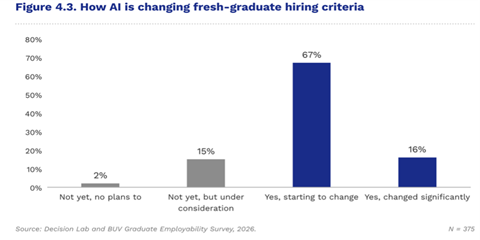
AI BEGINNING TO RESHAPE RECRUITMENT CRITERIA
Digital literacy is the only capability area in which fresh graduates meet employers’ expectations, according to a new report. Yet, it is also the standard rising fastest, as businesses increasingly expect new hires to use AI effectively in the workplace. Some 83 per cent of employers say AI has changed, or is beginning to change, their hiring criteria, while 94 per cent report higher expectations for digital and AI capabilities than they had two to three years ago.

INFRASTRUCTURE / CONSTRUCTION / LOGISTIC / PORT
ĐÀ NẴNG GREEN-LIGHTS US$105 MILLION THAI DEVELOPMENT DEAL
The central city has approved an investment proposal by Thailand’s WHA Group to develop infrastructure for the 400ha WHA Đà Nẵng Industrial Park project on two communes of Thăng Bình and Đồng Dương, with an investment of more than VNĐ2.7 trillion (US$105 million). The city said it approved WHA Industrial Development International's status as an investor in the project, which is expected to take place between 2027 and 2034.

VIETNAM ECONOMY INVESTMENT
MOBILE PHONE EXPORTS RISE 20% TO $51.8 BILLION IN FIRST NINE MONTHS
Exports of mobile phones and components rose 20 per cent year-on-year to nearly US$51.8 billion in the first nine months of 2026, with China, the US and Republic of Korea accounting for more than half of the total. Shipments to the three markets reached a combined $26.18 billion, or 50.6 per cent of total exports of the product group during the period, according to data from the Vietnam Department of Customs under the Ministry of Finance.

VIETNAM ECONOMY INVESTMENT
FRUIT AND VEGETABLE EXPORTS POISED TO HIT $10 BILLION IN 2026
Fruit and vegetable exports are on track to reach nearly US$10 billion in 2026, after rising 19.9 per cent year on year to nearly US$7.4 billion in the first nine months, driven by strong seasonal demand and abundant tropical fruit supplies. The Ministry of Agriculture and Environment said the growth reflected stronger international demand for fresh produce and processed agricultural products.
GARMENT / TEXTILE
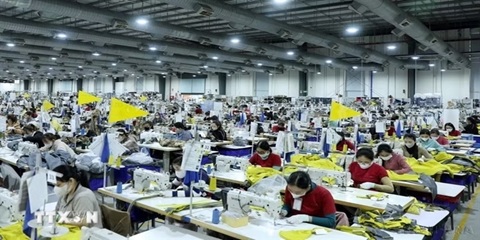
TEXTILE EXPORTS FACE DUAL CHALLENGES OF SUSTAINING ORDERS AND BOOSTING EFFICIENCY AMID GROWING COMPETITION
Data shows that the textile and garment sector maintained its growth momentum in the first nine months of this year. The industry's total export turnover reached an estimated US$35.721 billion in the first nine months of this year, up 3.3 per cent year-on-year. Despite posting encouraging export figures, Vietnamese textile and garment enterprises continue to navigate unpredictable market variables.
Events Sponsors






















