Want to be in the loop?
subscribe to
our notification
Business News
DEVELOPERS CALL FOR MORE PRACTICAL SUPPORT POLICIES
Real estate developers are advising the government to detail supportive measures for the sector after Directive No.11/CT-TTg dated March 4 on urgent objectives and solutions for assisting businesses facing difficulties and assurance of social welfare amid the COVID-19 pandemic was issued.
According to Nguyen Quang Tin, financial director of Development Investment Construction JSC, as the real estate market is currently devastated by the epidemic, the government should issue strong financial supporting policies to help real estate investors and developers to overcome this difficult time.
The government has issued a package of VND250 trillion ($10.87 billion) to support enterprises via the banking system, however, the business community is still waiting for detailed guidelines.
“Singapore’s government has issued financial support policies to enterprises, such as refunding a part of the income tax or giving tax relief and helping enterprises approach bank loans. Similar support measures would be very useful for us,” Tin said.
He added that policies to support enterprises must be synchronised for both enterprises and banks, since banks that are giving loans to developers should also be supported.
Meanwhile, Ngo Quang Phuc, general director of Phu Dong Group, said that to date, many developers have been running short on finances as they have been relying on revenue gained from previous years.
“The epidemic was an unexpected blow – it came as a shock to the market and froze our business,” Phuc said. “We suggest some financial incentives such as tax relief for developers, especially those in the hospitality sector, which has suffered the largest impact from the outbreak. They would react well to a 50 per cent reduction in VAT, corporate income tax, and import tax, while it would also go a long way if they reduced personal income tax for tourism workers based on the damage from the disease.”
“If the pandemic cannot be contained in the next few months, many developers will go bankrupt,” Phuc explained.
Kevin Hawkins, co-executive partner of ZICO Law Vietnam, told VIR that Vietnamese leaders should consider instructing the State Bank of Vietnam to adjust interest rates applied to real estate projects in the resort and retail segments as well as other segments which have also been adversely affected, to help lower investor losses.
“Moreover, the government should also encourage developers to restructure the payment schedules for residential projects to allow buyers more time to make payments, and delay land lease payments to help projects which have leased land arrangements,” Hawkins added.
The Ho Chi Minh City Real Estate Association (HoREA) suggested the government to forego five months of VAT and social insurance, and defer payments on credit loans.
HoREA chairman Le Hoang Chau said that proposals included halving land lease tax for real estate developers in 2020 and 2021 and extending the tax payment deadline until the second half of this year.
According to Nguyen Trong Ninh, head of the Housing and Real Estate Market Management Department under the Ministry of Construction (MoC), the ministry is building a special package for the real estate sector in tandem with the new government directive.
Even though figures in the package are not yet fixed, Ninh said the MoC is asking the government to pump more capital into the social and affordable housing segments.
“The MoC will propose the State Bank of Vietnam to compensate the difference in interest rates for social housing loans granted by commercial and social banks. This will help reduce interest rates provided to homebuyers,” said Ninh.
Former Deputy Minister of Natural Resources and Environment Dang Hung Vo, meanwhile, suggested competent bodies to support the dozens of thousands of realtors who were dismissed due to the downturn of the real estate market.
The Vietnam National Real Estate Association reported that around 500 transaction centres were closed in the first two months of this year.
Meanwhile, some local banks earlier this month adjusted interest rates for homebuyers with more flexible packages.
Some banks are expanding the loanable margin to up to 90 per cent of the assets’ value, from the previous rate of 70 per cent. Lending terms were also increased to a maximum of 35 years (with certain conditions) from the previous 20 years.
PVcomBank is one of the first lenders offering a financial package of VND10.5 trillion ($456.5 million) with interest rates from 7.49 per cent for manufacturing, consumption, car purchase, and house purchase to support enterprises and individual buyers during the pandemic.

Source: VIR
Related News

INFRASTRUCTURE / CONSTRUCTION / LOGISTIC / PORT
VIỆT NAM-CAMBODIA TRADE GATHERS PACE TOWARDS $20 BILLION TARGET
Trade between Việt Nam and Cambodia continues to grow, remaining a bright spot and a key pillar of bilateral cooperation as the two countries aim to raise two-way trade to US$20 billion in the coming years. After setting a record of more than $11.3 billion last year, bilateral trade reached about $8.7 billion in the first eight months of this year, up 8.3 per cent year on year.
TECHNOLOGY
AI BEGINNING TO RESHAPE RECRUITMENT CRITERIA
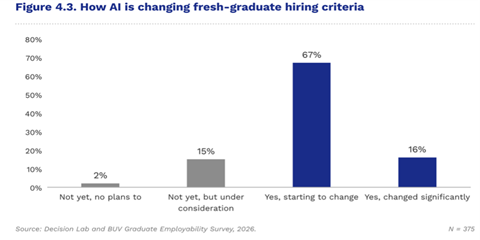
Digital literacy is the only capability area in which fresh graduates meet employers’ expectations, according to a new report. Yet, it is also the standard rising fastest, as businesses increasingly expect new hires to use AI effectively in the workplace. Some 83 per cent of employers say AI has changed, or is beginning to change, their hiring criteria, while 94 per cent report higher expectations for digital and AI capabilities than they had two to three years ago.

INFRASTRUCTURE / CONSTRUCTION / LOGISTIC / PORT
ĐÀ NẴNG GREEN-LIGHTS US$105 MILLION THAI DEVELOPMENT DEAL
The central city has approved an investment proposal by Thailand’s WHA Group to develop infrastructure for the 400ha WHA Đà Nẵng Industrial Park project on two communes of Thăng Bình and Đồng Dương, with an investment of more than VNĐ2.7 trillion (US$105 million). The city said it approved WHA Industrial Development International's status as an investor in the project, which is expected to take place between 2027 and 2034.

VIETNAM ECONOMY INVESTMENT
MOBILE PHONE EXPORTS RISE 20% TO $51.8 BILLION IN FIRST NINE MONTHS
Exports of mobile phones and components rose 20 per cent year-on-year to nearly US$51.8 billion in the first nine months of 2026, with China, the US and Republic of Korea accounting for more than half of the total. Shipments to the three markets reached a combined $26.18 billion, or 50.6 per cent of total exports of the product group during the period, according to data from the Vietnam Department of Customs under the Ministry of Finance.

VIETNAM ECONOMY INVESTMENT
FRUIT AND VEGETABLE EXPORTS POISED TO HIT $10 BILLION IN 2026
Fruit and vegetable exports are on track to reach nearly US$10 billion in 2026, after rising 19.9 per cent year on year to nearly US$7.4 billion in the first nine months, driven by strong seasonal demand and abundant tropical fruit supplies. The Ministry of Agriculture and Environment said the growth reflected stronger international demand for fresh produce and processed agricultural products.
GARMENT / TEXTILE
TEXTILE EXPORTS FACE DUAL CHALLENGES OF SUSTAINING ORDERS AND BOOSTING EFFICIENCY AMID GROWING COMPETITION
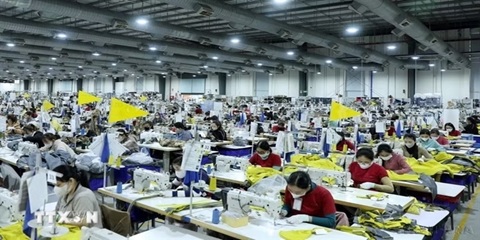
Data shows that the textile and garment sector maintained its growth momentum in the first nine months of this year. The industry's total export turnover reached an estimated US$35.721 billion in the first nine months of this year, up 3.3 per cent year-on-year. Despite posting encouraging export figures, Vietnamese textile and garment enterprises continue to navigate unpredictable market variables.
Events Sponsors






















