Want to be in the loop?
subscribe to
our notification
Business News
DEVELOPING THE CARBON MARKET IS KEY TO GREEN TRANSITION
Low-carbon economic development towards a circular economy is becoming an inevitable tendency in the framework of the green transition with the creation and development of carbon markets seen as an increasingly crucial tool.
The World Bank Group's Country Report on Climate and Development for Việt Nam in 2022 highlights that the effects of climate change cost the country roughly US$10 billion in 2020, approximately 3.2 per cent of GDP. By 2050, the entire economic expense associated with climate change could reach $523 billion.
The carbon market has been identified as a key solution for Việt Nam to reach its net zero goal in the near future, according to Phạm Việt Biên Cương, Director of the Centre for Environmental Protection and Response to Climate Change.
Global trade and investment are driving the development and acceleration of green standards, incorporating new requirements related to labour, the environment, sustainable development and the reduction of carbon emissions.
In addition, there is an increasing need for bilateral and international cooperation, as well as efforts related to green fields. Việt Nam has a great chance to achieve its green transformation objectives and establish its place in the world's green value chains at this pivotal juncture.
Cương also said that the basic principle of the market's operation was that polluters should compensate for their emissions into the atmosphere by exchanging and trading carbon credits.
Factories and manufacturing companies emit a certain amount of CO2. If they exceed the allowed level, they must buy more carbon credits. On the flip side, businesses emitting less than the limit can sell their extra carbon credits to those exceeding the limit, according to Cương.
The carbon credit market plays a vital role in helping enterprises and the country's economy shift from brown to green, lowering greenhouse gas emissions and boosting national GDP and company profits.
At a seminar last week about developing the carbon market, Nguyễn Minh Vũ, Deputy Foreign Minister, affirmed that green transformation was a new driving force for sustainable growth and a key strategy for Việt Nam to establish its position in the global green value chain.
The Organisation for Economic Cooperation and Development (OECD) highlighted the Vietnamese Government's efforts to promote green growth and sustainable development and expressed their impression of the country's commitment to net-zero emissions made at the 26th UN Climate Change Conference (COP26). They maintained that Việt Nam had enormous potential for creating a vibrant, effective, and high-quality carbon market.
To date, Việt Nam is one of the four nations with the highest number of investment projects registered under the clean development mechanism, having received 40.2 million carbon credits to date for 150 projects.
However, Việt Nam is facing many challenges in the carbon market construction and development process, such as a lack of legal framework, international cooperation, and limited awareness.
To deal with these problems, Việt Nam has issued a number of significant strategic initiatives on sustainable development and green growth, one of which is a development plan for instruments related to carbon pricing, particularly a market for compliant carbon.
Việt Nam intends to guide the implementation of domestic and international carbon credit exchange and offsetting mechanisms in accordance with the provisions of law and international treaties, accelerate the development of regulations on carbon credit management and greenhouse gas emission quota exchange activities, and pilot a carbon credit trading floor starting in 2025.
Source: VNS
Related News
MEMBER CORNER / PROMOTIONS
KNIC ENGAGES WITH GOVERNMENT AND HIGH-TECH BUSINESS COMMUNITIES IN CHINA
From Beijing to Shandong, KN Holdings and KN Industrial City are continuing to expand their engagement with government authorities, trade promotion organizations, and high-tech business communities in China. In Beijing, the delegation met with the Center for International Economic and Technological Cooperation under the Ministry of Industry and Information Technology (MIIT), exchanging perspectives on industrial and technology cooperation between the two markets.

VIETNAM ECONOMY INVESTMENT
VIETNAM’S TRADE TOPS $825 BILLION BY MID-SEPTEMBER
Figures released on September 21 showed goods trade reached nearly $55 billion in the first 15 days of September alone, bringing cumulative turnover since the beginning of the year to more than $825 billion. The strong growth reflects robust trade flows, with demand for consumer goods and production inputs remaining high.

TECHNOLOGY
VIỆT NAM'S BUSINESSES MOVE TOWARDS AI AGENTS
Việt Nam’s AI landscape is entering a new phase as businesses move beyond generative AI (GenAI) tools designed to assist human users towards autonomous AI, agentic AI and AI agents that can take action with limited supervision, experts have said. The shift comes as Việt Nam seeks to accelerate science and technology, innovation and digital transformation under Politburo Resolution 57-NQ/TW, issued on December 22, 2024.
GARMENT / TEXTILE
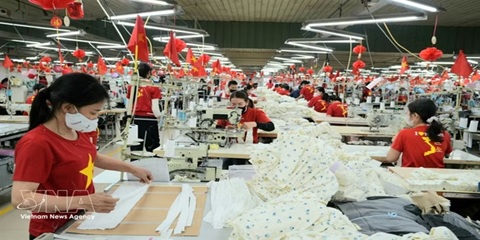
VIỆT NAM TARGETS $48 BILLION IN TEXTILE-GARMENT EXPORTS
Việt Nam’s textile and garment industry is facing both opportunities and challenges amid complex and unpredictable developments in the global market, prompting businesses to improve growth quality, optimise production costs and enhance adaptability in pursuit of an export turnover of about $48 billion this year. The target is considered an important milestone that requires concerted efforts from management agencies and the business community.
INFRASTRUCTURE / CONSTRUCTION / LOGISTIC / PORT
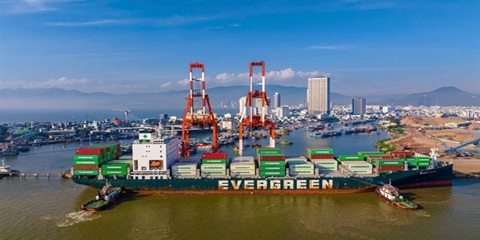
CUTTING LOGISTICS COSTS KEY TO BOOSTING EXPORTS
Reducing costs has become an increasingly urgent priority for import-export activities, particularly logistics costs, a conference in Hà Nội was told on Tuesday. According to Deputy General Director of the Ministry of Industry and Trade's Agency for Foreign Trade, Trần Thanh Hải, import-export activities has remained a bright spot for the economy in recent years, playing an important role and helping drive macroeconomic growth.
LEGAL UPDATE / POLICY
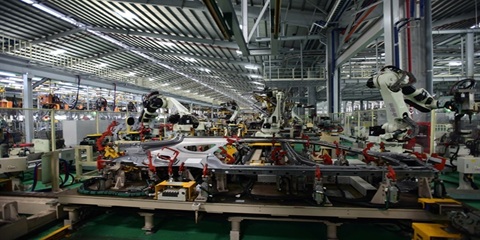
FLEXIBLE FISCAL POLICY HELPS DRIVE ECONOMIC GROWTH
Việt Nam’s fiscal policy has been implemented in a targeted expansionary manner since early 2026, helping maintain macroeconomic stability and supporting the country’s goal of achieving double-digit economic growth. According to the Ministry of Finance, State budget revenue in the first eight months of 2026 was estimated at VNĐ2.02 quadrillion (US$77.7 billion), equivalent to 80 per cent of the annual estimate and up 16 per cent year-on-year.
Events Sponsors






















