Want to be in the loop?
subscribe to
our notification
Business News
DIRECTING FDI INTO LARGE TRANSPORT INFRASTRUCTURE PROJECTS
Policies are a leverage to stimulate foreign direct investment (FDI) flows into large transport infrastructure projects, such as North-South Expressway or Long Thanh International Airport.
Seaport projects pushing ahead
Four months after since the first shipment in May 2018, the construction of the first and second container ports of Haiphong International Port (component B) with the total investment about $321 million has begun, hoping to attract more international shipping lines to the country.
The project is developed by Haiphong International Container Terminal Co., Ltd. (HICT), a joint venture between Saigon New Port, Japan’s Mitsui OSK Lines (MOL), Taiwan’s Wan Hai Lines (WHL), and Japan’s Itochu Corporation (ITO).
Haiphong International Port is the first deep-water port in the key economic region in North Vietnam, which is capable of receiving vessels up to 14,000 TEU and cargo ships up to 160,000 DWT. From this port, the import and export goods from North Vietnam can be directly transferred to Europe, America.
In addition, HICT’s project is only one of the projects attracting investment into port infrastructure, which is the leading segment of the transportation sector in terms of FDI attraction.
Nguyen Ngoc Dong, Deputy Minister of Transport, said that the investment in transportation and seaport management by world-leading corporations such as Hutchinson, PSA, DP World, and SSA has changed the shape of Vietnamese seaports, especially in Cai Mep-Thi Vai Port.
“This is a favourable foundation for Vietnamese seaports to become the link in the global supply chains of maritime corporations and thereby attract more foreign investors to Vietnam,” said Dong.
Beside seaports, another bright spot in FDI transportation attraction is logistics. Even though foreign ownership in the sector is still limited at 49-51 per cent at road, inland shipping, and air transport logistics companies, foreign investors still flock to Vietnam for its attractive trade opportunities.
The presence of foreign investors from Japan, South Korea, and Denmark in large logistics joint ventures is one of the key factors behind the improvement of the Logistics Performance Index ( LPI) from 64th out of 160 countries in 2016 to 39th in 2018 (survey of the World Bank).
The general FDI picture
Seaports and logistics are the rare sectors that successfully attract foreign capital into transportation. Sectors that are receiving less FDI include road infrastructure, railways, airports, and inland waterways.
Among these, the sector receiving the least is road infrastructure—an area with huge capital requirements, but mainly invested by state budget and domestic private investors.
According to the MoT, FDI into road development goes through different models, including BOT and PPP projects where foreign investors contribute capital and directly manage and exploit the completed project; where they hold the right to exploit the routes; or where they buyout domestic enterprises to replace them in the project.
Under these three formats, road infrastructure projects in Vietnam have come to the attention of foreign investors.
For example, Nexco (Japan) proposed a Build-Operate-Transfer (BOT) component project of Phap Van-Cau Gie Expressway, while Infrastructure Leasing & Financial Services Limited (IL&FS) from India wants to buy 70 per cent of the Hanoi-Haiphong Expressway BOT project and Vinci (France) offered to buy the rights to collect tolls on Cau Gie-Ninh Binh Expressway.
However, up to now, none of these projects have been awarded a contract.
In the railway sector, some investors from Russia and the Czech Republic proposed to co-operate with state-owned Vietnam Railways (VNR) to set up a joint venture to manufacture locomotives and wagons, but failed due to the limited export volumes.
“Transportation infrastructure projects require large capital, long time to breakeven, while we have no sufficient legal system and incentive policies, which lead to difficulties in attracting FDI,” the leader of the MoT explained.
According to the MoT, this is the bottleneck that needs to be solved to enhance FDI flows to large-scale infrastructure projects, such as the North-South Highway Project that has eight PPP (Public-Private-Partnership) components with a total investment of about $5 billion, the first stage of the $5.45 billion Long Thanh International Airport project, and the $58 billion North-South high-speed railway.
“With the creation of a PPP investment law, the development of a risk-sharing mechanism, the formation of a state support fund, and ensuring transparency are the keys to open up FDI flows into the transport sector,” the leader of the MoT shared.
Not only seaports and logistics, the development of other areas in the transport system still needs the efforts of authorities at all levels, as well as policies to encourage innovation.
Source: VIR
Related News
MEMBER CORNER / PROMOTIONS
HCMC | CERTIFIED SUSTAINABILITY PROFESSIONAL (CSP) TRAINING | REGISTRATION OPEN
As sustainability becomes deeply embedded in corporate strategy and supply-chain operations across Vietnam, Hong Kong Business Association Vietnam is pleased to endorse the upcoming Certified Sustainability Professional (CSP) training program by the Asia Institute for Sustainability (AIS) - a premier internationally recognized ESG credential in Vietnam.
VIETNAM ECONOMY INVESTMENT
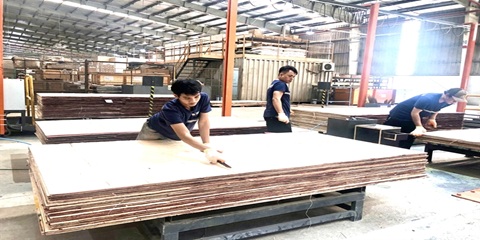
HCM CITY SAYS HOW IT PLANS TO ACHIEVE 10-11% ANNUAL EXPORT GROWTH FOR REST OF DECADE
The southern economic hub aims to strengthen its role as the country’s largest import-export centre while developing into a regional transhipment centre in Southeast Asia, supported by green and digital transformation and a circular economy. HCM City has outlined measures to expand production capacity, cut logistics costs, diversify export markets, and help businesses meet increasingly stringent international standards as it targets average annual export growth of 10-11 per cent through 2030.
VIETNAM ECONOMY INVESTMENT
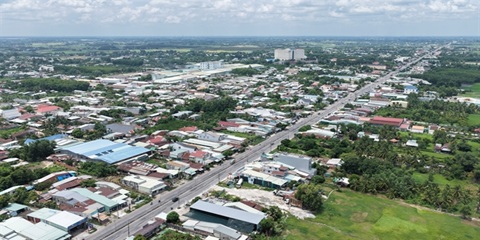
HCM CITY LEADS ECONOMIC RESTRUCTURING IN SOUTHEAST REGION
According to Associate Professor, Dr Vũ Tuấn Hưng, director of the Institute of Social Sciences of the Southern Region, the Southeast is a strategically important socio-economic space in Việt Nam’s development given its advantages in location, industry, trade, services, logistics, science and technology, urbanisation and human resources.
TECHNOLOGY
DIGITAL TRANSFORMATION TURNED INTO PRACTICAL TOOLS FOR PEOPLE, BUSINESSES
Việt Nam is moving its digital transformation agenda beyond policy frameworks and individual technology platforms towards practical applications that address everyday needs, as authorities seek measurable outcomes from science, technology and innovation. Under Politburo Resolution No. 57-NQ/TW issued on December 22, 2024, the implementation is increasingly shifting from simply completing assigned tasks towards developing concrete products and services for citizens and businesses.
TECHNOLOGY
APPLYING TECHNOLOGY FOR ECONOMIC TRANSFORMATION
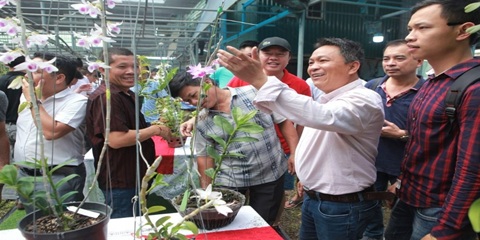
Having completed its new rural development program, Hanoi is shifting its focus toward improving development quality and building smart, sustainable rural areas. The transformation of Dong La orchid-growing village in An Khanh, a western commune of Hanoi, shows how digital technology is becoming a driver of production, market expansion, and higher incomes for local residents.
MEMBER CORNER / PROMOTIONS
VIGLACERA HONORED AS THE "LEADING GREEN INDUSTRIAL REAL ESTATE DEVELOPER 2026"
Organized by the Vietnam Investment Review, this prestigious awards program recognizes industry pioneers advancing eco-industrial parks, clean energy transition, and rigorous ESG standards. Outperforming competitors through a rigorous evaluation, Viglacera Corporation – JSC proudly ranked among the Top 5 highest-positioned enterprises in the Leading Green Industrial Real Estate Developers 2026 category, reinforcing its premier position in Vietnam’s industrial real estate sector.
Events Sponsors






















