Want to be in the loop?
subscribe to
our notification
Business News
DOMESTIC CAPITAL MARKET PRIORITIZED FOR GROWTH
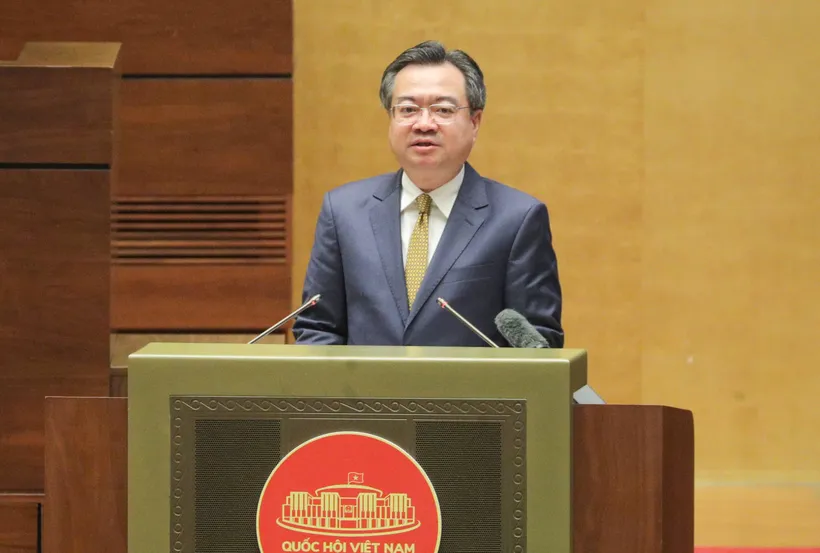
Nguyen Thanh Nghi, chairman of the Party Central Committee’s Commission for Policy and Strategy, speaks at the conference on April 13 - PHOTO: SGGPO
HCMC – Vietnam will prioritize developing its domestic capital market to raise an estimated VND38.5 quadrillion in long-term funds to achieve annual double-digit growth in 2026–2030, said Nguyen Thanh Nghi, Politburo member and chairman of the Party Central Committee’s Commission for Policy and Strategy.
Nguyen Thanh Nghi, who is also Secretary of the Party Central Committee, was speaking at a national hybrid conference on April 13 as he presented the key contents of the resolution adopted at the second plenum of the 14th Party Central Committee on Vietnam’s socio-economic development plan, national financial strategy, public debt management, and medium-term public investment for 2026-2030.
The total investment demand comprises about VND8.5 quadrillion from the state budget, accounting for 20–22% of total investment demand. The remaining capital is expected to come from multiple sources, reported local media.
Authorities plan to strengthen the domestic capital market to reduce reliance on bank credit. The strategy includes improving the role of international financial centers and free trade zones in attracting indirect investment and global funds. Measures also aim to maintain financial system stability and increase charter capital for state-owned commercial banks.
A comprehensive reform plan for the financial market is scheduled for completion in 2026. Plans also include modernizing the banking system, handling poor-performing banks, and introducing policies to attract international investment funds and diversify fund structures.
Fiscal targets for 2026 set a 10% increase in state budget revenue. Regular spending is to be cut by at least 10%, with an additional 5% in savings targeted. Authorities plan to issue government and local bonds, including project bonds, and mobilize official development assistance.
Efforts will focus on developing medium- and long-term capital markets and improving sovereign credit ratings and stock market classification to attract foreign portfolio investment.
Administrative reforms aim to cut processing time and compliance costs for procedures by 50% compared with 2025. At least 30% of conditional business lines are to be removed, along with unnecessary business conditions. Ministries will handle no more than 30% of administrative procedures within their sectors.
The plan calls for a legal review, expansion of effective pilot policies nationwide, and resolution of issues related to delayed projects, land use violations, and unused public assets before the 2024 Land Law takes effect.
Public investment will focus on key national projects with broad impact. The number of projects is to be reduced by at least 30% compared with the 2021–2025 period. Public investment is expected to play a leading role in attracting private capital through public-private partnerships.
Implementation across government agencies and local authorities is required to be timely, coordinated, and flexible to support the growth target.
Source: The Saigon Times
Related News

INFRASTRUCTURE / CONSTRUCTION / LOGISTIC / PORT
VIỆT NAM-CAMBODIA TRADE GATHERS PACE TOWARDS $20 BILLION TARGET
Trade between Việt Nam and Cambodia continues to grow, remaining a bright spot and a key pillar of bilateral cooperation as the two countries aim to raise two-way trade to US$20 billion in the coming years. After setting a record of more than $11.3 billion last year, bilateral trade reached about $8.7 billion in the first eight months of this year, up 8.3 per cent year on year.
TECHNOLOGY
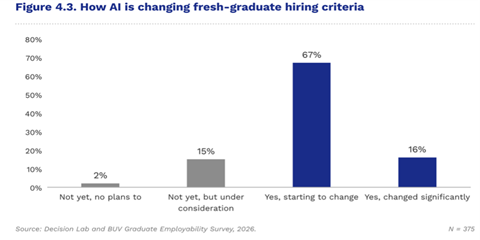
AI BEGINNING TO RESHAPE RECRUITMENT CRITERIA
Digital literacy is the only capability area in which fresh graduates meet employers’ expectations, according to a new report. Yet, it is also the standard rising fastest, as businesses increasingly expect new hires to use AI effectively in the workplace. Some 83 per cent of employers say AI has changed, or is beginning to change, their hiring criteria, while 94 per cent report higher expectations for digital and AI capabilities than they had two to three years ago.

INFRASTRUCTURE / CONSTRUCTION / LOGISTIC / PORT
ĐÀ NẴNG GREEN-LIGHTS US$105 MILLION THAI DEVELOPMENT DEAL
The central city has approved an investment proposal by Thailand’s WHA Group to develop infrastructure for the 400ha WHA Đà Nẵng Industrial Park project on two communes of Thăng Bình and Đồng Dương, with an investment of more than VNĐ2.7 trillion (US$105 million). The city said it approved WHA Industrial Development International's status as an investor in the project, which is expected to take place between 2027 and 2034.

VIETNAM ECONOMY INVESTMENT
MOBILE PHONE EXPORTS RISE 20% TO $51.8 BILLION IN FIRST NINE MONTHS
Exports of mobile phones and components rose 20 per cent year-on-year to nearly US$51.8 billion in the first nine months of 2026, with China, the US and Republic of Korea accounting for more than half of the total. Shipments to the three markets reached a combined $26.18 billion, or 50.6 per cent of total exports of the product group during the period, according to data from the Vietnam Department of Customs under the Ministry of Finance.

VIETNAM ECONOMY INVESTMENT
FRUIT AND VEGETABLE EXPORTS POISED TO HIT $10 BILLION IN 2026
Fruit and vegetable exports are on track to reach nearly US$10 billion in 2026, after rising 19.9 per cent year on year to nearly US$7.4 billion in the first nine months, driven by strong seasonal demand and abundant tropical fruit supplies. The Ministry of Agriculture and Environment said the growth reflected stronger international demand for fresh produce and processed agricultural products.
GARMENT / TEXTILE
TEXTILE EXPORTS FACE DUAL CHALLENGES OF SUSTAINING ORDERS AND BOOSTING EFFICIENCY AMID GROWING COMPETITION
Data shows that the textile and garment sector maintained its growth momentum in the first nine months of this year. The industry's total export turnover reached an estimated US$35.721 billion in the first nine months of this year, up 3.3 per cent year-on-year. Despite posting encouraging export figures, Vietnamese textile and garment enterprises continue to navigate unpredictable market variables.
Events Sponsors






















