Want to be in the loop?
subscribe to
our notification
Business News
DOMESTIC MOTORCYCLE MARKET BREAKS THROUGH IN Q1 OF 2025
A total of 673,055 motorcycles were sold in the first three months of 2025, signalling a rebound after a period of stagnation.

A showroom displays Yamaha models for sales in Hà Nội. — Photo of courtesy of xemayhonda.org
HÀ NỘI — The local motorcycle market is experiencing a significant recovery in the first quarter of 2025, with sales surpassing 673,000 units, reflecting an impressive increase of 11.48 per cent compared to the same period last year.
A total of 673,055 motorcycles were sold in the first three months of 2025, signalling a rebound after a period of stagnation.
The introduction of electric motorcycles and innovative promotional strategies, have not only boosted sales but also reshaped consumer preferences, opening new avenues for growth among major brands and electric vehicle manufacturers.
The Vietnam Association of Motorcycle Manufacturers (VAMM) reports that its five members—Honda Vietnam, Yamaha Motor Vietnam, Piaggio Vietnam, Vietnam Suzuki, and SYM Vietnam—now offer nearly 100 models. These range in price from VNĐ18 million to over VNĐ1.2 billion (US$720-$48,000), catering to a wide array of consumer needs, from students and workers, to enthusiasts of higher-powered motorcycles.
This diversification is crucial for attracting different segments of the market and sustaining growth in the competitive motorcycle landscape.
Honda Vietnam remains the dominant player in the market, commanding over 80 per cent of market share. In March 2025, the company sold 202,546 vehicles domestically, marking a 50.9 per cent increase compared to the same month last year. This surge underscores the brand's strength and the preference of Vietnamese consumers.
A key factor driving growth in the Vietnamese motorbike market during the first quarter of 2025 is the diversity in models and pricing. Members of the Vietnam Association of Motorcycle Manufacturers (VAMM) are not only launching new models, but also implementing flexible promotional and after-sales policies. These strategies have facilitated impressive sales, contributing to an overall growth rate of 11.48 per cent in the first quarter.
Sustainable consumption trends
The electric motorbike market in Việt Nam is gaining momentum, driven by sustainability and environmental concerns. Key players like VinFast, Pega and Yadea are diversifying their offers, contributing to significant growth in this segment.
Experts predict that with the right policies, electric motorbikes could capture up to 75 per cent of the Vietnamese market by 2035. This presents a promising future for the local electric vehicle industry.
Yamaha Vietnam has launched the Neo's model, with sales currently limited. Prices have dropped from VNĐ49 million to VNĐ33 million to boost demand. Meanwhile, Honda Vietnam introduced the ICON e: series, aimed at students, priced between VNĐ26.9 million and VNĐ27.3 million. They also offer a battery rental option at VNĐ350,000 per month and have begun deliveries in Hanoi. The CUV e: model is available for rent at VNĐ1.5 million per month.
Although it still faces many challenges in terms of higher initial costs, consumer awareness and habits, industry experts believe that the two-wheeled electric vehicle market in Việt Nam has great potential.
Electric motorbikes are increasingly popular with consumers, thanks to their environmental friendliness and low operating costs. Traditional motorbikes, although still maintaining their appeal, will face increasingly fierce competition from electric vehicles in the future.
Based on sales reports for the first quarter of 2025 and current consumption trends, industry experts predict that the Vietnamese motorbike market is expected to continue to maintain its growth momentum in 2025. However, this development will not only come from traditional motorbikes, but also have the strong presence of electric motorbikes, creating a remarkable transformation in the domestic motorbike industry and bringing both opportunities and challenges for manufacturers in meeting the increasingly high and diverse needs of consumers. — VNS
Source: VNS
Related News
VIETNAM ECONOMY INVESTMENT
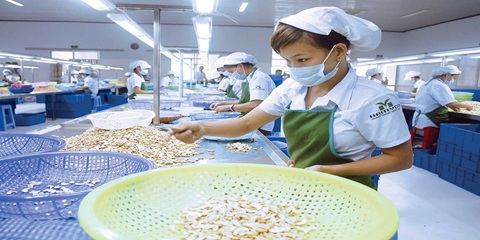
VIETNAMESE COMPANIES OPTIMISTIC ON INTERNATIONAL GROWTH
Vietnamese businesses are among the most confident about the outlook for international trade, according to HSBC’s Global Trade Pulse Survey 2026, released on November 16. The survey captures the views of 10,000 senior business leaders across 26 markets on trade, tariffs, supply chains, and technology. Findings show that 94 per cent of Vietnamese businesses expect their international trade to grow over the next two years. Vietnam ranks joint top in the survey with the Philippines, compared with 86 per cent globally.
TECHNOLOGY
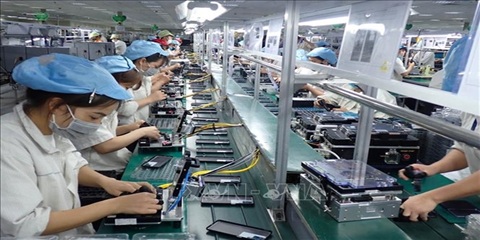
VIỆT NAM'S DIGITAL TECHNOLOGY INDUSTRY REVENUE SURGES 53% TO $254.6B
Việt Nam's digital technology industry generated an estimated US$254.6 billion in revenue in the first 10 months of 2026, up 53 per cent from a year earlier, while exports rose 46.2 per cent to $212 billion, the Ministry of Science and Technology said in its latest report. According to the report, hardware and electronics exports reached an estimated $30.681 billion in October, up 108 per cent from the same month last year.

CHARITY / EXHIBITION / OTHER EVENTS
BOCHK ‧ HKPC FUTURE VIETNAM: HANOI BUSINESS DELEGATION ON DIGITAL TRANSFORMATION AND INDUSTRIAL INNOVATION
Interested in exploring Vietnam’s latest developments in digital transformation, technology adoption and industrial innovation? Organised by the Hong Kong Productivity Council (HKPC) and fully supported by Bank of China (Hong Kong) Limited, the "Future Vietnam: Hanoi Business Delegation on Digital Transformation and Industrial Innovation” will feature visits to leading high-tech enterprises across Vietnam and engage with local chambers of commerce, industry organisations and associations. Join us to expand your high-value business network and seize emerging opportunities in the ASEAN market!
GARMENT / TEXTILE
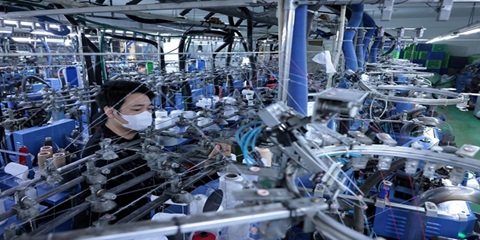
TEXTILE, GARMENT FIRMS REFORM TO MEET CPTPP ORIGIN RULES
Vietnamese textile and garment manufacturers are aggressively restructuring their supply chains and diversifying material sources to unlock untapped tariff benefits. To capitalise on the Comprehensive and Progressive Agreement for Trans-Pacific Partnership (CPTPP), companies are racing to align with the pact's strict "yarn-forward" rules — a task made difficult by a shortage of raw materials within the trade bloc.
TECHNOLOGY
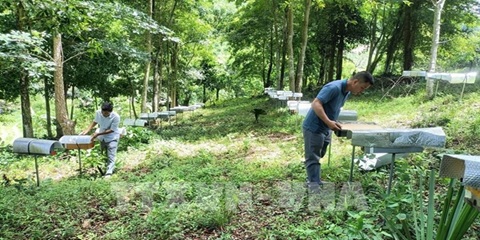
ĐÀ NẴNG SEEKS TO BUILD HIGH-TECH AGRICULTURE, INTEGRATED VALUE CHAINS
Đà Nẵng is seeking to transform its agricultural sector from a supplier of raw materials into a technology-driven, market-oriented economy, with investment opportunities spanning concentrated production areas, deep processing, logistics and agricultural product distribution. The city aims to shift from traditional agricultural production towards agricultural economic development, organising value chains and increasing the technological content and added value of products through closer links between production and processing.

INFRASTRUCTURE / CONSTRUCTION / LOGISTIC / PORT
HCM CITY ACCELERATES POWER INFRASTRUCTURE INVESTMENT TO ATTRACT HIGH-TECH CAPITAL
High-tech projects, particularly data centres, are not confined to SHTP but are also expanding into export processing zones and industrial parks across HCM City, driving up electricity demand. Proactively developing power infrastructure, diversifying energy supplies and expanding access to green energy are becoming essential for HCM City to maintain its competitive edge in attracting high-tech foreign direct investment (FDI).
Events Sponsors






















