Want to be in the loop?
subscribe to
our notification
Business News
DRAFT LAW LIFTS BANKS’ ROLE IN E-COMMERCE
Payments for e-commerce transactions must be made via banks or authorised payment intermediary services, according to the draft of the amended Law on Tax Management. The draft law, which was recently released by the Ministry of Finance (MoF) for recommendation, aims to better manage and collect taxes on e-commerce businesses, which have developed strongly in Việt Nam in recent years.
Besides the tax agency, it is necessary to have close co-ordination among other relevant ministries and agencies to make tax management more effective, according to the draft law.
Accordingly, the MoF has proposed that the tax department will build databases and apply electronic tax services, such as electronic tax declaration, electronic invoices and online tax payments, ensuring that 100 per cent of taxpayers will have access to these facilities to catch up with e-commerce.
The State Bank of Việt Nam (SBV) will take measures to develop e-commerce payments and to ensure that cross-border services pay through payment service suppliers or licensed payment intermediary services.
The MoF will co-ordinate with SBV in guiding commercial banks to deduct the tax that foreign social networking sites, such as Google, Facebook and YouTube, have to pay when they transfer money from organisations and individuals to the sites.
Under the current legal regulations, every business or individual, regardless of having a business registration certificate or not, that earns over VNĐ100 million (US$4,400) from trading activities, including those on social media operating as e-trading floors, must register, declare and pay taxes. However, tax authorities find it challenging to tax e-commerce businesses as it is not easy to control online business revenues given cash payment is so common in Việt Nam.
Currently, individual traders mainly pay personal income tax based on taxpayers’ declarations. To declare and pay taxes, individual traders must register their tax codes with the tax authorities. But online traders are reluctant to make tax declarations, while the tax authorities’ facilities and personnel for tax inspection and collection are limited, failing to catch up with the swift growth of e-commerce. The common practice of cash transactions in Việt Nam also makes it impossible to determine the exact income of online shops.
In developed countries, tax enforcement and control mechanisms are mostly based on declarations of taxpayers, but most transactions are made via bank accounts rather than in cash, helping secure full and accurate declaration by taxpayers.
Experts therefore suggested that State management agencies should adopt measures to encourage online payment and reduce cash transactions to help oversee revenues of online traders. There should also be closer co-ordination between concerned authorities and intermediary payment banks.
Source: VNS
Related News

TECHNOLOGY
TECH SECTOR GROWTH OPENS UP OPPORTUNITIES FOR VIỆT NAM TO GO GLOBAL
The growth of the electronics, semiconductor and high-tech sectors worldwide is opening up a variety of opportunities for Vietnamese enterprises to integrate more deeply into the global supply chain. However, to become suppliers for these corporations, domestic enterprises must meet rigorous standards regarding quality, technology, productivity and order fulfilment capabilities.
INFRASTRUCTURE / CONSTRUCTION / LOGISTIC / PORT
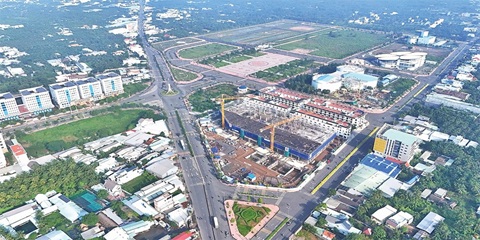
DONG THAP PROVINCE STEPS UP INDUSTRIAL EXPANSION AND INFRASTRUCTURE CONNECTIVITY
Accelerating public investment, strengthening inter-regional connectivity, and expanding industrial land are helping Dong Thap efficiently bolster competitiveness and drive economic growth. Following the 2025 merger of the former Dong Thap and Tien Giang provinces, the expanded Dong Thap province in the Mekong Delta faces mounting pressure to accelerate infrastructure development and strengthen connectivity among local economic zones, urban areas, industrial parks (IPs), and production centres.
PROPERTY / INDUSTRIAL ZONE
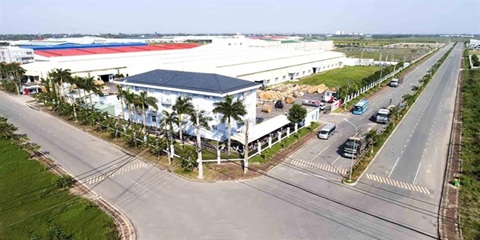
HCM CITY ATTRACTS US$5.7 BILLION INTO EXPORT PROCESSING AND INDUSTRIAL ZONES
HCM City attracted US$5.7 billion in domestic and foreign investment into its export processing and industrial zones during the first nine months of 2026. The figure exceeded the city's full-year target by 31 per cent, highlighting strong momentum in high-quality industrial investment under Resolution No.10-NQ/TW. Total investment reached 131 per cent of the 2026 target of $4.25 billion and represented a 29 per cent increase compared with the same period in 2025, according to the city's Export Processing and Industrial Zones Authority (HEPZA).

BANKING / FINANCE / INSURANCE / TAX
REMITTANCES TO HCM CITY RISE NEARLY 40% IN Q3
Remittances to HCM City reached more than US$2.83 billion in the third quarter of this year, up 39.5 per cent from the previous quarter and 3.6 per cent year-on-year. This was the first quarter showing positive annual growth this year, helping narrow the decline in remittance inflows over the first nine months. According to the State Bank of Vietnam (SBV)’s Regional Branch 2, remittances transferred to HCM City through credit institutions and economic organisations totalled $2.835 billion in Q3, an increase of more than $802 million from the previous quarter.
VIETNAM ECONOMY INVESTMENT
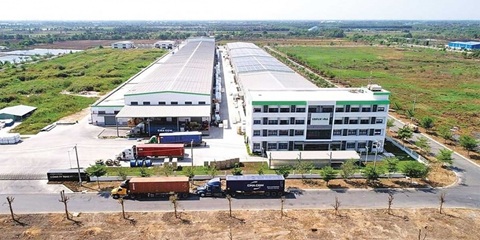
FOREIGN INVESTORS SEEKING A SYNCHRONISED MANUFACTURING ECOSYSTEM
Instead of focusing only on land costs and incentives as usual, foreign investors are seeking a synchronised manufacturing ecosystem, from stable power supply and logistics to shared infrastructure and the convenience of completing residence procedures for experts to serve their long-term investment in the country.
VIETNAM ECONOMY INVESTMENT
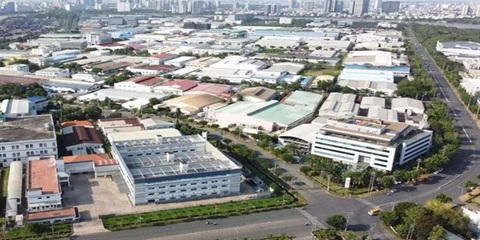
HCM CITY ADDRESSES MANUFACTURING, LAND HURDLES FOR Q4 GROWTH PUSH
HCM City is adjusting growth scenarios for lagging sectors and removing key bottlenecks in manufacturing and industrial land pricing to achieve a 13.23 per cent expansion in the fourth quarter of 2026. This sharp fourth-quarter acceleration is required to secure the city's full-year double-digit targets, following a 9.06 per cent GRDP growth recorded in the first nine months.
Events Sponsors






















