Want to be in the loop?
subscribe to
our notification
Business News
EFFICIENCY ENTICES PLAYERS IN LOGISTICS
Vietnam’s logistics market is drawing in more foreign investors, with opportunities spanning across various segments.
Two Japanese companies, Kawanishi Warehouse and MOL Logistics, have become strategic shareholders of Toan Phat Logistics (TPL), which operates a refrigerated warehouse in Tay Ninh province. The warehouse is located in the Mekong Delta region, where agricultural production thrives.
On the adjacent site, Toan Phat Irradiation – which holds a 10 per cent stake in TPL – offers irradiation sterilisation services, enabling integrated solutions including pre-export storage. The warehouse has also obtained Halal certification, giving it a competitive edge in exports to Islamic countries.
Through its investment in TPL, MOL Logistics Vietnam, a subsidiary of MOL Logistics Japan, has established a system that combines its existing transport network with refrigerated storage capabilities, enabling it to meet the growing demand for cold chain logistics within Vietnam. This integration allows MOL Vietnam to address diverse international transport needs – primarily for agricultural and marine products – while contributing to the strengthening of Vietnam’s logistics infrastructure.
Osamu Sakurada, president and CEO of MOL Logistics, said, “We highly appreciate the efficient cold storage operations of Toan Phat Logistics. This is a key factor for the export of agricultural and aquatic products – industries that require strict temperature control and are expected to experience strong growth in the future.”
Elsewhere, in mid-September, Kuehne+Nagel and Lego Group opened a new regional distribution centre in Dong Nam. The centre will serve as a distribution hub for products manufactured at Lego’s newest factory in Ho Chi Minh City.
At the time of opening, the facility will cover 10,200sq.m and be equipped with bonded storage, specialised packing, and value-added services. Once fully complete and operational in 2026, it will process more than 150 containers per week, have capacity for 33,000 pallets, and span 16,360sq.m, providing sufficient capacity for growth.
Kuehne+Nagel will manage end-to-end logistics operations for the centre, including transport from Lego’s Vietnam factory and mainland China, customs clearance, bonded warehousing, sea freight, and delivery to local distribution centres throughout the region.
In early September, Japan’s Seino Holdings and ITL Corporation announced the launch of Seino-ITL Logistics, a joint venture that will provide less-than-truckload services – a model that consolidates smaller shipments from multiple customers into a single truck for greater efficiency. Seino-ITL Logistics is headquartered in Ho Chi Minh City, and its establishment follows Seino’s acquisition of a strategic stake in ITL in August.
Sam Sang, general manager of Seino-ITL Logistics, said, “We will focus on strengthening road links between Vietnam’s key economic regions to deliver optimal distribution solutions and unlock the country’s full potential. With expertise in efficient transport and ITL’s profound local knowledge, we are building a powerful synergy ready to support Vietnamese firms to become more competitive and adapt more easily to global integration.”
According to the National Statistics Office, Vietnam’s logistics sector continues to grow at 14–16 per cent annually, with freight volume reaching 1.67 billion tonnes in the first seven months of this year, up 13.7 per cent on-year.
According to the draft logistics development strategy, by 2030 Vietnam’s logistics services sector is expected to contribute 6-8 per cent to GDP, with the outsourcing rate rising to 6-8 per cent, and the country securing 45th place in the Logistics Performance Index. By 2050, the sector’s share of GDP is projected to reach 12–15 per cent, outsourcing will increase to 70–90 per cent, and Vietnam will move up to 30th position in the index.
Jens Thomassen, partner at A.P. Moller Capital, said the company sees an enormous opportunity in Vietnam’s logistics sector.
“The country is one of the fastest-growing logistics markets in Asia, underpinned by 6–7 per cent GDP growth, rapidly expanding electronics exports, and strong foreign direct investment from global firms such as Samsung, LG, and Foxconn,” Thomassen said.
“Air freight volumes through Hanoi are increasing at around a 6.5 per cent compound annual growth rate, yet capacity across all handlers remains structurally constrained. At the same time, the ongoing China+1 supply chain shift is accelerating demand for high-quality, internationally governed cargo terminals,” he added.
To capitalise on this potential, A.P. Moller Capital, in collaboration with VinaCapital, has made an investment and strategic alliance with ALS Cargo Terminal. It will apply its expertise to unlock value in ALS Cargo Terminal through operational enhancements – automation and process optimisation, strategic expansion, and a strong focus on sustainability initiatives.
Thomassen said that gaining access to Vietnam’s transport and logistics sector requires trust, local partnerships, and a proven ability to deliver.
“Drawing on over 120 years of industrial heritage and working with VinaCapital, we will bring our heritage in global transport and long track record of building infrastructure businesses in high-growth markets with the aim of investing in more transport and logistics businesses in the country,” Thomassen said.
Source: VIR
Related News

MEMBER CORNER / PROMOTIONS
HCMC | CERTIFIED SUSTAINABILITY PROFESSIONAL (CSP) TRAINING | REGISTRATION OPEN
As sustainability becomes deeply embedded in corporate strategy and supply-chain operations across Vietnam, Hong Kong Business Association Vietnam is pleased to endorse the upcoming Certified Sustainability Professional (CSP) training program by the Asia Institute for Sustainability (AIS) - a premier internationally recognized ESG credential in Vietnam.
VIETNAM ECONOMY INVESTMENT
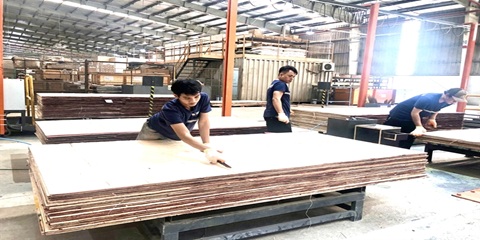
HCM CITY SAYS HOW IT PLANS TO ACHIEVE 10-11% ANNUAL EXPORT GROWTH FOR REST OF DECADE
The southern economic hub aims to strengthen its role as the country’s largest import-export centre while developing into a regional transhipment centre in Southeast Asia, supported by green and digital transformation and a circular economy. HCM City has outlined measures to expand production capacity, cut logistics costs, diversify export markets, and help businesses meet increasingly stringent international standards as it targets average annual export growth of 10-11 per cent through 2030.
VIETNAM ECONOMY INVESTMENT
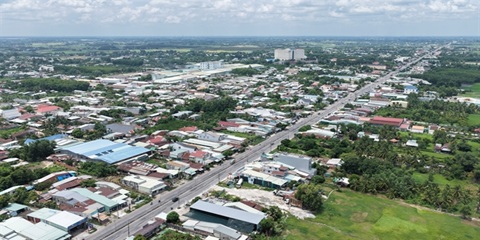
HCM CITY LEADS ECONOMIC RESTRUCTURING IN SOUTHEAST REGION
According to Associate Professor, Dr Vũ Tuấn Hưng, director of the Institute of Social Sciences of the Southern Region, the Southeast is a strategically important socio-economic space in Việt Nam’s development given its advantages in location, industry, trade, services, logistics, science and technology, urbanisation and human resources.
TECHNOLOGY
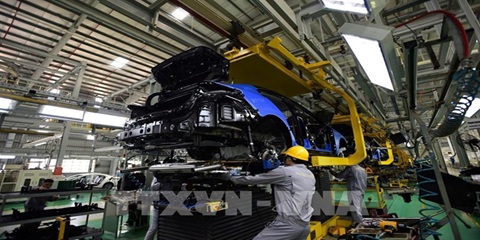
DIGITAL TRANSFORMATION TURNED INTO PRACTICAL TOOLS FOR PEOPLE, BUSINESSES
Việt Nam is moving its digital transformation agenda beyond policy frameworks and individual technology platforms towards practical applications that address everyday needs, as authorities seek measurable outcomes from science, technology and innovation. Under Politburo Resolution No. 57-NQ/TW issued on December 22, 2024, the implementation is increasingly shifting from simply completing assigned tasks towards developing concrete products and services for citizens and businesses.
TECHNOLOGY
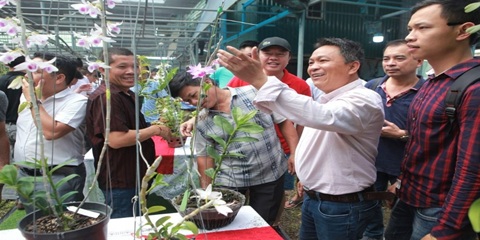
APPLYING TECHNOLOGY FOR ECONOMIC TRANSFORMATION
Having completed its new rural development program, Hanoi is shifting its focus toward improving development quality and building smart, sustainable rural areas. The transformation of Dong La orchid-growing village in An Khanh, a western commune of Hanoi, shows how digital technology is becoming a driver of production, market expansion, and higher incomes for local residents.

MEMBER CORNER / PROMOTIONS
VIGLACERA HONORED AS THE "LEADING GREEN INDUSTRIAL REAL ESTATE DEVELOPER 2026"
Organized by the Vietnam Investment Review, this prestigious awards program recognizes industry pioneers advancing eco-industrial parks, clean energy transition, and rigorous ESG standards. Outperforming competitors through a rigorous evaluation, Viglacera Corporation – JSC proudly ranked among the Top 5 highest-positioned enterprises in the Leading Green Industrial Real Estate Developers 2026 category, reinforcing its premier position in Vietnam’s industrial real estate sector.
Events Sponsors






















