Want to be in the loop?
subscribe to
our notification
Business News
ENHANCING PRESENCE OF VIETNAMESE GOODS IN ASEAN MARKET IS ESSENTIAL
Việt Nam’s Trade Office in Singapore recently encouraged Vietnamese businesses to participate in Retail’s Big Show APAC 2025, which will take place in Singapore early next month.
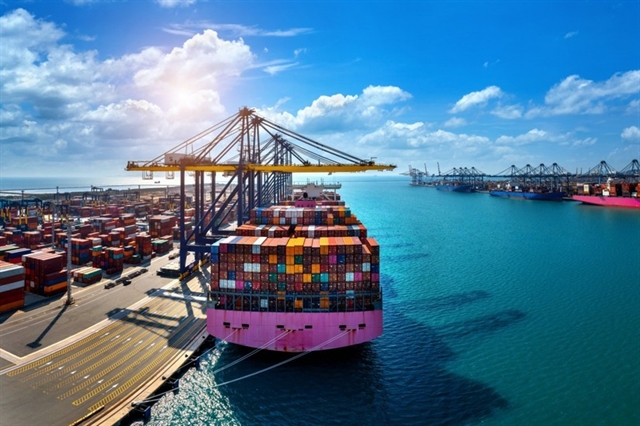
ASEAN ranks as Việt Nam’s fourth-largest export market after the US, China and the EU.— Photo mekongasean.vn
HÀ NỘI — As Việt Nam’s export turnover has yet to fully reflect its potential within the ASEAN region, enhancing the presence of Vietnamese goods and seizing opportunities in this market is essential, particularly amid tariff fluctuations.
This issue demands greater attention from businesses, along with a proactive and flexible approach to market access, deep market understanding and the ability to overcome trade barriers.
Việt Nam’s Trade Office in Singapore recently encouraged Vietnamese businesses to participate in Retail’s Big Show APAC 2025, which will take place in Singapore early next month.
The event provides opportunities for Vietnamese enterprises to connect with potential customers and top retailers, while also exploring new trends in retail, ranging from enhancing customer experience to digital transformation strategies.
In light of Việt Nam becoming the fourth-largest seafood supplier to Singapore, the trade office also announced ongoing efforts to promote trade connections between Vietnamese and Singaporean seafood businesses.
These efforts include participating in seafood exhibitions and trade fairs to increase the visibility of Vietnamese products in Singapore and help companies expand their market share.
The trade office also advised Vietnamese seafood exporters to maintain high quality standards, stay updated on local regulations, improve packaging designs and boost productivity to remain competitive with products from other countries in the region.
Guidance and support are crucial for Vietnamese enterprises looking to deepen their presence in Singapore specifically, and the ASEAN region more broadly — especially amid global trade instability caused by shifting US tariffs.
As of the first four months of this year, Việt Nam’s exports to Thailand reached US$2.67 billion, a modest increase of 1.4 per cent year-over-year.
Meanwhile, imports from Thailand surged to over $4.2 billion, an 18.5 per cent rise. Thailand is currently Việt Nam’s largest export market within ASEAN, accounting for more than 20 per cent of Việt Nam’s total ASEAN export turnover, followed by Indonesia and the Philippines.
Key exports to Thailand include machinery and equipment, electronics and components, phones and parts, crude oil and vehicles.
At a seminar in HCM City on Thursday, a representative of Central Retail Việt Nam Group said that the company was promoting lychee exports to Thailand as the harvest season approached.
In mid-May, Việt Nam’s Trade Office in the Philippines provided an update on the trade relationship between the two countries, noting that Việt Nam still has plenty of room to expand its exports to the Philippines.
Agricultural products represent a significant opportunity. Despite similarities in the agricultural profiles of both countries, they are not direct competitors. Việt Nam has a comparative advantage in various subtropical fruits and seafood strains that have not yet been exported to the Philippines.
Aside from rice, the Philippines has strong demand for many types of Vietnamese agricultural products, particularly fresh produce. However, some sectors remain untapped due to trade and logistics barriers.
Moreover, light industrial products, fertilisers, chemicals, tools, machinery, electrical and household appliances, heavy industry products and construction materials also have growth potential in the Philippine market.
Vietnamese exporters should also be aware of the market’s challenges and risks, and adopt appropriate marketing and market entry strategies to ensure success.
Despite these individual market opportunities, Việt Nam’s overall export performance in the ASEAN region still falls short of its potential.
According to the latest data from Việt Nam’s General Department of Customs, from the beginning of this year to May 15, exports to ASEAN reached $12.42 billion — an increase of just 3.2 per cent year-over-year, or $389 million.
ASEAN ranks as Việt Nam’s fourth-largest export market after the US, China and the EU.
To boost export turnover and the presence of Vietnamese products in ASEAN, it is vital for Vietnamese businesses to show greater interest and capitalise on opportunities in this regional market.
Building consumer trust and brand credibility is also crucial. Vietnamese exporters must work hard to change ASEAN consumers’ perception of Vietnamese goods and distinguish them from competitors. — VNS
Source: VNS
Related News

CHARITY / EXHIBITION / OTHER EVENTS
INVESTMENT OPPORTUNITIES IN CA MAU PROVINCE: 96 PROJECTS AND 20 STRATEGIC PROJECTS
We are pleased to share with you information on investment projects currently seeking investors in Ca Mau Province. Should your esteemed company or association be interested, we kindly invite you to review the project information and complete the registration form via the links provided. The Ho Chi Minh City Investment and Trade Promotion Centre (ITPC) will consolidate the expressions of interest and facilitate connections with the leadership of Ca Mau Province at a meeting tentatively scheduled for 13 November 2026 in Ho Chi Minh City.

MEMBER CORNER / PROMOTIONS
BẰNG KIỀU LIVESHOW - A SYMPHONY OF LOVE UNDER THE GOLDEN GLOW
A masterclass in live music that takes the audience on a soulful journey through immortal love songs, guided by the peerless artistry and emotive storytelling of renowned singer Bằng Kiều. The highlight of the night is his seamless musical chemistry with special guest Triệu Hồng Ngọc, promising passionate and deeply resonant duets inside the magnificent Grand Ballroom.
INFRASTRUCTURE / CONSTRUCTION / LOGISTIC / PORT
ĐÀ NẴNG GREEN-LIGHTS US$105 MILLION THAI DEVELOPMENT DEAL
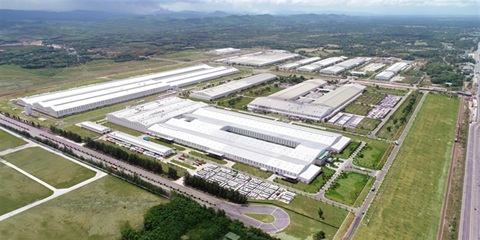
The central city has approved an investment proposal by Thailand’s WHA Group to develop infrastructure for the 400ha WHA Đà Nẵng Industrial Park project on two communes of Thăng Bình and Đồng Dương, with an investment of more than VNĐ2.7 trillion (US$105 million). The city said it approved WHA Industrial Development International's status as an investor in the project, which is expected to take place between 2027 and 2034.
VIETNAM ECONOMY INVESTMENT
MOBILE PHONE EXPORTS RISE 20% TO $51.8 BILLION IN FIRST NINE MONTHS
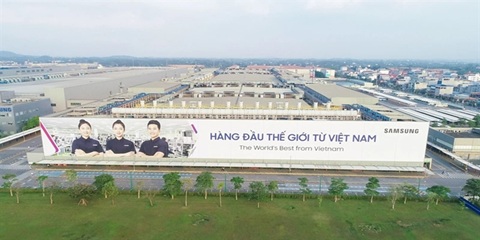
Exports of mobile phones and components rose 20 per cent year-on-year to nearly US$51.8 billion in the first nine months of 2026, with China, the US and Republic of Korea accounting for more than half of the total. Shipments to the three markets reached a combined $26.18 billion, or 50.6 per cent of total exports of the product group during the period, according to data from the Vietnam Department of Customs under the Ministry of Finance.

INFRASTRUCTURE / CONSTRUCTION / LOGISTIC / PORT
VIỆT NAM-CAMBODIA TRADE GATHERS PACE TOWARDS $20 BILLION TARGET
Trade between Việt Nam and Cambodia continues to grow, remaining a bright spot and a key pillar of bilateral cooperation as the two countries aim to raise two-way trade to US$20 billion in the coming years. After setting a record of more than $11.3 billion last year, bilateral trade reached about $8.7 billion in the first eight months of this year, up 8.3 per cent year on year.
VIETNAM ECONOMY INVESTMENT
FRUIT AND VEGETABLE EXPORTS POISED TO HIT $10 BILLION IN 2026
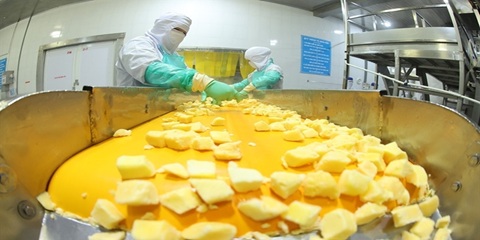
Fruit and vegetable exports are on track to reach nearly US$10 billion in 2026, after rising 19.9 per cent year on year to nearly US$7.4 billion in the first nine months, driven by strong seasonal demand and abundant tropical fruit supplies. The Ministry of Agriculture and Environment said the growth reflected stronger international demand for fresh produce and processed agricultural products.
Events Sponsors






















