Want to be in the loop?
subscribe to
our notification
Business News
EXCHANGE RATE FORECAST TO BE STABLE IN 2019
According to analysts from the Fitch Group’s Fitch Solutions Macro Research, the dong will weaken slightly against the dollar to VND23,700 by the end of the year, and average VND23,440 per dollar over 2019, which represents a 1.8 per cent depreciation from the average of 2018.
Analysts attributed the modest weakness expectation to three reasons.
First, they said, Vietnam’s FDI will likely remain robust over 2019, adding Fitch continued to project the Vietnamese economy to be a regional outperformer with a growth of 6.5 per cent in 2019 compared to an aggregate of 6.1 per cent for Asia.
“We believe that FDI inflows into the manufacturing sector will be further supported by improved diplomatic relationships combined with the Government’s open-door trade policy, alongside favourable demographics such as Vietnam’s educated and low-cost labour force,” the report noted.
The Vietnamese processing and manufacturing sector remained the largest sector for FDI last year, with total registered capital of US$16.6 billion, up 4.4 per cent from $15.9 billion from the previous year.
Vietnam’s strong economic growth outlook will also continue to attract FDI in the real estate sector as foreign developers look to capitalise on the rising affluence of the population and the desire for physical expansion among businesses. Real estate businesses attracted total FDI of $6.6 billion in 2018, more than doubling the $3.1 billion in 2017.
Second, Fitch forecast Vietnam’s current account surplus to print around 2.1 per cent of GDP in 2019, which represents an expectation for the surplus to narrow slightly from 2.2 per cent in 2018.
Vietnam is one of the two countries running a current account surplus among the Mekong region countries, with the other being Thailand which ran a 7.5 per cent surplus in 2018. The other countries, namely Laos, Cambodia, and Myanmar are running current account deficits in excess of 2 per cent.
“We continue to expect the current account surplus to be supported by the export-oriented manufacturing sector, helped by a possible rebound in global trade in the second half of 2019,” the report said.
Vietnam’s goods trade surplus came in at $6.8 billion in 2018, on the back of a 13.8 per cent expansion in exports and a 12.1 per cent increase in imports.
Third, at $56.3 billion, representing 2.8 months of import cover, the State Bank of Vietnam (SBV) has ample foreign exchange reserves to continue its course of active intervention to ensure currency stability, which suggests that the dong is likely to see minimal volatility over the coming months.
Over the long term, Fitch forecast the dong to weaken gradually against the dollar to due to higher inflation, but a relatively strong growth outlook is likely to put a floor under the depreciation of the currency.
“We forecast inflation in Vietnam to average around 4.1 per cent over the next 24 months, as compared with 2.3 per cent in the US.”
According to Fitch, the SBV, utilising credit growth targets as its main monetary policy tool, is targeting credit growth of 14 per cent in 2019, the same rate achieved in 2018. At 14 per cent, credit growth still outpaces nominal GDP growth of about 10 per cent and this is likely to fuel inflationary pressures over the coming quarters.
“Given the Vietnamese economy’s reliance on export-led growth, upside price pressures is likely to warrant some dong depreciation against the US dollar to preserve Vietnam’s export competitiveness, and we believe that this is likely to see the dong average VND23,850 per dollar in 2020,” Fitch forecast, adding the Vietnamese dong’s overvaluation, as suggested by its real effective exchange rate trading by 9.3 per cent above its 10 -year average, open room for further currency weakness over the longer term.
However, Fitch also noted: “Risks to the dong forecast are weighted to the downside. A dovish shift among major global central banks could see the SBV intervene to weaken the dong by more than we expect so as to maintain Vietnam’s export competitiveness. Slowing global growth, trade uncertainty, and disruptions to global value chains could also adversely impact Vietnam’s export sector, pressuring the SBV to weaken the dong further.”
Source: VIR
Related News

CHARITY / EXHIBITION / OTHER EVENTS
INVESTMENT OPPORTUNITIES IN CA MAU PROVINCE: 96 PROJECTS AND 20 STRATEGIC PROJECTS
We are pleased to share with you information on investment projects currently seeking investors in Ca Mau Province. Should your esteemed company or association be interested, we kindly invite you to review the project information and complete the registration form via the links provided. The Ho Chi Minh City Investment and Trade Promotion Centre (ITPC) will consolidate the expressions of interest and facilitate connections with the leadership of Ca Mau Province at a meeting tentatively scheduled for 13 November 2026 in Ho Chi Minh City.

MEMBER CORNER / PROMOTIONS
BẰNG KIỀU LIVESHOW - A SYMPHONY OF LOVE UNDER THE GOLDEN GLOW
A masterclass in live music that takes the audience on a soulful journey through immortal love songs, guided by the peerless artistry and emotive storytelling of renowned singer Bằng Kiều. The highlight of the night is his seamless musical chemistry with special guest Triệu Hồng Ngọc, promising passionate and deeply resonant duets inside the magnificent Grand Ballroom.
INFRASTRUCTURE / CONSTRUCTION / LOGISTIC / PORT
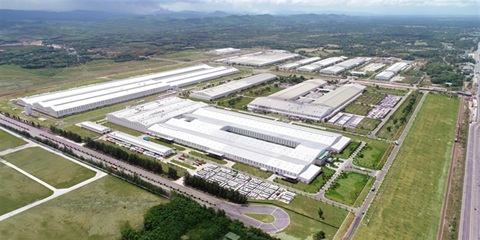
ĐÀ NẴNG GREEN-LIGHTS US$105 MILLION THAI DEVELOPMENT DEAL
The central city has approved an investment proposal by Thailand’s WHA Group to develop infrastructure for the 400ha WHA Đà Nẵng Industrial Park project on two communes of Thăng Bình and Đồng Dương, with an investment of more than VNĐ2.7 trillion (US$105 million). The city said it approved WHA Industrial Development International's status as an investor in the project, which is expected to take place between 2027 and 2034.

VIETNAM ECONOMY INVESTMENT
MOBILE PHONE EXPORTS RISE 20% TO $51.8 BILLION IN FIRST NINE MONTHS
Exports of mobile phones and components rose 20 per cent year-on-year to nearly US$51.8 billion in the first nine months of 2026, with China, the US and Republic of Korea accounting for more than half of the total. Shipments to the three markets reached a combined $26.18 billion, or 50.6 per cent of total exports of the product group during the period, according to data from the Vietnam Department of Customs under the Ministry of Finance.

INFRASTRUCTURE / CONSTRUCTION / LOGISTIC / PORT
VIỆT NAM-CAMBODIA TRADE GATHERS PACE TOWARDS $20 BILLION TARGET
Trade between Việt Nam and Cambodia continues to grow, remaining a bright spot and a key pillar of bilateral cooperation as the two countries aim to raise two-way trade to US$20 billion in the coming years. After setting a record of more than $11.3 billion last year, bilateral trade reached about $8.7 billion in the first eight months of this year, up 8.3 per cent year on year.
VIETNAM ECONOMY INVESTMENT
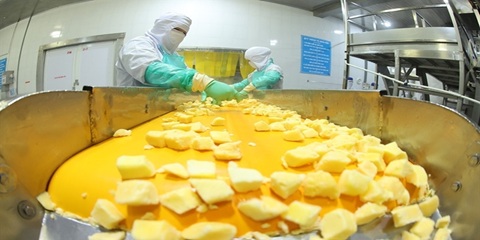
FRUIT AND VEGETABLE EXPORTS POISED TO HIT $10 BILLION IN 2026
Fruit and vegetable exports are on track to reach nearly US$10 billion in 2026, after rising 19.9 per cent year on year to nearly US$7.4 billion in the first nine months, driven by strong seasonal demand and abundant tropical fruit supplies. The Ministry of Agriculture and Environment said the growth reflected stronger international demand for fresh produce and processed agricultural products.
Events Sponsors






















