Want to be in the loop?
subscribe to
our notification
Business News
EXPORT GROWTH TARGET OF 15-16% SET FOR 2026
2026 would mark the start of a new development phase for the country, making exports a critical driver of growth while also requiring a shift toward a more efficient and sustainable growth model.
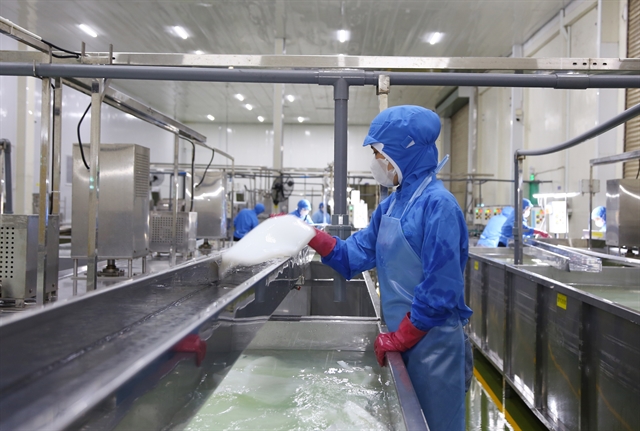
Coconut jelly being produced for export at GC Food Co in Đồng Nai Province. — VNA/VNS Photo
HÀ NỘI — Việt Nam is targeting export growth of around 15-16 per cent in 2026 as it seeks to support economic expansion in the first year of its new five-year socio-economic development phase, a senior trade official has said.
Nguyễn Anh Sơn, director of the Ministry of Industry and Trade (MoIT)’s Import-Export Department, said the target was set under a Government resolution outlining key tasks and solutions for implementing the 2026 socio-economic development plan and State budget.
He said 2026 would mark the start of a new development phase for the country, with exports playing a critical role in driving growth and a shift toward a more efficient and sustainable growth model.
Under the plan, total export turnover is expected to rise to about US$546-550 billion in 2026, compared with 2025 levels, implying average monthly exports of around $45-46 billion, Sơn said.
The target was described as challenging amid ongoing global economic uncertainty, requiring coordinated efforts from government agencies, local authorities and the business community. Sơn said measures to boost exports would need to be implemented early in the year and in a synchronised manner to deliver tangible results.
He said the MoIT has identified six priority measures to promote export growth in 2026 and beyond.
The first focuses on developing domestic production and new export products, increasing value added and local content, and shifting from processing to manufacturing and direct exporting to reduce reliance on imported raw materials.
The second aims to help exporters meet increasingly strict technical and environmental standards and respond more effectively to trade barriers and trade defence measures, as sustainability requirements in major markets continue to tighten.
A third priority is to strengthen linkages between domestic firms and foreign-invested companies and global corporations by developing industrial clusters and integrated supply chains, in order to raise the participation of Vietnamese businesses in global value chains.
The ministry will also closely monitor trade policy changes in major economies, while improving market information, trade promotion and the application of digital tools to enhance forecasting.
Another focus is to make more effective use of free trade agreements, diversify export destinations and develop new markets to reduce concentration risks and support stable growth.
Finally, the ministry plans to continue reforming administrative procedures and simplifying specialised inspections in import and export activities, a move it said would help cut costs and time for businesses and improve the competitiveness of Vietnamese goods.
Last year, Việt Nam’s export revenue amounted to $475.04 billion, marking a 17 per cent year-on-year increase, according to figures released by the National Statistics Office (NSO).
The NSO reported that 36 product categories each recorded export revenue of more than $1 billion, together accounting for 94 per cent of the total exports. Of these, eight categories exceeded $10 billion each, representing 70.2 per cent.
By sector, processed industrial products dominated exports with $421.47 billion, equivalent to 88.7 per cent of the total export value. Agriculture and forestry earned $39.46 billion (8.3 per cent), seafood brought in $11.29 billion (2.4 per cent), while fuels and minerals contributed $2.83 billion (0.6 per cent). — VNS
Source: VNS
Related News

MEMBER CORNER / PROMOTIONS
KNIC ENGAGES WITH GOVERNMENT AND HIGH-TECH BUSINESS COMMUNITIES IN CHINA
From Beijing to Shandong, KN Holdings and KN Industrial City are continuing to expand their engagement with government authorities, trade promotion organizations, and high-tech business communities in China. In Beijing, the delegation met with the Center for International Economic and Technological Cooperation under the Ministry of Industry and Information Technology (MIIT), exchanging perspectives on industrial and technology cooperation between the two markets.
VIETNAM ECONOMY INVESTMENT
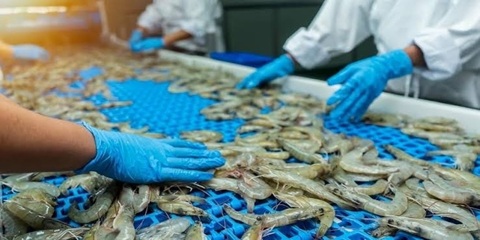
VIETNAM’S TRADE TOPS $825 BILLION BY MID-SEPTEMBER
Figures released on September 21 showed goods trade reached nearly $55 billion in the first 15 days of September alone, bringing cumulative turnover since the beginning of the year to more than $825 billion. The strong growth reflects robust trade flows, with demand for consumer goods and production inputs remaining high.

TECHNOLOGY
VIỆT NAM'S BUSINESSES MOVE TOWARDS AI AGENTS
Việt Nam’s AI landscape is entering a new phase as businesses move beyond generative AI (GenAI) tools designed to assist human users towards autonomous AI, agentic AI and AI agents that can take action with limited supervision, experts have said. The shift comes as Việt Nam seeks to accelerate science and technology, innovation and digital transformation under Politburo Resolution 57-NQ/TW, issued on December 22, 2024.
GARMENT / TEXTILE
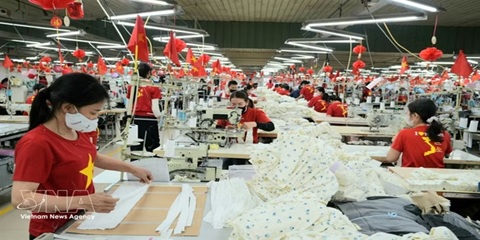
VIỆT NAM TARGETS $48 BILLION IN TEXTILE-GARMENT EXPORTS
Việt Nam’s textile and garment industry is facing both opportunities and challenges amid complex and unpredictable developments in the global market, prompting businesses to improve growth quality, optimise production costs and enhance adaptability in pursuit of an export turnover of about $48 billion this year. The target is considered an important milestone that requires concerted efforts from management agencies and the business community.
INFRASTRUCTURE / CONSTRUCTION / LOGISTIC / PORT
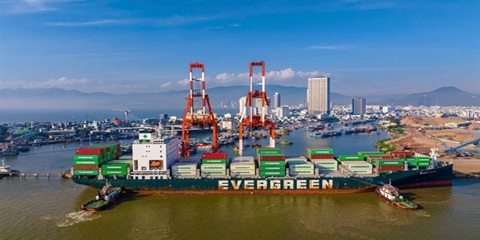
CUTTING LOGISTICS COSTS KEY TO BOOSTING EXPORTS
Reducing costs has become an increasingly urgent priority for import-export activities, particularly logistics costs, a conference in Hà Nội was told on Tuesday. According to Deputy General Director of the Ministry of Industry and Trade's Agency for Foreign Trade, Trần Thanh Hải, import-export activities has remained a bright spot for the economy in recent years, playing an important role and helping drive macroeconomic growth.
LEGAL UPDATE / POLICY
FLEXIBLE FISCAL POLICY HELPS DRIVE ECONOMIC GROWTH
Việt Nam’s fiscal policy has been implemented in a targeted expansionary manner since early 2026, helping maintain macroeconomic stability and supporting the country’s goal of achieving double-digit economic growth. According to the Ministry of Finance, State budget revenue in the first eight months of 2026 was estimated at VNĐ2.02 quadrillion (US$77.7 billion), equivalent to 80 per cent of the annual estimate and up 16 per cent year-on-year.
Events Sponsors






















