Want to be in the loop?
subscribe to
our notification
Business News
EXPORTERS STRUGGLE WITH ESCALATING SHIPPING COSTS
Undergoing turbulent an 2023 with fewer order, sinking revenues, and reduced profits, exporters are facing further obstacles from early 2024 amidst the soaring shipping costs.
Ho Chi Minh City-based fruit export major Vina T&T Group ships dozens of containers full of fresh fruits to the United States and EU markets every week.
The recent Red Sea tensions have driven up transportation costs by 30-50 per cent, while also extending transportation time by around 15 days, having negative impacts on the product quality.
A source from Trung An High-tech Farming JSC, based in Can Tho city, revealed that though the company’s rice export volume to the EU and US is not as big as to Asian markets, the volatility of shipping costs have affected the company’s operations.
“Formerly, rice exports to Europe cost less than $1,000 per container, but have now soared to $3,000-$4,000, putting a real burden on firms’ shoulders,” said the source.
Cao Huu Hieu, CEO of state group Vinatex, revealed that member units belonging to the group have incurred increasing input costs due to the Red Sea tensions. It is difficult to raise the unit rate for export items as order intake is still on a downward trend due to the impacts of the global economic turmoil and tightened spending in major markets.
Currently, container transportation costs from Asia to Europe and the Americas have soared by about 88 per cent compared to pre-pandemic levels.
According to the Vietnam Maritime Administration (VMA), container transportation costs from Asia to Europe and the Americas in the first week of January spiked by about 60 per cent compared to late 2023.
Currently, those same costs have soared by about 88 per cent compared to pre-pandemic levels.
As such, a container from Vietnam to western America reportedly fetches $2,650/40-foot unit, with eastern America reaching $3,900 and Europe hitting $4,900.
It is worrying that besides a jump in transportation costs, there are also shipment cancellations from major global shipping lines.
For instance, from the second week of January to mid-February, the rate of cancelled shipments reached 12 per cent (78 out of 850).
Normally, the shortest way with optimal costs for container transportation from Asia to Europe is by going through the Red Sea and Suez Canal.
Since the conflicts in Red Sea areas, shipping companies have had to alter their itineraries, not passing the Suez Canal and instead travelling around the Cape of Good Hope, extending the voyage by 10-14 days and significantly driving up the cost.
To avoid delays, many firms resort to air transport, leading to a sharp hike in their expenses.
The commodities transported on flights from Vietnam to Europe are mainly apparel items, which is hard for firms as they need to spend more on transportation, but the unit rate cannot go up correspondingly.
In this context, the Ministry of Transport (MoT) is requesting support for container transportation to Europe and the Americas.
The MoT has asked state management bodies in the maritime sector to join forces with relevant units to ensure a smooth seaport system throughout the country. The hope is that measures to bolster the efficiency of maritime infrastructure can be expedited.
“The VMA needs to quicken its procedures for ships to enter and leave the ports, as well as those for the loading and unloading of goods, particularly for container vessels to Europe and the Americas. It is also necessary to work with shipping firms, calling on them to maintain their routes and supplement container shells for Vietnam to meet the burgeoning freight transportation demands,” said the MoT.
Source: VIR
Related News

MEMBER CORNER / PROMOTIONS
HCMC | CERTIFIED SUSTAINABILITY PROFESSIONAL (CSP) TRAINING | REGISTRATION OPEN
As sustainability becomes deeply embedded in corporate strategy and supply-chain operations across Vietnam, Hong Kong Business Association Vietnam is pleased to endorse the upcoming Certified Sustainability Professional (CSP) training program by the Asia Institute for Sustainability (AIS) - a premier internationally recognized ESG credential in Vietnam.
VIETNAM ECONOMY INVESTMENT
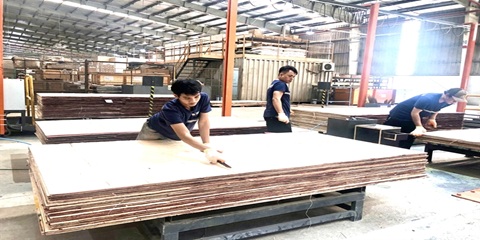
HCM CITY SAYS HOW IT PLANS TO ACHIEVE 10-11% ANNUAL EXPORT GROWTH FOR REST OF DECADE
The southern economic hub aims to strengthen its role as the country’s largest import-export centre while developing into a regional transhipment centre in Southeast Asia, supported by green and digital transformation and a circular economy. HCM City has outlined measures to expand production capacity, cut logistics costs, diversify export markets, and help businesses meet increasingly stringent international standards as it targets average annual export growth of 10-11 per cent through 2030.
VIETNAM ECONOMY INVESTMENT
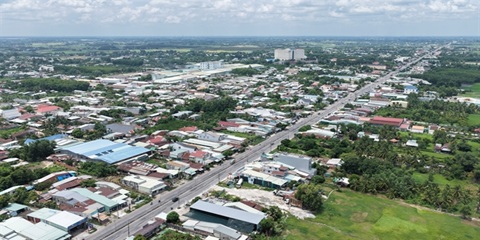
HCM CITY LEADS ECONOMIC RESTRUCTURING IN SOUTHEAST REGION
According to Associate Professor, Dr Vũ Tuấn Hưng, director of the Institute of Social Sciences of the Southern Region, the Southeast is a strategically important socio-economic space in Việt Nam’s development given its advantages in location, industry, trade, services, logistics, science and technology, urbanisation and human resources.
TECHNOLOGY
DIGITAL TRANSFORMATION TURNED INTO PRACTICAL TOOLS FOR PEOPLE, BUSINESSES
Việt Nam is moving its digital transformation agenda beyond policy frameworks and individual technology platforms towards practical applications that address everyday needs, as authorities seek measurable outcomes from science, technology and innovation. Under Politburo Resolution No. 57-NQ/TW issued on December 22, 2024, the implementation is increasingly shifting from simply completing assigned tasks towards developing concrete products and services for citizens and businesses.
TECHNOLOGY
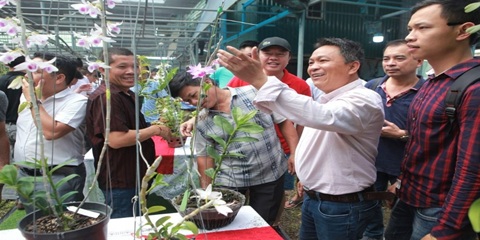
APPLYING TECHNOLOGY FOR ECONOMIC TRANSFORMATION
Having completed its new rural development program, Hanoi is shifting its focus toward improving development quality and building smart, sustainable rural areas. The transformation of Dong La orchid-growing village in An Khanh, a western commune of Hanoi, shows how digital technology is becoming a driver of production, market expansion, and higher incomes for local residents.

MEMBER CORNER / PROMOTIONS
VIGLACERA HONORED AS THE "LEADING GREEN INDUSTRIAL REAL ESTATE DEVELOPER 2026"
Organized by the Vietnam Investment Review, this prestigious awards program recognizes industry pioneers advancing eco-industrial parks, clean energy transition, and rigorous ESG standards. Outperforming competitors through a rigorous evaluation, Viglacera Corporation – JSC proudly ranked among the Top 5 highest-positioned enterprises in the Leading Green Industrial Real Estate Developers 2026 category, reinforcing its premier position in Vietnam’s industrial real estate sector.
Events Sponsors






















