Want to be in the loop?
subscribe to
our notification
Business News
EXTRA CREDIT ROOM SUGGESTED FOR REAL ESTATE SECTOR
Real estate developers have suggested that the State Bank of Vietnam increases credit room soon to inject capital into the economy and create conditions for property businesses to restructure and develop this year.
Nguyen Van Dinh, deputy chairman of the Vietnam Real Estate Association, said that to avoid market crashes, the central bank (SBV) must quickly increase credit to give the economy a boost in capital.
“Based on this credit easing, developers will have finance sources to continue their projects and buyers and investors will have capital for products,” Dinh said.
However, he stressed that the cash flow injected into the market needs to be controlled to target the right product segments, bringing the residential real estate price down to a more comfortable level for households with real needs.
“For real estate businesses in difficulty, the SBV should create conditions for businesses to postpone due loans, similar to what we saw during the pandemic,” he said.
If businesses with overdue credit loans are moved to worse debts, Dinh suggested that the SBV consider restructuring their debts, so they can access new credit loans and get through this extremely difficult time.
“At the same time, banks should not apply new interest rates to old loans, and even offer interest-free support or preferential loans for investors and developers of affordable housing and social housing for workers and people on low-incomes,” Dinh said. “For businesses that have issued corporate bonds to maturity, banks need to support underwriting or buying back the issued bonds.”
Economic expert Can Van Luc said the government needs urgent solutions to solve the four biggest difficulties in the current real estate market: legality, capital, supply-demand balance, and official plans.
Luc said it was key to remove legal blockages for stuck projects so that the supply can be increased. “Regarding capital for real estate, the credit growth of 25 per cent is not too low, but it needs to be easier for developers to access credit because capital mobilised from the stock market and bonds is now stagnant, putting many developers in an extremely difficult situation,” Luc said.
“I think that the SBV should proactively grant credit lines now. More importantly, it is necessary to remove the bond bottleneck with the revision of legislation so that businesses with good health can still issue bonds successfully, to have a powerful finance flow into the market,”
Moreover, Luc noted that real estate businesses also needed drastic solutions in restructuring, paying bonds, negotiating with bondholders to extend debt, and even exchanging bonds for real estate products.
According to Le Hoang Chau, chairman of the Ho Chi Minh City Real Estate Association (HoREA), 2023 is the year to decide real estate businesses’ fate.
The HoREA on February 8 sent a document to the SBV, proposing to allow real estate businesses to restructure their due credit loans, maintain the outstanding debt and get new credit loans if they have collateral assets. Specifically, it proposed issuing a new circular allowing real estate businesses to restructure credit loans due within 12-24 months, keep their debts, and get new credit loans with collateral assets.
Regarding credit conditions, the HoREA suggested the central bank assign credit institutions not to require real estate businesses to have a construction license as a condition for considering loans.
Talking to VIR, private investor Nguyen Manh Duc said developers inevitably had to look at themselves and come up with proactive solutions.
“The macroeconomy is facing many difficulties, while real estate is only a part of the economy. To save the market, businesses must save themselves first. Enterprises need to restructure and review projects and debts to have the right direction for their development,” Duc said.
He added that at a real estate credit conference held by the SBV on February 8 focusing on issues such as access to capital, interest rates, and legal obstacles, some developers said they had nearly 50 projects ongoing at the same time.
“For those, I think the developer needs to sell some projects to other potential investors and lower their prices in others to ensure better finance flow for their development,” he said. “Loans from one project are used for others, and this is very dangerous when the market falls. It is necessary to look at reality.”
According to the General Statistics Office, the number of real estate businesses dissolved in 2022 was nearly 1,200, an annual increase of 38.7 per cent. Many businesses have had to drastically restructure investment portfolios, change business plans, cancel or postpone investment activities and project construction, scale down production, and transfer projects. Others have had to cut off staff, some by up to half, reduce wages by 30-50 per cent, and others offered little or no bonus for the Lunar New Year.
Some real estate businesses have also implemented measures such as reducing selling prices by up to half, but low demand means it has still been difficult to sell products. This has pushed them into a cash shortage, which could potentially lead to the status of holding dead assets.
Source: VIR
Related News

INFRASTRUCTURE / CONSTRUCTION / LOGISTIC / PORT
VIỆT NAM-CAMBODIA TRADE GATHERS PACE TOWARDS $20 BILLION TARGET
Trade between Việt Nam and Cambodia continues to grow, remaining a bright spot and a key pillar of bilateral cooperation as the two countries aim to raise two-way trade to US$20 billion in the coming years. After setting a record of more than $11.3 billion last year, bilateral trade reached about $8.7 billion in the first eight months of this year, up 8.3 per cent year on year.
TECHNOLOGY
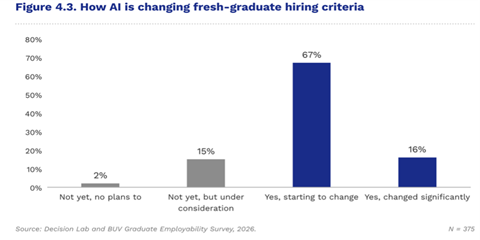
AI BEGINNING TO RESHAPE RECRUITMENT CRITERIA
Digital literacy is the only capability area in which fresh graduates meet employers’ expectations, according to a new report. Yet, it is also the standard rising fastest, as businesses increasingly expect new hires to use AI effectively in the workplace. Some 83 per cent of employers say AI has changed, or is beginning to change, their hiring criteria, while 94 per cent report higher expectations for digital and AI capabilities than they had two to three years ago.

INFRASTRUCTURE / CONSTRUCTION / LOGISTIC / PORT
ĐÀ NẴNG GREEN-LIGHTS US$105 MILLION THAI DEVELOPMENT DEAL
The central city has approved an investment proposal by Thailand’s WHA Group to develop infrastructure for the 400ha WHA Đà Nẵng Industrial Park project on two communes of Thăng Bình and Đồng Dương, with an investment of more than VNĐ2.7 trillion (US$105 million). The city said it approved WHA Industrial Development International's status as an investor in the project, which is expected to take place between 2027 and 2034.

VIETNAM ECONOMY INVESTMENT
MOBILE PHONE EXPORTS RISE 20% TO $51.8 BILLION IN FIRST NINE MONTHS
Exports of mobile phones and components rose 20 per cent year-on-year to nearly US$51.8 billion in the first nine months of 2026, with China, the US and Republic of Korea accounting for more than half of the total. Shipments to the three markets reached a combined $26.18 billion, or 50.6 per cent of total exports of the product group during the period, according to data from the Vietnam Department of Customs under the Ministry of Finance.

VIETNAM ECONOMY INVESTMENT
FRUIT AND VEGETABLE EXPORTS POISED TO HIT $10 BILLION IN 2026
Fruit and vegetable exports are on track to reach nearly US$10 billion in 2026, after rising 19.9 per cent year on year to nearly US$7.4 billion in the first nine months, driven by strong seasonal demand and abundant tropical fruit supplies. The Ministry of Agriculture and Environment said the growth reflected stronger international demand for fresh produce and processed agricultural products.
GARMENT / TEXTILE
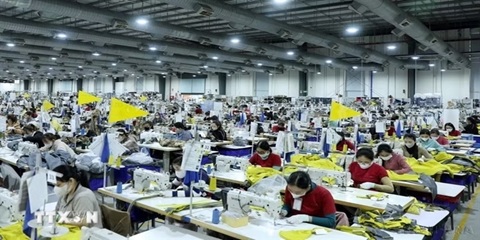
TEXTILE EXPORTS FACE DUAL CHALLENGES OF SUSTAINING ORDERS AND BOOSTING EFFICIENCY AMID GROWING COMPETITION
Data shows that the textile and garment sector maintained its growth momentum in the first nine months of this year. The industry's total export turnover reached an estimated US$35.721 billion in the first nine months of this year, up 3.3 per cent year-on-year. Despite posting encouraging export figures, Vietnamese textile and garment enterprises continue to navigate unpredictable market variables.
Events Sponsors






















