Want to be in the loop?
subscribe to
our notification
Business News
FINANCE MINISTRY TO ASSESS IMPACT OF FTAS QUARTERLY
First of all, it is to further enhance and unify awareness of all the units of the Ministry from the central to local levels of requirements, challenges of international economic integration. This is a key task in 2016 and subsequent years in order to improve financial institutions, creating a favourable business environment, enhance national competitiveness of enterprises and products; strengthen the mobilisation of resources at home and abroad to serve production and business development, to accelerate the process of restructuring the economy. Besides, the Minister requested the units to build a roadmap of implementing commitments in the field of finance such as the implementation of commitments on tariff harmonisation in ASEAN; develop a roadmap for the export tariff commitments in Vietnam-EU free trade agreement and TPP; improve policies to implement the commitments on insurance services, securities; complete regulations on the functions, tasks and mechanisms of action of Vietnam’s monitoring committee.
In the field of customs, the Minister of Finance requires further development, improvement of legal base to carry out commitments on national OSS; pilot programme for ASEAN Single Window Customs mechanisms from which to proceed formal enforcement of the ASEAN Single Window; continue to implement the tasks and major solutions to complete the reform of customs norms by the standards of ASEAN-4 in Resolution 19 / NQ-CP of the Government on the tasks and solutions essential to continue to improve the business environment, enhance national competitiveness in 2015-2016. Another important task is to enhance monitoring and assess impacts of integration to timely propose policy mechanisms. Specifically, the Minister asked to assess the impact of the implementation of integration commitments with regard to the state budget revenues to promptly propose solutions, reform of tax and customs to ensure balance budget; propose additional measures to implement the Strategy of Finance, Strategy of Tax and other strategies; complete database of commercial tracking of Vietnam, monitor changes in import and export of major commodities groups in each market on a monthly basis, detect potential export markets in various regions and publicize for the business community.
Every quarter, the units must assess the impact of the implementation of the FTA on import developments and the extent of the application of special preferential tax rates under the FTA to advise the Ministry to timely adjust the tax rate, propose application of trade defence measures, strict management of the origin of exported and imported goods to strengthen the anti-fraud tools in trade.
In the directive, the Minister of Finance emphasised the propagation of financial integration which requires promoting information, communication and dissemination of knowledge about international economic integration in the financial sector to the local, associations and businesses; strengthen and improve the quality of external information about the activities of the financial sector to contribute to attracting foreign direct and indirect investment to serve socio-economic development and financial markets. To do well the work of integration, the Minister also called for promoted training and strengthening staff capacity through enhanced exploitation and efficient use of resources in the form of financial and technical support, policy advice, support for training and capacity building from bilateral and multilateral partners; by actively sending cadres to work in major markets with higher exports.
Source: VCCI
Related News
VIETNAM ECONOMY INVESTMENT
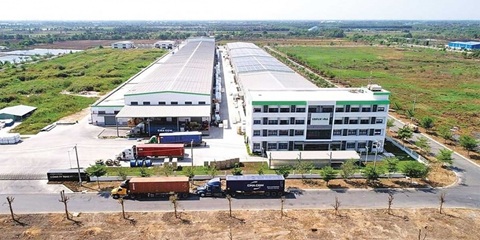
FOREIGN INVESTORS SEEKING A SYNCHRONISED MANUFACTURING ECOSYSTEM
Instead of focusing only on land costs and incentives as usual, foreign investors are seeking a synchronised manufacturing ecosystem, from stable power supply and logistics to shared infrastructure and the convenience of completing residence procedures for experts to serve their long-term investment in the country.
INFRASTRUCTURE / CONSTRUCTION / LOGISTIC / PORT
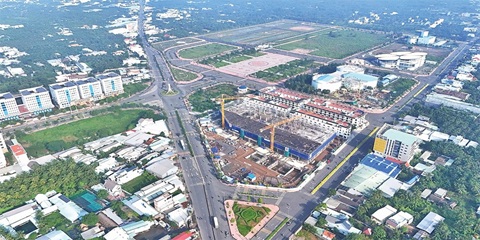
DONG THAP PROVINCE STEPS UP INDUSTRIAL EXPANSION AND INFRASTRUCTURE CONNECTIVITY
Accelerating public investment, strengthening inter-regional connectivity, and expanding industrial land are helping Dong Thap efficiently bolster competitiveness and drive economic growth. Following the 2025 merger of the former Dong Thap and Tien Giang provinces, the expanded Dong Thap province in the Mekong Delta faces mounting pressure to accelerate infrastructure development and strengthen connectivity among local economic zones, urban areas, industrial parks (IPs), and production centres.
PROPERTY / INDUSTRIAL ZONE
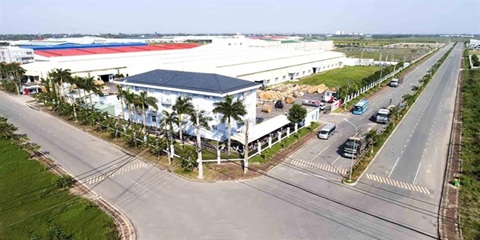
HCM CITY ATTRACTS US$5.7 BILLION INTO EXPORT PROCESSING AND INDUSTRIAL ZONES
HCM City attracted US$5.7 billion in domestic and foreign investment into its export processing and industrial zones during the first nine months of 2026. The figure exceeded the city's full-year target by 31 per cent, highlighting strong momentum in high-quality industrial investment under Resolution No.10-NQ/TW. Total investment reached 131 per cent of the 2026 target of $4.25 billion and represented a 29 per cent increase compared with the same period in 2025, according to the city's Export Processing and Industrial Zones Authority (HEPZA).

BANKING / FINANCE / INSURANCE / TAX
REMITTANCES TO HCM CITY RISE NEARLY 40% IN Q3
Remittances to HCM City reached more than US$2.83 billion in the third quarter of this year, up 39.5 per cent from the previous quarter and 3.6 per cent year-on-year. This was the first quarter showing positive annual growth this year, helping narrow the decline in remittance inflows over the first nine months. According to the State Bank of Vietnam (SBV)’s Regional Branch 2, remittances transferred to HCM City through credit institutions and economic organisations totalled $2.835 billion in Q3, an increase of more than $802 million from the previous quarter.

VIETNAM ECONOMY INVESTMENT
LOCALITIES REPORT BREAKTHROUGH RESULTS IN FDI IN FIRST NINE MONTHS
In Ho Chi Minh City, total registered capital reached $17.2 billion in the first nine months, up 4.2 times from the same period last year. The figure included more than $9.35 billion in newly registered capital and over $4.9 billion in additional capital for existing projects. Foreign investors also registered more than $2.9 billion through capital contributions and share purchases.

TECHNOLOGY
TECH SECTOR GROWTH OPENS UP OPPORTUNITIES FOR VIỆT NAM TO GO GLOBAL
The growth of the electronics, semiconductor and high-tech sectors worldwide is opening up a variety of opportunities for Vietnamese enterprises to integrate more deeply into the global supply chain. However, to become suppliers for these corporations, domestic enterprises must meet rigorous standards regarding quality, technology, productivity and order fulfilment capabilities.
Events Sponsors






















