Want to be in the loop?
subscribe to
our notification
Business News
FINANCE MINISTRY OPPOSES HIGH INCENTIVES FOR SPECIAL ECONOMIC ZONES
The Ministry of Finance (MoF) has expressed its disagreement with certain incentive mechanisms for businesses and individuals working in special economic zones in three provinces.
These mechanisms are stated in the recently-issued Draft Law on Special Administrative Economic Units. The Ministry of Planning and Investment (MPI) has prepared the law for submission to the Government and the National Assembly.
Under the draft law, the MPI proposes many preferential policies on land and taxes to enhance the ability to attract investment capital, especially foreign-invested capital, in three special administrative -- economic units of Van Don in the northern province of Quang Ninh, Bac Van Phong in the southern province of Khanh Hoa and Phu Quoc in the southern province of Kien Giang.
The MoF has objected to the draft’s Clause 3 of Article 16, which proposes regulations allowing domestic economic organisations and foreign-invested economic organisations to mortgage their assets attached to land at foreign credit institutions and be entitled to the transfer of land use right directly from an organisation or individual having land use right to implement an investment project as a domestic economic organisation.
The ministry proposed that the MPI remove this incentive as mortgaged assets will be recovered by the credit institution and sold to recover the debt if the borrower cannot pay the debt. Thus, by allowing economic organisations to have land use right to mortgage the loan, then if they go bankrupt, the credit institution will not be able to handle mortgaged assets.
The draft also stipulates a 10 per cent preferential reduction of land use fees for foreign invested enterprises and Vietnamese residing overseas that are allocated land to implement investment projects for construction of residential housing for purposes of sale or for sale and lease.
However, the MoF proposed that the MPI re-consider this as the reduction of 10 per cent of the land use fee only benefits the buyers, so this policy will have little impact on production and business activities.
The MoF is also opposed to the MPI’s proposal to set up state funds outside the budget in the special economic zones, such as the Development Investment Fund and the Investment, Trade and Tourism Promotion Fund. The ministry explained the objection by quoting the Prime Minister as saying the funds should only be set up when necessary.
MoF disagrees with the idea of allowing overspending in revenue of the special economic zone as only budgets at central and provincial levels are permitted to overspend.
The ministry said the MPI should keep the special consumption tax imposed on casino and betting games at 35 and 30 per cent, instead of decreasing them to 25 per cent and 21 per cent under the proposal, adding that this is an indirect tax on types of goods and services which should limit consumption.
Source: VIR
Related News
VIETNAM ECONOMY INVESTMENT
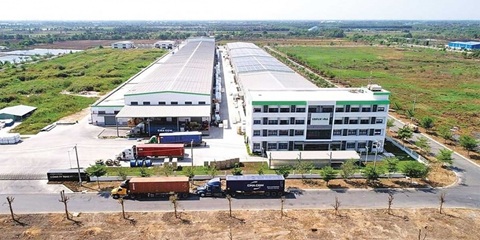
FOREIGN INVESTORS SEEKING A SYNCHRONISED MANUFACTURING ECOSYSTEM
Instead of focusing only on land costs and incentives as usual, foreign investors are seeking a synchronised manufacturing ecosystem, from stable power supply and logistics to shared infrastructure and the convenience of completing residence procedures for experts to serve their long-term investment in the country.
INFRASTRUCTURE / CONSTRUCTION / LOGISTIC / PORT
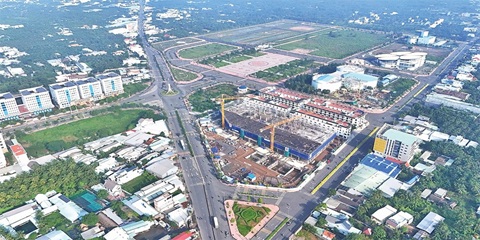
DONG THAP PROVINCE STEPS UP INDUSTRIAL EXPANSION AND INFRASTRUCTURE CONNECTIVITY
Accelerating public investment, strengthening inter-regional connectivity, and expanding industrial land are helping Dong Thap efficiently bolster competitiveness and drive economic growth. Following the 2025 merger of the former Dong Thap and Tien Giang provinces, the expanded Dong Thap province in the Mekong Delta faces mounting pressure to accelerate infrastructure development and strengthen connectivity among local economic zones, urban areas, industrial parks (IPs), and production centres.
PROPERTY / INDUSTRIAL ZONE
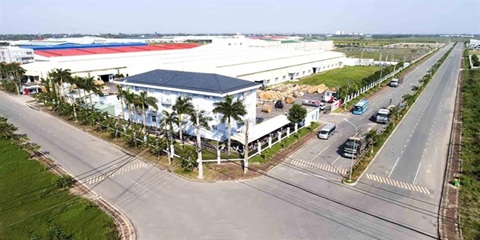
HCM CITY ATTRACTS US$5.7 BILLION INTO EXPORT PROCESSING AND INDUSTRIAL ZONES
HCM City attracted US$5.7 billion in domestic and foreign investment into its export processing and industrial zones during the first nine months of 2026. The figure exceeded the city's full-year target by 31 per cent, highlighting strong momentum in high-quality industrial investment under Resolution No.10-NQ/TW. Total investment reached 131 per cent of the 2026 target of $4.25 billion and represented a 29 per cent increase compared with the same period in 2025, according to the city's Export Processing and Industrial Zones Authority (HEPZA).

BANKING / FINANCE / INSURANCE / TAX
REMITTANCES TO HCM CITY RISE NEARLY 40% IN Q3
Remittances to HCM City reached more than US$2.83 billion in the third quarter of this year, up 39.5 per cent from the previous quarter and 3.6 per cent year-on-year. This was the first quarter showing positive annual growth this year, helping narrow the decline in remittance inflows over the first nine months. According to the State Bank of Vietnam (SBV)’s Regional Branch 2, remittances transferred to HCM City through credit institutions and economic organisations totalled $2.835 billion in Q3, an increase of more than $802 million from the previous quarter.
VIETNAM ECONOMY INVESTMENT
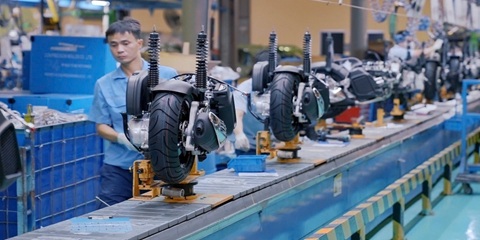
LOCALITIES REPORT BREAKTHROUGH RESULTS IN FDI IN FIRST NINE MONTHS
In Ho Chi Minh City, total registered capital reached $17.2 billion in the first nine months, up 4.2 times from the same period last year. The figure included more than $9.35 billion in newly registered capital and over $4.9 billion in additional capital for existing projects. Foreign investors also registered more than $2.9 billion through capital contributions and share purchases.

TECHNOLOGY
TECH SECTOR GROWTH OPENS UP OPPORTUNITIES FOR VIỆT NAM TO GO GLOBAL
The growth of the electronics, semiconductor and high-tech sectors worldwide is opening up a variety of opportunities for Vietnamese enterprises to integrate more deeply into the global supply chain. However, to become suppliers for these corporations, domestic enterprises must meet rigorous standards regarding quality, technology, productivity and order fulfilment capabilities.
Events Sponsors






















