Want to be in the loop?
subscribe to
our notification
Business News
FIRST-QUARTER GROWTH HITS RECORD HIGH DESPITE GLOBAL VOLATILITY
Vietnam’s economy delivered a standout performance in the first quarter of 2026, with GDP expanding 7.8 per cent on-year – the strongest first-quarter growth on record.
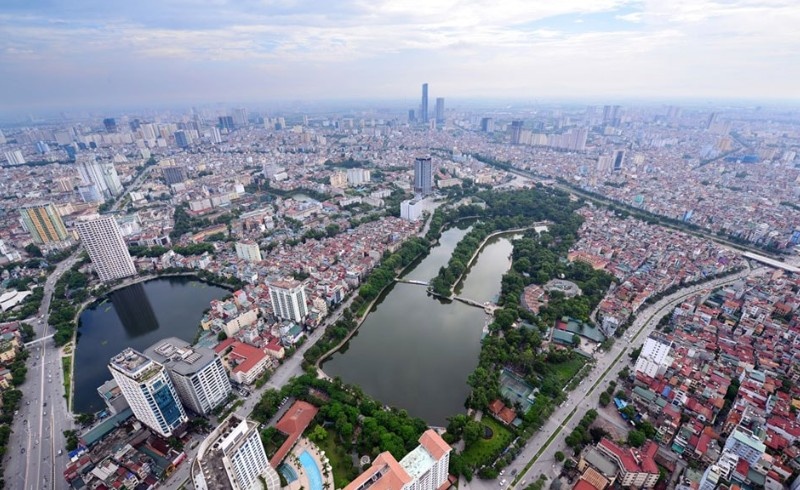
According to Dragon Capital, Vietnam’s growth momentum strengthened in March following Lunar New Year normalisation, reinforcing confidence that the expansion remained firmly intact through the first quarter of 2026. GDP grew 7.8 per cent on-year in the first quarter, with industry and construction rising 8.9 per cent and services 8.2 per cent, highlighting that growth is not solely reliant on exports and manufacturing, but is increasingly supported by services and domestic demand.
The confirmation of Vietnam’s leadership structure reinforces political stability and policy continuity, providing investors with clearer economic visibility over the next five-year government cycle. Nonetheless, global markets turned more volatile following the escalating Iran conflict in early March, shaping near-term sentiment despite Vietnam’s stable macro fundamentals, placing downward pressure on the VN-Index.
Industrial activity remained a key pillar. The Index of Industrial Production (IIP) increased 9 per cent on-year in the first quarter, with manufacturing expanding 9.7 per cent and driving the majority of growth. March recorded a strong rebound, with IIP rising 18.8 per cent from a month ago and 6.9 per cent on-year.
Business conditions remained expansionary, with Purchasing Managers' Index moderating to 51.2 from 54.3 in February, reflecting normalisation from a high base rather than weaker demand. Expansion remained broad-based across sectors, including metals (up 22.9 per cent), non-metallic minerals (up 19.7 per cent), chemicals (up 18.2 per cent).
Domestic demand remained firm. Retail sales and services revenue rose 12.1 per cent on-year in March and 10.9 per cent in the first quarter, reaching approximately $72.3 billion. Accommodation and food services increased 13.3 per cent on-year, while tourism-related services grew 12.5 per cent, supported by seasonal demand and continued recovery in travel activity.
This trend supports earnings visibility for consumer-facing sectors, which have become an increasingly important driver of market performance in recent years, and reinforces consumption as a stable and increasingly important support to economic expansion.
Dragon Capital noted that investment and external activity continued to underpin expansion. Goods exports rose 19.1 per cent on-year in the first quarter, while imports increased 27 per cent, reflecting strong trade demand. Business formation remained active, with over 57,000 new enterprises (up 57.8 per cent on-year) and registered capital of approximately $20.5 billion. Including firms restarting operations, total active additions reached around 96,000 (up 31.7 per cent), highlighting continued private-sector dynamism.
The consumer price index rose 4.6 per cent on-year in March, the highest March reading in five years, bringing the first quarter average inflation to 3.5 per cent on-year, driven mainly by higher fuel prices amid US-Iran tensions. However, both remain within the government’s 4.5–5.0 per cent target, preserving policy flexibility to absorb external shocks.
In addition, equity markets turned more volatile in March, entering a corrective phase after the strong rally earlier in the year. The VN-Index declined 11.9 per cent on-month in total return USD terms as global markets priced in geopolitical tensions. The correction was sector-agnostic, suggesting a broad derisking rather than specific weakness.
Average daily trading value remained resilient at around $1.3 billion, supported by domestic participation, while foreign flows remained intermittent. By month-end, the VN-Index stabilised from its lows, suggesting the adjustment was driven primarily by external factors rather than any change in domestic fundamentals.
Source: VIR
Related News

INFRASTRUCTURE / CONSTRUCTION / LOGISTIC / PORT
VIỆT NAM-CAMBODIA TRADE GATHERS PACE TOWARDS $20 BILLION TARGET
Trade between Việt Nam and Cambodia continues to grow, remaining a bright spot and a key pillar of bilateral cooperation as the two countries aim to raise two-way trade to US$20 billion in the coming years. After setting a record of more than $11.3 billion last year, bilateral trade reached about $8.7 billion in the first eight months of this year, up 8.3 per cent year on year.
TECHNOLOGY
AI BEGINNING TO RESHAPE RECRUITMENT CRITERIA
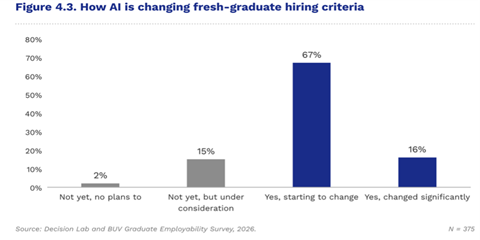
Digital literacy is the only capability area in which fresh graduates meet employers’ expectations, according to a new report. Yet, it is also the standard rising fastest, as businesses increasingly expect new hires to use AI effectively in the workplace. Some 83 per cent of employers say AI has changed, or is beginning to change, their hiring criteria, while 94 per cent report higher expectations for digital and AI capabilities than they had two to three years ago.

INFRASTRUCTURE / CONSTRUCTION / LOGISTIC / PORT
ĐÀ NẴNG GREEN-LIGHTS US$105 MILLION THAI DEVELOPMENT DEAL
The central city has approved an investment proposal by Thailand’s WHA Group to develop infrastructure for the 400ha WHA Đà Nẵng Industrial Park project on two communes of Thăng Bình and Đồng Dương, with an investment of more than VNĐ2.7 trillion (US$105 million). The city said it approved WHA Industrial Development International's status as an investor in the project, which is expected to take place between 2027 and 2034.

VIETNAM ECONOMY INVESTMENT
MOBILE PHONE EXPORTS RISE 20% TO $51.8 BILLION IN FIRST NINE MONTHS
Exports of mobile phones and components rose 20 per cent year-on-year to nearly US$51.8 billion in the first nine months of 2026, with China, the US and Republic of Korea accounting for more than half of the total. Shipments to the three markets reached a combined $26.18 billion, or 50.6 per cent of total exports of the product group during the period, according to data from the Vietnam Department of Customs under the Ministry of Finance.

VIETNAM ECONOMY INVESTMENT
FRUIT AND VEGETABLE EXPORTS POISED TO HIT $10 BILLION IN 2026
Fruit and vegetable exports are on track to reach nearly US$10 billion in 2026, after rising 19.9 per cent year on year to nearly US$7.4 billion in the first nine months, driven by strong seasonal demand and abundant tropical fruit supplies. The Ministry of Agriculture and Environment said the growth reflected stronger international demand for fresh produce and processed agricultural products.
GARMENT / TEXTILE
TEXTILE EXPORTS FACE DUAL CHALLENGES OF SUSTAINING ORDERS AND BOOSTING EFFICIENCY AMID GROWING COMPETITION
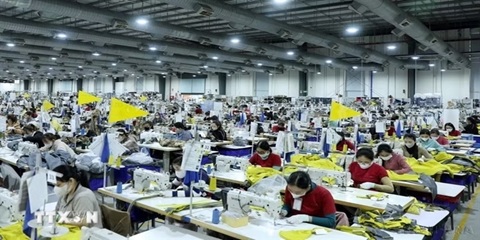
Data shows that the textile and garment sector maintained its growth momentum in the first nine months of this year. The industry's total export turnover reached an estimated US$35.721 billion in the first nine months of this year, up 3.3 per cent year-on-year. Despite posting encouraging export figures, Vietnamese textile and garment enterprises continue to navigate unpredictable market variables.
Events Sponsors






















