Want to be in the loop?
subscribe to
our notification
Business News
FREIGHT COSTS WEIGH DOWN ON DISRUPTED BUSINESSES
Vietnamese businesses are reeling under financial stress as ocean-freight costs soar to a new record level, hindering local exporters’ ambitions to further expand in foreign markets.
Phan Van Viet, chairman of jeans and khaki producer Viet Thang Jean Co., Ltd. (VitaJean), said that the costs to ship goods in a shipping container have tripled during the global health crisis. The rate for a container from Vietnam to Europe has risen from $3,000 pre-pandemic to $10,000 last month, the highest on record. This has caused several obstacles for VitaJean’s export activities to overseas markets.
Viet further noted that despite rising shipping-container rates, the company could not increase selling prices with the contracts already signed before. High ocean-freight rates discourage customers to place new orders while some make slower payments than usual. As the situation continues to deteriorate, it is likely to weigh on the firm’s profit margin this year.
Meanwhile, Nguyen Dinh Tung, general director of fruit exporter Vina T&T Group, told VIR, “We have dealt with the challenges caused by rising ocean freight rates since July last year. This year, the company has to pay $6,000 per container to export its goods from Vietnam to the United States, which is three times higher than the rate of $1,800-2,000 last year. Headwinds in ocean freight result in several challenges including rising expenses and higher prices, which in turn lowers the competitiveness of made-in-Vietnam products.”
Although international carriers raise the freight rates, there is still strong demand in the market. Many companies accept higher fees to export their products from Vietnam to the US and Europe. While this trend hurts exporters and importers, ocean carriers are enjoying growing profits.
“While companies are struggling with the difficulties from another major outbreak in Vietnam, the rise of seaborne-freight costs sees no sign of cooling down. Thus, I hope that the government can work with foreign ocean carriers to address this problem soon,” Tung added.
According to the Vietnam Logistics Association (VLA), the spike in ocean freight rates comes from the fluctuating supply and demand in the market. US and European importers are ramping up the restocking of goods to serve the surging consumption demand. Meanwhile, the pandemic has disrupted the trade flow and affected the turnaround time of container vessels, which results in a shortage of empty containers. Thus, freight costs are projected to wind down when the demand for imports go down.
According to data from container liner Maersk, due to the pandemic there was a precipitous drop in the demand for container services in the second quarter of 2020. The demand plunged from 2.2 per cent in the preceding quarter to minus 8.3 per cent.
Starting from the second half of 2020, the restocking in the US and Europe has been raising demand whilst global measures to contain the pandemic have been causing severe strains across the supply chain, from a lack of vessels, containers, and trucks to significantly reduced productivity across ports, warehouses, and inland terminals.
And on top of these bottlenecks in the global supply chain, issues like the Suez Canal blockage and Yantian Port closure continue to put pressure on supply chains. A spokesperson from Maersk explained that the current market situation is exceptional. The current supply/demand picture has caused freight rates to spike, also driven by increased network costs from less efficient vessel operations, steep increases in charter rates, and box prices as well as alternative solutions to support customer supply chains.
“Equipment supply and the repositioning of empty containers remains a concern, but to further lessen the impact on our customers’ supply chains, given the extraordinary market conditions triggered by the global pandemic, we are accelerating the injection of new dry containers into our fleet,” she added. “By the end of the second quarter, we will have added around 260,000 twenty-foot equivalent units (TEU). This comes after the 400,000 TEUs already added to our fleet from July 2020 to January. We also have deployed all available vessels in our fleet and chartered in all available capacity.”
The Drewry World Container Index released on May 27 showed the rate for a 40-foot container from Asia to the Europe shot above $10,000 for the first time on record. Industry insiders predict that the trend of high freight costs will continue to the third quarter of 2021, impacting exporters’ business results.
Source: VIR
Related News

MEMBER CORNER / PROMOTIONS
HCMC | CERTIFIED SUSTAINABILITY PROFESSIONAL (CSP) TRAINING | REGISTRATION OPEN
As sustainability becomes deeply embedded in corporate strategy and supply-chain operations across Vietnam, Hong Kong Business Association Vietnam is pleased to endorse the upcoming Certified Sustainability Professional (CSP) training program by the Asia Institute for Sustainability (AIS) - a premier internationally recognized ESG credential in Vietnam.
VIETNAM ECONOMY INVESTMENT
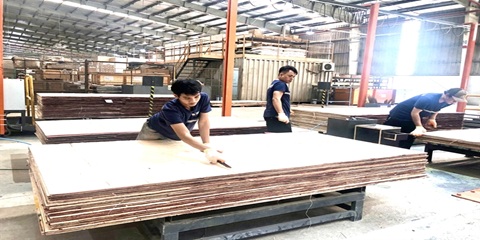
HCM CITY SAYS HOW IT PLANS TO ACHIEVE 10-11% ANNUAL EXPORT GROWTH FOR REST OF DECADE
The southern economic hub aims to strengthen its role as the country’s largest import-export centre while developing into a regional transhipment centre in Southeast Asia, supported by green and digital transformation and a circular economy. HCM City has outlined measures to expand production capacity, cut logistics costs, diversify export markets, and help businesses meet increasingly stringent international standards as it targets average annual export growth of 10-11 per cent through 2030.
VIETNAM ECONOMY INVESTMENT
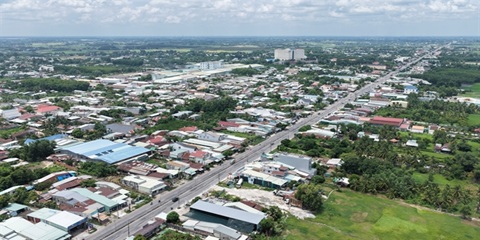
HCM CITY LEADS ECONOMIC RESTRUCTURING IN SOUTHEAST REGION
According to Associate Professor, Dr Vũ Tuấn Hưng, director of the Institute of Social Sciences of the Southern Region, the Southeast is a strategically important socio-economic space in Việt Nam’s development given its advantages in location, industry, trade, services, logistics, science and technology, urbanisation and human resources.
TECHNOLOGY
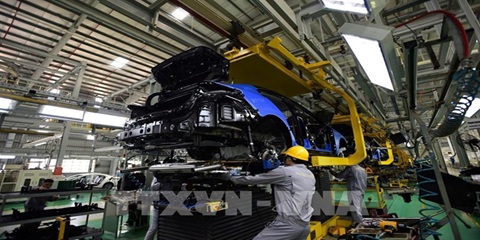
DIGITAL TRANSFORMATION TURNED INTO PRACTICAL TOOLS FOR PEOPLE, BUSINESSES
Việt Nam is moving its digital transformation agenda beyond policy frameworks and individual technology platforms towards practical applications that address everyday needs, as authorities seek measurable outcomes from science, technology and innovation. Under Politburo Resolution No. 57-NQ/TW issued on December 22, 2024, the implementation is increasingly shifting from simply completing assigned tasks towards developing concrete products and services for citizens and businesses.
TECHNOLOGY
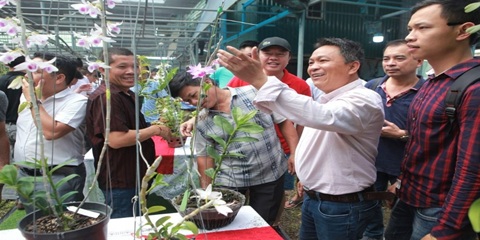
APPLYING TECHNOLOGY FOR ECONOMIC TRANSFORMATION
Having completed its new rural development program, Hanoi is shifting its focus toward improving development quality and building smart, sustainable rural areas. The transformation of Dong La orchid-growing village in An Khanh, a western commune of Hanoi, shows how digital technology is becoming a driver of production, market expansion, and higher incomes for local residents.

MEMBER CORNER / PROMOTIONS
VIGLACERA HONORED AS THE "LEADING GREEN INDUSTRIAL REAL ESTATE DEVELOPER 2026"
Organized by the Vietnam Investment Review, this prestigious awards program recognizes industry pioneers advancing eco-industrial parks, clean energy transition, and rigorous ESG standards. Outperforming competitors through a rigorous evaluation, Viglacera Corporation – JSC proudly ranked among the Top 5 highest-positioned enterprises in the Leading Green Industrial Real Estate Developers 2026 category, reinforcing its premier position in Vietnam’s industrial real estate sector.
Events Sponsors






















