Want to be in the loop?
subscribe to
our notification
Business News
FROM VISAS TO VILLAS BUSINESS IS BOOMING
A portion of repeat international visitors are beginning to purchase property for long stays, retirement or combined investment use.
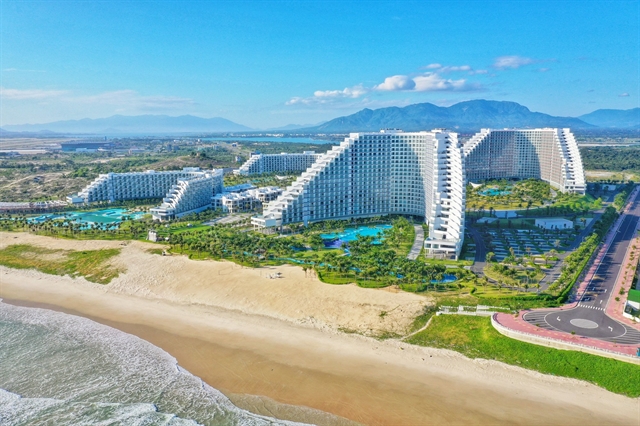
The Arena, a resort apartment in central province Nha Trang. VGP Photo
HÀ NỘI — The resort property market is showing renewed vitality, with hotel occupancy and investment activity rising after the Government expanded its visa-waiver policy, according to industry insiders.
Surveys by the VARS Institute of Real Estate Market Research and provincial Departments of Culture, Sports and Tourism reveal four- and five-star hotel occupancy in Đà Nẵng, Nha Trang and Phú Quốc reaching between 70 and 90 per cent, with full bookings during holidays and festivals. Room revenue is reported to have increased by 20–30 per cent year-on-year.
Secondary market activity has also picked up, with fewer distressed resales, 5–10 per cent annual price growth at some projects and the resumption of high-end developments. New project launches have recorded positive initial absorption.
Industry analysts attribute the rebound primarily to changes in visa policy. Over the past two years, Việt Nam has expanded its list of countries eligible for unilateral visa exemptions.
Most recently, Resolution 229 grants visa-free entry to citizens of 12 countries from August 15 to August 2028. This follows Resolution 44 in March 2025, which also covered 12 nations. Việt Nam now applies unilateral visa waivers to 24 countries, mainly in Europe. Since August 2023, the permitted stay under these waivers has been extended from 15 to 45 days.
The impact of the changes is reflected in tourism data. According to the General Statistics Office, Việt Nam welcomed 10.7 million international visitors in the first half of 2025, up nearly 21 per cent year-on-year and about 26 per cent above 2019 levels. The Việt Nam National Authority of Tourism reports notable increases in visitors from Poland (44 per cent) and Switzerland (10 per cent) in the same period.
Localities with airport, seaport and expressway access, established tourism brands and clear international marketing strategies are seeing the strongest gains in occupancy and room revenue. The VARS Institute expects the visa-waiver policy to continue driving hotel demand, stimulate new supply and revive previously delayed projects.
The evolving market is also seeing structural shifts. A portion of international visitors are staying longer and spending more, bolstering demand for higher-end properties such as beachfront villas, resort-standard accommodation and luxury condotels. Repeat visitors are increasingly purchasing property for extended stays, retirement or a mix of personal use and investment, gradually widening the ownership base.
Sustaining this growth will depend on the responsiveness of both developers and public authorities. VARS Chairman Nguyễn Văn Đính noted that businesses must adapt their offerings to match evolving demand. Projects that incorporate on-site amenities, wellness services, night-time entertainment and experiential tourism are becoming more prevalent.
On the regulatory side, continued efforts to remove legal bottlenecks and maintain a transparent, predictable investment environment are essential for boosting investor confidence.
In short, Việt Nam’s expanded visa-waiver policy is contributing to stronger hotel performance and renewed resort property activity. If consistently implemented and well-supported, the policy could underpin steady, long-term growth in the hospitality and resort real estate sectors. — VNS
Source: VNS
Related News

MEMBER CORNER / PROMOTIONS
BẰNG KIỀU LIVESHOW - A SYMPHONY OF LOVE UNDER THE GOLDEN GLOW
A masterclass in live music that takes the audience on a soulful journey through immortal love songs, guided by the peerless artistry and emotive storytelling of renowned singer Bằng Kiều. The highlight of the night is his seamless musical chemistry with special guest Triệu Hồng Ngọc, promising passionate and deeply resonant duets inside the magnificent Grand Ballroom.
INFRASTRUCTURE / CONSTRUCTION / LOGISTIC / PORT
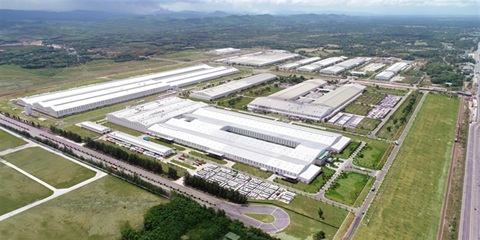
ĐÀ NẴNG GREEN-LIGHTS US$105 MILLION THAI DEVELOPMENT DEAL
The central city has approved an investment proposal by Thailand’s WHA Group to develop infrastructure for the 400ha WHA Đà Nẵng Industrial Park project on two communes of Thăng Bình and Đồng Dương, with an investment of more than VNĐ2.7 trillion (US$105 million). The city said it approved WHA Industrial Development International's status as an investor in the project, which is expected to take place between 2027 and 2034.
VIETNAM ECONOMY INVESTMENT
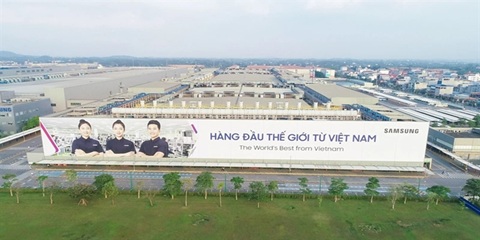
MOBILE PHONE EXPORTS RISE 20% TO $51.8 BILLION IN FIRST NINE MONTHS
Exports of mobile phones and components rose 20 per cent year-on-year to nearly US$51.8 billion in the first nine months of 2026, with China, the US and Republic of Korea accounting for more than half of the total. Shipments to the three markets reached a combined $26.18 billion, or 50.6 per cent of total exports of the product group during the period, according to data from the Vietnam Department of Customs under the Ministry of Finance.

INFRASTRUCTURE / CONSTRUCTION / LOGISTIC / PORT
VIỆT NAM-CAMBODIA TRADE GATHERS PACE TOWARDS $20 BILLION TARGET
Trade between Việt Nam and Cambodia continues to grow, remaining a bright spot and a key pillar of bilateral cooperation as the two countries aim to raise two-way trade to US$20 billion in the coming years. After setting a record of more than $11.3 billion last year, bilateral trade reached about $8.7 billion in the first eight months of this year, up 8.3 per cent year on year.
VIETNAM ECONOMY INVESTMENT
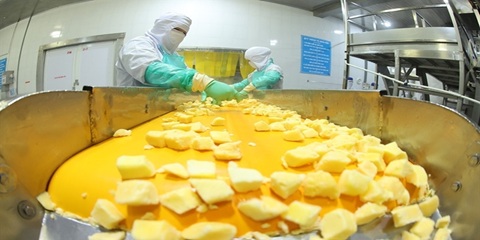
FRUIT AND VEGETABLE EXPORTS POISED TO HIT $10 BILLION IN 2026
Fruit and vegetable exports are on track to reach nearly US$10 billion in 2026, after rising 19.9 per cent year on year to nearly US$7.4 billion in the first nine months, driven by strong seasonal demand and abundant tropical fruit supplies. The Ministry of Agriculture and Environment said the growth reflected stronger international demand for fresh produce and processed agricultural products.
GARMENT / TEXTILE
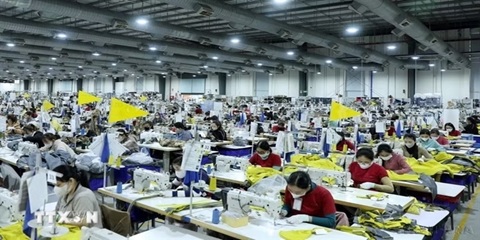
TEXTILE EXPORTS FACE DUAL CHALLENGES OF SUSTAINING ORDERS AND BOOSTING EFFICIENCY AMID GROWING COMPETITION
Data shows that the textile and garment sector maintained its growth momentum in the first nine months of this year. The industry's total export turnover reached an estimated US$35.721 billion in the first nine months of this year, up 3.3 per cent year-on-year. Despite posting encouraging export figures, Vietnamese textile and garment enterprises continue to navigate unpredictable market variables.
Events Sponsors






















