Want to be in the loop?
subscribe to
our notification
Business News
GARMENT AND TEXTILE FIRMS EYE EXPORTS AND DOMESTIC MARKET FOR GROWTH
Amid global uncertainties, garment and textile firms are exploring new growth avenues – expanding export markets while also turning their focus inward to reclaim the domestic market through branding and green supply chains.
Talking to VIR, Pham Xuan Hong, chairman of Ho Chi Minh City Association of Garment Textile Embroidery-Knitting (AGTEK), noted that Vietnamese businesses still maintain a competitive edge thanks to product quality, delivery reliability, and a stable business environment. However, rising costs and a shortage of skilled labour in yarn production and design are major challenges.
“Beyond tariff barriers, the sector is facing increased risks of trade fraud investigations and safeguard measures from major markets. This compels firms to raise localisation rates, strictly comply with rules of origin, and fully leverage preferential terms under Free Trade Agreements (FTAs), particularly those with the EU, Japan, and Australia,” he said.
As the year-end approaches with anticipated market volatility, businesses are prioritising order retention, workforce stability, and proactive upgrades in equipment and production lines to meet evolving international standards. The domestic market, long considered a 'backyard', is now emerging as a promising frontier.
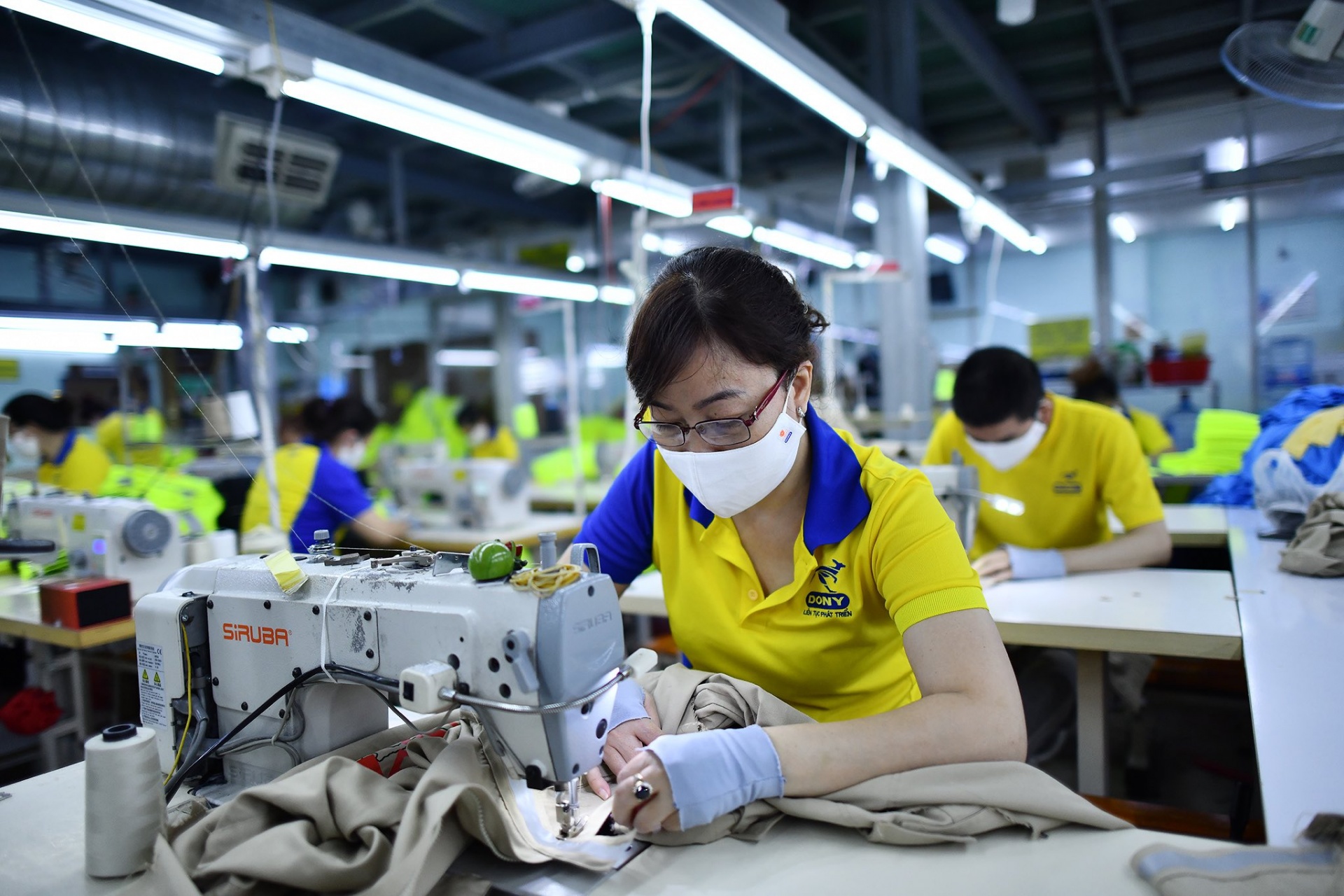
Nguyen Thi Tuyet Mai, deputy secretary general of Vietnam Textile and Apparel Association (VITAS), reported that Vietnam’s domestic textile apparel sales exceeded $5 billion in 2024, growing 8–10 per cent annually from 2018 to 2023.
“A new consumer segment with higher incomes is reshaping demand structures by prioritising sustainability. Today’s consumers don’t just compare prices – they care about material origins and production processes. This is an advantage Vietnamese businesses can capitalise on, given their deep understanding of local culture and preferences,” she noted.
The domestic landscape, however, is also fiercely competitive. Low-cost products continue to dominate online platforms, while imported high-end items hold sway in premium segments.
This presents a steep challenge for local brands aiming to reclaim market share at home.
Given the current climate, Hong from AGTEK emphasised that renegotiating export contracts to share cost burdens with partners is a necessary first step to preserve orders. Additionally, firms must increase localisation rates, adhere rigorously to origin regulations, and leverage FTA tax incentives to broaden their market reach.
“We must transition from a pure outsourcing model to developing our own products, targeting high-end and niche markets, and simultaneously accelerate automation to boost productivity and reduce long-term costs,” he stressed.
Many firms are already shifting direction. Nguyen Tran Thien Thanh, director of Thien Thanh Binh Co., Ltd. Based in Ho Chi Minh City, shared VIR that by the end of the third quarter (Q3), the company’s order placement faces a pause. In Q4, orders are arriving more slowly due to tariff pressures.
To adapt, Thien Thanh Binh has diversified its market presence into Japan, Taiwan, and the EU.
Simultaneously, the company is sourcing domestically to increase localisation and developing a roadmap for environmental, social, and governance policies, ensuring supply chain transparency and compliance with origin rules to enhance competitiveness in potential markets.
“Domestic raw material supply remains insufficient. The auxiliary manufacturing sector is small, with limited orders and high capital recovery risks, discouraging investment. We hope to see broader access to manufacturing machinery and tools, so that even the smallest production steps can be localised,” said Thanh.
In the domestic market, Mai from VITAS believes that winning back local consumers requires a complete mindset shift.
“We cannot continue with just contract manufacturing. Businesses must control their own brands, invest in design, and position their products strategically. E-commerce and social media should serve as strategic pillars – not just sales channels,” she noted.
She added,“Understanding Vietnamese consumer preferences and the growing ‘Vietnamese use Vietnamese products’ movement can be powerful if leveraged wisely. Still, intense price competition online from low-cost imports is putting local brands under significant pressure. Therefore, the government should establish specific exhibition and promotion centres for domestic textile products – to enhance national brand identity and connect local businesses with foreign partners and investors.”
According to the latest data from National Statistics Office under Ministry of Finance, Vietnam’s garments and textiles sector posted over $26.4 billion in total export value in the first eight months of 2025, an increase of $2.1 billion or 10.8 per cent on-year.
Source: VIR
Related News

INFRASTRUCTURE / CONSTRUCTION / LOGISTIC / PORT
VIỆT NAM-CAMBODIA TRADE GATHERS PACE TOWARDS $20 BILLION TARGET
Trade between Việt Nam and Cambodia continues to grow, remaining a bright spot and a key pillar of bilateral cooperation as the two countries aim to raise two-way trade to US$20 billion in the coming years. After setting a record of more than $11.3 billion last year, bilateral trade reached about $8.7 billion in the first eight months of this year, up 8.3 per cent year on year.
TECHNOLOGY
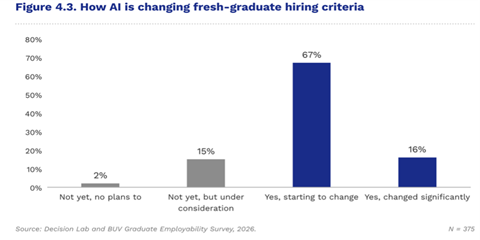
AI BEGINNING TO RESHAPE RECRUITMENT CRITERIA
Digital literacy is the only capability area in which fresh graduates meet employers’ expectations, according to a new report. Yet, it is also the standard rising fastest, as businesses increasingly expect new hires to use AI effectively in the workplace. Some 83 per cent of employers say AI has changed, or is beginning to change, their hiring criteria, while 94 per cent report higher expectations for digital and AI capabilities than they had two to three years ago.

INFRASTRUCTURE / CONSTRUCTION / LOGISTIC / PORT
ĐÀ NẴNG GREEN-LIGHTS US$105 MILLION THAI DEVELOPMENT DEAL
The central city has approved an investment proposal by Thailand’s WHA Group to develop infrastructure for the 400ha WHA Đà Nẵng Industrial Park project on two communes of Thăng Bình and Đồng Dương, with an investment of more than VNĐ2.7 trillion (US$105 million). The city said it approved WHA Industrial Development International's status as an investor in the project, which is expected to take place between 2027 and 2034.
VIETNAM ECONOMY INVESTMENT
MOBILE PHONE EXPORTS RISE 20% TO $51.8 BILLION IN FIRST NINE MONTHS
Exports of mobile phones and components rose 20 per cent year-on-year to nearly US$51.8 billion in the first nine months of 2026, with China, the US and Republic of Korea accounting for more than half of the total. Shipments to the three markets reached a combined $26.18 billion, or 50.6 per cent of total exports of the product group during the period, according to data from the Vietnam Department of Customs under the Ministry of Finance.

VIETNAM ECONOMY INVESTMENT
FRUIT AND VEGETABLE EXPORTS POISED TO HIT $10 BILLION IN 2026
Fruit and vegetable exports are on track to reach nearly US$10 billion in 2026, after rising 19.9 per cent year on year to nearly US$7.4 billion in the first nine months, driven by strong seasonal demand and abundant tropical fruit supplies. The Ministry of Agriculture and Environment said the growth reflected stronger international demand for fresh produce and processed agricultural products.
GARMENT / TEXTILE
TEXTILE EXPORTS FACE DUAL CHALLENGES OF SUSTAINING ORDERS AND BOOSTING EFFICIENCY AMID GROWING COMPETITION
Data shows that the textile and garment sector maintained its growth momentum in the first nine months of this year. The industry's total export turnover reached an estimated US$35.721 billion in the first nine months of this year, up 3.3 per cent year-on-year. Despite posting encouraging export figures, Vietnamese textile and garment enterprises continue to navigate unpredictable market variables.
Events Sponsors






















