Want to be in the loop?
subscribe to
our notification
Business News
GARMENT, FOOTWEAR HARD HIT BY PANDEMIC
Right from the middle of the first quarter of 2020, a lot of major importers postponed and canceled orders, causing most domestic exporters to moderate production or even temporarily halt production.
Double hardship
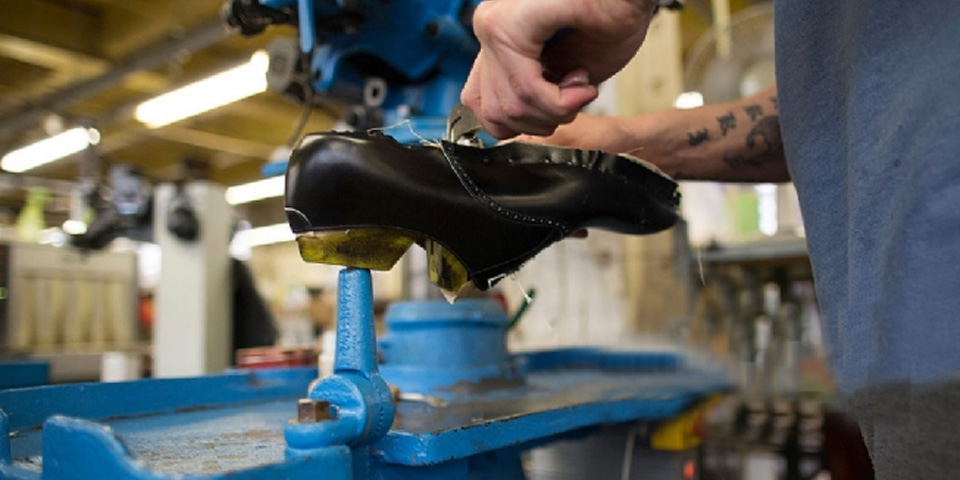
According to the General Department of Vietnam Customs, in the first three months of the year, leather-footwear exports all declined. Specifically, footwear fell by 1.9% as compared with a 14% growth in the corresponding period of 2019. The export of bags, suitcases, hats and umbrellas slipped 5.5%, compared to a growth of 10.2% a year earlier.
According to data from the General Statistics Office, textile and apparel export turnover in the first three months of 2020 recorded a marked decline. Specifically, the export turnover of the first quarter of 2020 reached nearly US$6.5 billion, down 9% over the same period. In March 2020 alone, textile and apparel export turnover is estimated at US$1.8 billion, down by 29%.
Notably, input imports for garment-textile and leather-footwear sectors slumped significantly. The import value sank 12%, equivalent to US$270 million, from the same period of 2019. Specifically, imported inputs for garment-textile and footwear valued US$967.3 million, down nearly 8%. Cotton import reached US$494 million, down about 15%. Yarn imports reached US$423.8 million, down about 6%.
Imports from China totaled US$1.24 billion, down 16.72%; S$389 million from South Korea, down 11.9%; and US$287 million from the United States, down nearly 4%. Therefore, many manufacturers lacked raw materials to make and deliver products in time to partners.
Exporters are forecast to face double difficulties due to rising raw material prices in absence of new input supply, and declining market demand as a result of the epidemic in many countries.
In March 2020, the European Union (EU) announced to stop importing goods in one month and the United States stopped importing commodities in 21 days. These two major markets account for over 50% of Vietnam’s apparel and footwear export value. The Ministry of Industry and Trade estimated garment and footwear orders for April and May delivery will fall by 70% and new orders for delivery from June on will not be negotiated. Order recovery is forecast to be slow towards the end of 2020.
Facing this reality, Ms. Phan Thi Thanh Xuan, General Secretary of the Vietnam Leather, Footwear and Handbag Association (Lefaso), feared that market shocks were much more severe than input shocks. This has affected revenue of companies and employment and income of workers.
Mr. Le Tien Truong, General Director of Vietnam National Textile and Garment Group (Vinatex), said many companies affiliated to Vinatex will be underemployed in April and May 2020 due to cancelled orders. Assuming that the Covid-19 pandemic ends in late May and the economy recovers from June 2020, Vinatex will lose about VND1 trillion.
Assuming that customers cancel 20% of orders, the textile and apparel industry will have a backlog of US$300 million of materials imported but not used, thus adding more hardship and loss for producers, he forecasts.
Experts fear that the low market demand may lead to a sharp drop of global prices by up to 20%, fueling pressures, both on finance and employment, for Vietnamese garment and textile companies in the future.
Recovery efforts
On the business side, Vinatex introduced a solution for its member units to actively search for export orders for anti-epidemic products such as face masks, antibacterial medical clothing, and disposable clothing made from non-woven fabric. They will also negotiate with their employees to apply flexible working regimes, reduce working hours and alternate working hours to ensure production, employment and income for laborers in the spirit of sharing hardships together.
Unlike other export industries, the shift to e-commerce channels or to the domestic market is unlikely effective for apparel and footwear companies because most producers are making export products for foreign brands, which models and materials fit foreigner tastes, not domestic consumer tastes.
A lot of useful business support policies have been introduced, like delaying the time of paying union dues or not conducting mass inspection in social insurance in 2020.
Regarding support policies, the Prime Minister issued Directive 11 on urgent tasks and solutions to cope with business difficulties and ensure social security in response to Covid-19. In particular, the credit support package of about VND250 trillion launched by banks offer new customers loans with an interest rate 0.5-1.5% lower than the normal rate of the same maturity terms. Interest rates were slashed. The ceiling interest rate for short-term dong loans decreased to 5.5% per annum, the refinancing rate slipped to 5% and the re-discount rate was cut to only 3.5%.
In order to balance the budget revenue to ensure the execution of the above-mentioned support solutions, the Ministry of Industry and Trade recommended that the Government direct central and local agencies to accelerate the equitization and divestment of state capital in state-owned enterprises to increase state budget revenue, while saving regular expenditures to reserve resources for business support.
Regarding export markets, the EU - Vietnam Free Trade Agreement (EVFTA), expected to take effect in July, is also hoped to become an “expressway” for leather-footwear and garment-textile products to reach the European market. If the EU can control the Covid-19 epidemic in the second quarter to restore manufacturing in the third and fourth quarters, EVFTA will be a broad exit to save Vietnamese exporters.
Source: VCCI
Related News

INFRASTRUCTURE / CONSTRUCTION / LOGISTIC / PORT
VIỆT NAM-CAMBODIA TRADE GATHERS PACE TOWARDS $20 BILLION TARGET
Trade between Việt Nam and Cambodia continues to grow, remaining a bright spot and a key pillar of bilateral cooperation as the two countries aim to raise two-way trade to US$20 billion in the coming years. After setting a record of more than $11.3 billion last year, bilateral trade reached about $8.7 billion in the first eight months of this year, up 8.3 per cent year on year.
TECHNOLOGY
AI BEGINNING TO RESHAPE RECRUITMENT CRITERIA
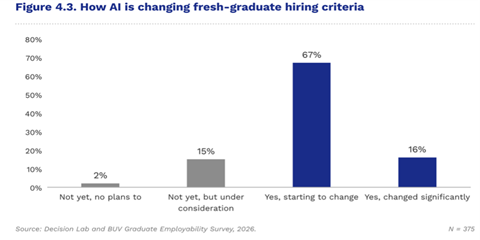
Digital literacy is the only capability area in which fresh graduates meet employers’ expectations, according to a new report. Yet, it is also the standard rising fastest, as businesses increasingly expect new hires to use AI effectively in the workplace. Some 83 per cent of employers say AI has changed, or is beginning to change, their hiring criteria, while 94 per cent report higher expectations for digital and AI capabilities than they had two to three years ago.

INFRASTRUCTURE / CONSTRUCTION / LOGISTIC / PORT
ĐÀ NẴNG GREEN-LIGHTS US$105 MILLION THAI DEVELOPMENT DEAL
The central city has approved an investment proposal by Thailand’s WHA Group to develop infrastructure for the 400ha WHA Đà Nẵng Industrial Park project on two communes of Thăng Bình and Đồng Dương, with an investment of more than VNĐ2.7 trillion (US$105 million). The city said it approved WHA Industrial Development International's status as an investor in the project, which is expected to take place between 2027 and 2034.

VIETNAM ECONOMY INVESTMENT
MOBILE PHONE EXPORTS RISE 20% TO $51.8 BILLION IN FIRST NINE MONTHS
Exports of mobile phones and components rose 20 per cent year-on-year to nearly US$51.8 billion in the first nine months of 2026, with China, the US and Republic of Korea accounting for more than half of the total. Shipments to the three markets reached a combined $26.18 billion, or 50.6 per cent of total exports of the product group during the period, according to data from the Vietnam Department of Customs under the Ministry of Finance.

VIETNAM ECONOMY INVESTMENT
FRUIT AND VEGETABLE EXPORTS POISED TO HIT $10 BILLION IN 2026
Fruit and vegetable exports are on track to reach nearly US$10 billion in 2026, after rising 19.9 per cent year on year to nearly US$7.4 billion in the first nine months, driven by strong seasonal demand and abundant tropical fruit supplies. The Ministry of Agriculture and Environment said the growth reflected stronger international demand for fresh produce and processed agricultural products.
GARMENT / TEXTILE
TEXTILE EXPORTS FACE DUAL CHALLENGES OF SUSTAINING ORDERS AND BOOSTING EFFICIENCY AMID GROWING COMPETITION
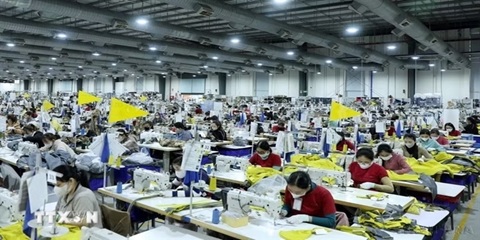
Data shows that the textile and garment sector maintained its growth momentum in the first nine months of this year. The industry's total export turnover reached an estimated US$35.721 billion in the first nine months of this year, up 3.3 per cent year-on-year. Despite posting encouraging export figures, Vietnamese textile and garment enterprises continue to navigate unpredictable market variables.
Events Sponsors






















