Want to be in the loop?
subscribe to
our notification
Business News
GERMAN INVESTORS CONTINUE TO BET ON THE VIETNAMESE MARKET
Vietnam has emerged as a potential investment destination for German companies, who are increasing their presence in the country.
On November 21, the results of the AHK World Business Outlook Fall 2023 survey were unveiled, providing valuable insights into the perspectives of German investors around the world and in Vietnam. The survey, conducted from September 25 to October 20, focused on assessing the business situation, expectations, investment activities, and associated risks faced by German companies operating in Vietnam.
Over the past 10 months, Germany has taken a bold step in further solidifying its presence in Vietnam. A total of 26 foreign-led projects have been initiated, representing a combined investment of nearly $221.5 million. This not only reflects the confidence of German companies in the Vietnamese market, but also positions Vietnam as a promising destination for those seeking to diversify their interests in Asia.
As Vietnam continues to showcase its potential as a robust and strategic investment location, the survey results indicate a positive trajectory from German businesses looking to implement the China+1 strategy – with an emphasis on new green investments. The Vietnamese market stands ready to welcome and support such ventures, offering a platform for growth, diversification, and sustainable business practices.
According to the survey, when it comes to investment plans, 42 per cent of German companies in Vietnam prioritise diversifying their production and manufacturing, indicating a strategic focus on varied production capabilities. Sales and marketing (41 per cent), services (35 per cent), and logistics (31 per cent) closely follow, underscoring a comprehensive approach to business development.
The survey highlights the influence of the factors that shape local investments, with half recognising the growth potential of the Vietnamese market as a pivotal consideration. Customer proximity and localisation follows closely at 43 per cent, underlining a keen interest in aligning strategies with local dynamics. Skilled labour availability is also crucial, with 37 per cent stressing the essential role of a well-qualified workforce.
However, German companies in Vietnam encounter significant challenges, with 49 per cent identifying the substantial issue of low global demand as a primary hurdle. The challenge of skill shortages closely follows, with 41 per cent of respondents expressing concern, along with potential disruptions in the supply chain at 37 per cent. Other notable risks include economic policy (24 per cent), energy prices (24 per cent), and financing challenges (22 per cent).
German companies and companies with close ties to Germany are divided in their choices for international locations. By historical standards, inflation rates and commodity and energy prices are still high in some regions. In addition, the rise in interest rates, particularly in the Eurozone and the US, China's weakness on the demand side, and geopolitical risks are weighing on the business of globally active companies.
In Autumn 2023, German companies were less optimistic about the economic development of their international locations than they were in the Spring – according to the more than 3,600 companies surveyed.
The global economic slowdown and high-interest rates are reflected in companies' lower investment intentions. However, they are generally more expansionary at their international locations than in Germany, as a comparison between the figures in the AHK World Business Outlook and the DIHK economic survey show.
Source: VIR
Related News
MEMBER CORNER / PROMOTIONS
KNIC ENGAGES WITH GOVERNMENT AND HIGH-TECH BUSINESS COMMUNITIES IN CHINA
From Beijing to Shandong, KN Holdings and KN Industrial City are continuing to expand their engagement with government authorities, trade promotion organizations, and high-tech business communities in China. In Beijing, the delegation met with the Center for International Economic and Technological Cooperation under the Ministry of Industry and Information Technology (MIIT), exchanging perspectives on industrial and technology cooperation between the two markets.
VIETNAM ECONOMY INVESTMENT
VIETNAM’S TRADE TOPS $825 BILLION BY MID-SEPTEMBER
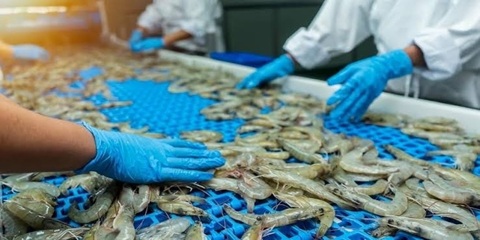
Figures released on September 21 showed goods trade reached nearly $55 billion in the first 15 days of September alone, bringing cumulative turnover since the beginning of the year to more than $825 billion. The strong growth reflects robust trade flows, with demand for consumer goods and production inputs remaining high.

TECHNOLOGY
VIỆT NAM'S BUSINESSES MOVE TOWARDS AI AGENTS
Việt Nam’s AI landscape is entering a new phase as businesses move beyond generative AI (GenAI) tools designed to assist human users towards autonomous AI, agentic AI and AI agents that can take action with limited supervision, experts have said. The shift comes as Việt Nam seeks to accelerate science and technology, innovation and digital transformation under Politburo Resolution 57-NQ/TW, issued on December 22, 2024.
GARMENT / TEXTILE
VIỆT NAM TARGETS $48 BILLION IN TEXTILE-GARMENT EXPORTS
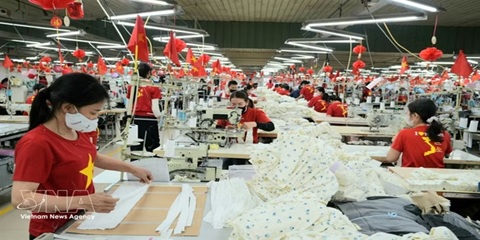
Việt Nam’s textile and garment industry is facing both opportunities and challenges amid complex and unpredictable developments in the global market, prompting businesses to improve growth quality, optimise production costs and enhance adaptability in pursuit of an export turnover of about $48 billion this year. The target is considered an important milestone that requires concerted efforts from management agencies and the business community.
INFRASTRUCTURE / CONSTRUCTION / LOGISTIC / PORT
CUTTING LOGISTICS COSTS KEY TO BOOSTING EXPORTS
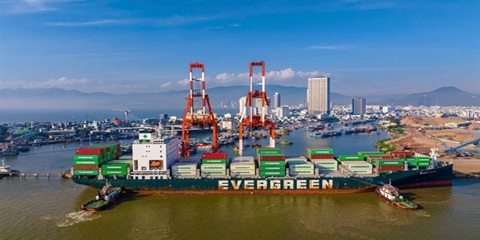
Reducing costs has become an increasingly urgent priority for import-export activities, particularly logistics costs, a conference in Hà Nội was told on Tuesday. According to Deputy General Director of the Ministry of Industry and Trade's Agency for Foreign Trade, Trần Thanh Hải, import-export activities has remained a bright spot for the economy in recent years, playing an important role and helping drive macroeconomic growth.
LEGAL UPDATE / POLICY
FLEXIBLE FISCAL POLICY HELPS DRIVE ECONOMIC GROWTH
Việt Nam’s fiscal policy has been implemented in a targeted expansionary manner since early 2026, helping maintain macroeconomic stability and supporting the country’s goal of achieving double-digit economic growth. According to the Ministry of Finance, State budget revenue in the first eight months of 2026 was estimated at VNĐ2.02 quadrillion (US$77.7 billion), equivalent to 80 per cent of the annual estimate and up 16 per cent year-on-year.
Events Sponsors






















