Want to be in the loop?
subscribe to
our notification
Business News
GLOBAL MINIMUM TAX A HEAD-SCRATCHER FOR VIETNAMESE POLICYMAKERS
As many countries plan to adopt the Global Minimum Tax Rate (GMTR) in 2024, experts are concerned that the entry into force of the rate would discourage foreign companies from locating their operations in low-tax countries.
Under GMTR rules, corporations with more than €750 million in annual revenue would be subject to an effective tax rate of at least 15 per cent, not including deductions for depreciation and certain tax credits. The introduction of GMTR is aimed to increase compliance costs and create a level playing field between developed and developing countries.
The European Union has unanimously agreed to implement the rate on January 1, 2024. Japan followed suit with the enactment date being April 1, 2024. Other countries are preparing their legislation for the adoption of GMTR in the short term, including Indonesia, Malaysia, and the Republic of Korea (RoK).
Experts worry that the introduction of GMTR in other countries would cancel out the tax incentives that Việt Nam has laid down for years and result in tax revenues being effectively exported to those countries.
Take RoK companies operating in Việt Nam for example. These companies are subject to a preferential tax rate of 7 per cent. Once GMTR comes into force in RoK, the companies would have to pay an additional rate of 8 per cent to RoK tax authorities, which is the difference between the Vietnamese rate and GMTR.
Đặng Ngọc Minh, deputy director of the General Department of Taxation, estimated that 1,015 FDI companies operating in Việt Nam would be unfavourably affected by the broad-based tax rules.
He said global corporate heavyweights in the country are enjoying tax rates of between 2.75 per cent to 5.95 per cent, far lower than the GMTR of 15 per cent. As such, the implementation of GMTR abroad would cost Việt Nam a couple of billions of dollars in tax loss every year.
Thomas McClelland, country tax leader at the Deloitte Vietnam Company Ltd, urged Việt Nam to act quickly and decisively to adopt GMTR. Otherwise, the country would lose out to others on the differential tax revenues.
Some other experts share this view, saying that Việt Nam must be quick to bring GMTR into force to boost its tax revenues from FDI companies. But they also warn that the bandwagon would pose some new challenges for policymakers, who would have to find non-tax ways to attract FDI.
Cấn Văn Lực, chief economist at the BIDV, believed that the implementation of GMRT would put developing countries at a competitive disadvantage, especially those using fiscal incentives as a magnet for FDI.
He urged Việt Nam to improve its business environment and investment climate to make up for the tax incentives that would diminish in the next few years.
"A sound business environment and investment climate are more beneficial to investors than the financial incentives offered in the form of tax cuts," said Lực.
It is also worth noting that GMRT can only be officially put in place next year under the circumstance that the Government proposes amendments to Corporate Law, Investment Law, and Tax Law to the National Assembly before October 2023.
Source: VNS
Related News

CHARITY / EXHIBITION / OTHER EVENTS
INVESTMENT OPPORTUNITIES IN CA MAU PROVINCE: 96 PROJECTS AND 20 STRATEGIC PROJECTS
We are pleased to share with you information on investment projects currently seeking investors in Ca Mau Province. Should your esteemed company or association be interested, we kindly invite you to review the project information and complete the registration form via the links provided. The Ho Chi Minh City Investment and Trade Promotion Centre (ITPC) will consolidate the expressions of interest and facilitate connections with the leadership of Ca Mau Province at a meeting tentatively scheduled for 13 November 2026 in Ho Chi Minh City.

MEMBER CORNER / PROMOTIONS
BẰNG KIỀU LIVESHOW - A SYMPHONY OF LOVE UNDER THE GOLDEN GLOW
A masterclass in live music that takes the audience on a soulful journey through immortal love songs, guided by the peerless artistry and emotive storytelling of renowned singer Bằng Kiều. The highlight of the night is his seamless musical chemistry with special guest Triệu Hồng Ngọc, promising passionate and deeply resonant duets inside the magnificent Grand Ballroom.
INFRASTRUCTURE / CONSTRUCTION / LOGISTIC / PORT
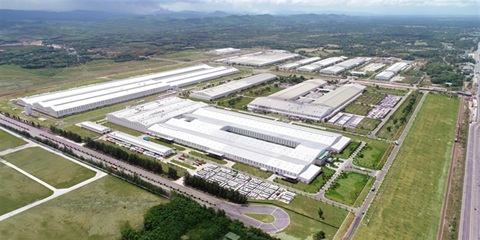
ĐÀ NẴNG GREEN-LIGHTS US$105 MILLION THAI DEVELOPMENT DEAL
The central city has approved an investment proposal by Thailand’s WHA Group to develop infrastructure for the 400ha WHA Đà Nẵng Industrial Park project on two communes of Thăng Bình and Đồng Dương, with an investment of more than VNĐ2.7 trillion (US$105 million). The city said it approved WHA Industrial Development International's status as an investor in the project, which is expected to take place between 2027 and 2034.
VIETNAM ECONOMY INVESTMENT
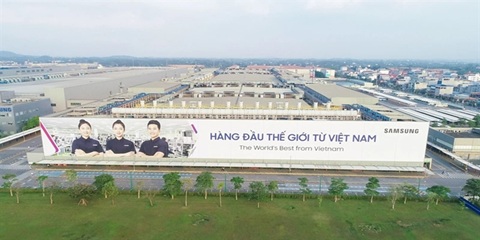
MOBILE PHONE EXPORTS RISE 20% TO $51.8 BILLION IN FIRST NINE MONTHS
Exports of mobile phones and components rose 20 per cent year-on-year to nearly US$51.8 billion in the first nine months of 2026, with China, the US and Republic of Korea accounting for more than half of the total. Shipments to the three markets reached a combined $26.18 billion, or 50.6 per cent of total exports of the product group during the period, according to data from the Vietnam Department of Customs under the Ministry of Finance.

INFRASTRUCTURE / CONSTRUCTION / LOGISTIC / PORT
VIỆT NAM-CAMBODIA TRADE GATHERS PACE TOWARDS $20 BILLION TARGET
Trade between Việt Nam and Cambodia continues to grow, remaining a bright spot and a key pillar of bilateral cooperation as the two countries aim to raise two-way trade to US$20 billion in the coming years. After setting a record of more than $11.3 billion last year, bilateral trade reached about $8.7 billion in the first eight months of this year, up 8.3 per cent year on year.
VIETNAM ECONOMY INVESTMENT
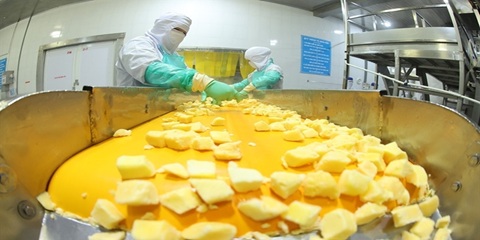
FRUIT AND VEGETABLE EXPORTS POISED TO HIT $10 BILLION IN 2026
Fruit and vegetable exports are on track to reach nearly US$10 billion in 2026, after rising 19.9 per cent year on year to nearly US$7.4 billion in the first nine months, driven by strong seasonal demand and abundant tropical fruit supplies. The Ministry of Agriculture and Environment said the growth reflected stronger international demand for fresh produce and processed agricultural products.
Events Sponsors






















