Want to be in the loop?
subscribe to
our notification
Business News
GOV’T SETS STEEL SELF-SUFFICIENCY GOAL FOR 2050
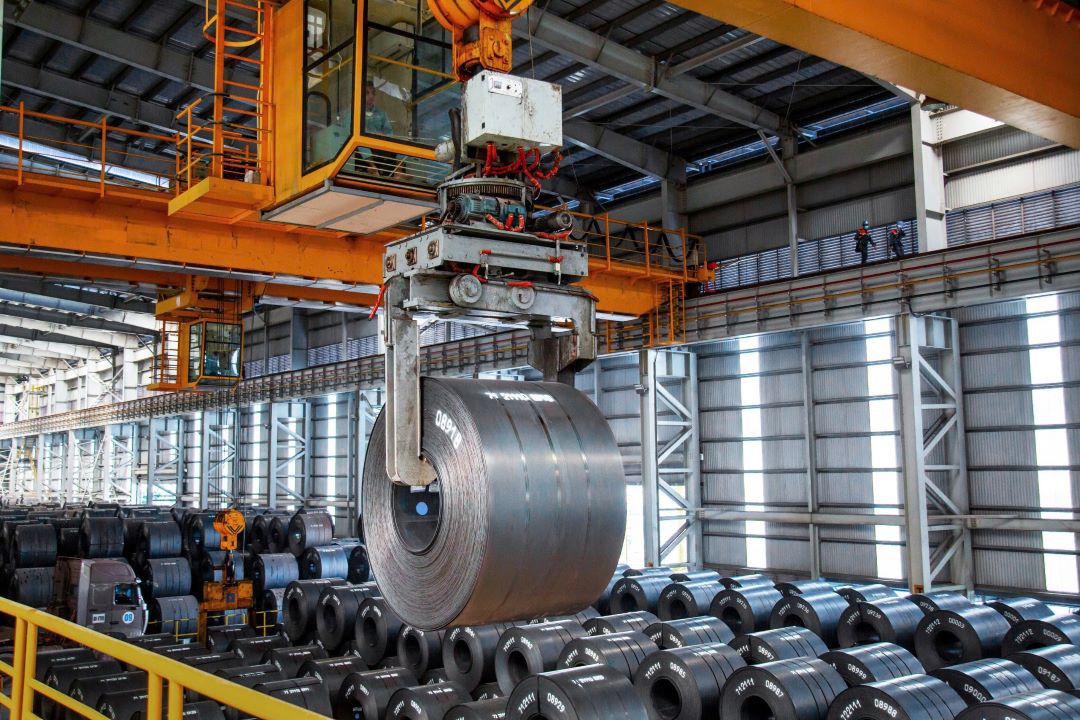
Hot-rolled steel coils are seen at a facility in Vietnam - PHOTO: ARCHIVES
HCMC – The Government has approved a steel industry development strategy targeting 80–85% of domestic demand to be met by local production by 2030 and full self-sufficiency by 2050.
Deputy Prime Minister Bui Thanh Son on February 9 signed Decision No. 261/QD-TTg approving the strategy, reported the Government news website (baochinhphu.vn).
Under the plan, crude steel output is projected to reach 25–26 million tons per year by 2030, with average annual growth of 7–8%. Finished steel production is targeted at 32–33 million tons. Per capita steel consumption is estimated at 270–280 kilograms per year, with domestic producers meeting up to 85% of demand.
The domestic supply ratio is expected to rise to 85–90% by 2035 and fully meet local demand by 2050.
The strategy calls for modernizing production, promoting environmentally friendly technologies, and shifting toward higher value-added products that meet international standards.
Authorities aim to gradually replace imported products, particularly alloy steel, tool steel, and specialty steel used in manufacturing. Investment will be encouraged in high-tech and green steel projects serving transport, energy, shipbuilding, and defense industries.
Priority products include high-strength steel plates, prestressed steel, corrosion-resistant stainless steel, high-speed railway rails, seamless pipes for LNG transport, wind turbine towers, and specialized steel products.
Large-scale projects will be located in areas with deep-water ports, favorable logistics, and access to renewable energy to improve efficiency and reduce costs.
Data from the Vietnam Steel Association showed the country imported more than 16.1 million tons of steel worth over US$11.1 billion in 2025, with 57–58% sourced from China. Domestic crude steel output rose 12.2% to 24.66 million tons, while finished steel production increased 9.6% to 32.26 million tons.
Finished steel exports fell nearly 38% to around five million tons last year. Exports of hot-rolled coil dropped by more than 60%.
Source: The Saigon Times
Related News

INFRASTRUCTURE / CONSTRUCTION / LOGISTIC / PORT
VIỆT NAM-CAMBODIA TRADE GATHERS PACE TOWARDS $20 BILLION TARGET
Trade between Việt Nam and Cambodia continues to grow, remaining a bright spot and a key pillar of bilateral cooperation as the two countries aim to raise two-way trade to US$20 billion in the coming years. After setting a record of more than $11.3 billion last year, bilateral trade reached about $8.7 billion in the first eight months of this year, up 8.3 per cent year on year.
TECHNOLOGY
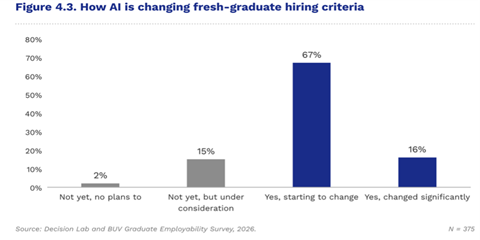
AI BEGINNING TO RESHAPE RECRUITMENT CRITERIA
Digital literacy is the only capability area in which fresh graduates meet employers’ expectations, according to a new report. Yet, it is also the standard rising fastest, as businesses increasingly expect new hires to use AI effectively in the workplace. Some 83 per cent of employers say AI has changed, or is beginning to change, their hiring criteria, while 94 per cent report higher expectations for digital and AI capabilities than they had two to three years ago.

INFRASTRUCTURE / CONSTRUCTION / LOGISTIC / PORT
ĐÀ NẴNG GREEN-LIGHTS US$105 MILLION THAI DEVELOPMENT DEAL
The central city has approved an investment proposal by Thailand’s WHA Group to develop infrastructure for the 400ha WHA Đà Nẵng Industrial Park project on two communes of Thăng Bình and Đồng Dương, with an investment of more than VNĐ2.7 trillion (US$105 million). The city said it approved WHA Industrial Development International's status as an investor in the project, which is expected to take place between 2027 and 2034.

VIETNAM ECONOMY INVESTMENT
MOBILE PHONE EXPORTS RISE 20% TO $51.8 BILLION IN FIRST NINE MONTHS
Exports of mobile phones and components rose 20 per cent year-on-year to nearly US$51.8 billion in the first nine months of 2026, with China, the US and Republic of Korea accounting for more than half of the total. Shipments to the three markets reached a combined $26.18 billion, or 50.6 per cent of total exports of the product group during the period, according to data from the Vietnam Department of Customs under the Ministry of Finance.

VIETNAM ECONOMY INVESTMENT
FRUIT AND VEGETABLE EXPORTS POISED TO HIT $10 BILLION IN 2026
Fruit and vegetable exports are on track to reach nearly US$10 billion in 2026, after rising 19.9 per cent year on year to nearly US$7.4 billion in the first nine months, driven by strong seasonal demand and abundant tropical fruit supplies. The Ministry of Agriculture and Environment said the growth reflected stronger international demand for fresh produce and processed agricultural products.
GARMENT / TEXTILE
TEXTILE EXPORTS FACE DUAL CHALLENGES OF SUSTAINING ORDERS AND BOOSTING EFFICIENCY AMID GROWING COMPETITION
Data shows that the textile and garment sector maintained its growth momentum in the first nine months of this year. The industry's total export turnover reached an estimated US$35.721 billion in the first nine months of this year, up 3.3 per cent year-on-year. Despite posting encouraging export figures, Vietnamese textile and garment enterprises continue to navigate unpredictable market variables.
Events Sponsors






















