Want to be in the loop?
subscribe to
our notification
Business News
GOVERNMENT OKAYS AMENDMENTS TO TAX LAWS
The Ministry of Finance on Tuesday announced a scheme for amending tax laws, including the laws on value added tax, personal income tax, natural resource tax and special consumption tax.
The Government has agreed with most of the adjustments proposed by the Finance Ministry, and asked the ministry to ensure transparency, said Deputy Prime Minister Vuong Dinh Hue at an earlier meeting with related ministries and departments.
The Deputy Prime Minister agreed with the Ministry of Finance’s suggestion to raise value added tax for some certain commodities from 10% to 12%. However, he asked the ministries to carefully review commodities that should be imposed 11-12% VAT.
The Government agreed to increase special consumption tax imposed on tobacco and certain autos. However, tax imposed on autos having less than nine seats should be reviewed by the Ministry of Industry and Trade.
The Deputy Prime Minister agreed with the suggestion to reduce income tax rates imposed on high-income earners, adjust natural resource tax imposed on water use and reduce corporate income tax rates for small and medium enterprises (SMEs).
The Ministry of Finance was asked to review some current regulations such as the newly issued law on support for SMEs and regulations on real estate transfers when making amendments to the tax laws.
The Ministry of Finance will pass the scheme around for public comment and send it to the Ministry of Justice for assessment in the next several days. The scheme will be submitted to the Government in September for approval.
The law amendment is aimed at reducing administrative procedures for tax payment, facilitate trade and manufacturing, and boost economic development.
Second home tax still undecided
The property tax levied on the ownership of the second home has not been decided although the tax was earlier proposed in a tax reform plan for the five-year period to 2020, said Pham Dinh Thi, director of the Tax Policy Department under the Ministry of Finance.
At a press conference on amendments and supplements to tax laws on Tuesday, Thi said that the ministry and the National Assembly have issued resolutions on domestic revenues, including the property tax.
In a report on collection of the land use and property tax and policies relating to the property tax, the ministry also proposed taxing land and landed assets. However, no regulations on tax collection methods, the base tax rate and asset evaluation methods have been issued.
Previously, the Ministry of Finance has proposed three tax options for housing. In option 1, the owner of a home measuring over 200 square meters is subject to a tax of VND1,000-4,000 per square meter per year depending on the type of house. In option 2, the tax would be collected based on the value of the house but if the value is more than VND1 billion, the tax sum would be equivalent to 0.03% of that value.
For option 3, the property tax would be levied from the second and subsequent houses with an annual rate of VND1,000-4,000 per square meter per year. But those homes with two floors or fewer would be spared.
Vietnam has no property tax as in other countries. The property-related tax policy has yet to create a stable source of revenue for the State budget since current land use tax revenue accounts for 0.03% of GDP and 0.15% of the nation’s total budget revenues. Meanwhile, the property tax is a main source of budget revenue in some other countries in the world.
Source: VIR
Related News
VIETNAM ECONOMY INVESTMENT
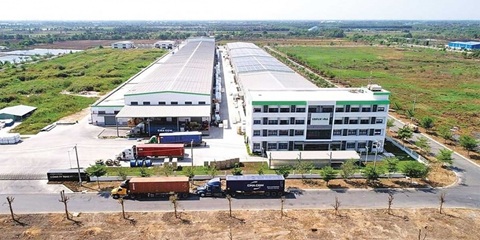
FOREIGN INVESTORS SEEKING A SYNCHRONISED MANUFACTURING ECOSYSTEM
Instead of focusing only on land costs and incentives as usual, foreign investors are seeking a synchronised manufacturing ecosystem, from stable power supply and logistics to shared infrastructure and the convenience of completing residence procedures for experts to serve their long-term investment in the country.
INFRASTRUCTURE / CONSTRUCTION / LOGISTIC / PORT
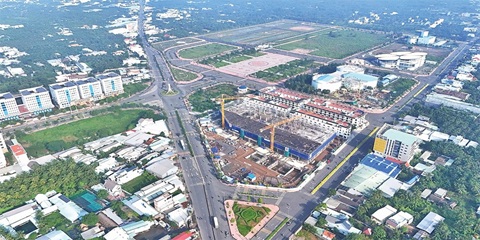
DONG THAP PROVINCE STEPS UP INDUSTRIAL EXPANSION AND INFRASTRUCTURE CONNECTIVITY
Accelerating public investment, strengthening inter-regional connectivity, and expanding industrial land are helping Dong Thap efficiently bolster competitiveness and drive economic growth. Following the 2025 merger of the former Dong Thap and Tien Giang provinces, the expanded Dong Thap province in the Mekong Delta faces mounting pressure to accelerate infrastructure development and strengthen connectivity among local economic zones, urban areas, industrial parks (IPs), and production centres.
PROPERTY / INDUSTRIAL ZONE
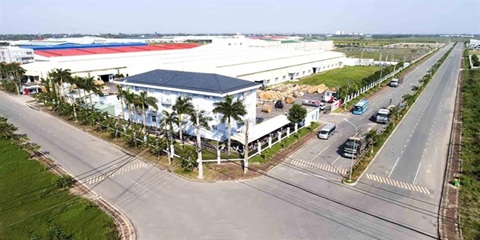
HCM CITY ATTRACTS US$5.7 BILLION INTO EXPORT PROCESSING AND INDUSTRIAL ZONES
HCM City attracted US$5.7 billion in domestic and foreign investment into its export processing and industrial zones during the first nine months of 2026. The figure exceeded the city's full-year target by 31 per cent, highlighting strong momentum in high-quality industrial investment under Resolution No.10-NQ/TW. Total investment reached 131 per cent of the 2026 target of $4.25 billion and represented a 29 per cent increase compared with the same period in 2025, according to the city's Export Processing and Industrial Zones Authority (HEPZA).

BANKING / FINANCE / INSURANCE / TAX
REMITTANCES TO HCM CITY RISE NEARLY 40% IN Q3
Remittances to HCM City reached more than US$2.83 billion in the third quarter of this year, up 39.5 per cent from the previous quarter and 3.6 per cent year-on-year. This was the first quarter showing positive annual growth this year, helping narrow the decline in remittance inflows over the first nine months. According to the State Bank of Vietnam (SBV)’s Regional Branch 2, remittances transferred to HCM City through credit institutions and economic organisations totalled $2.835 billion in Q3, an increase of more than $802 million from the previous quarter.
VIETNAM ECONOMY INVESTMENT
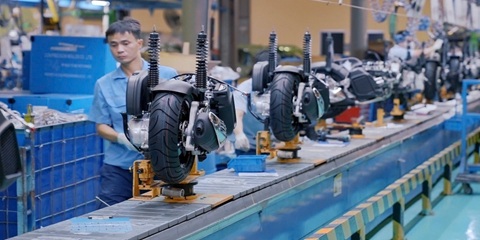
LOCALITIES REPORT BREAKTHROUGH RESULTS IN FDI IN FIRST NINE MONTHS
In Ho Chi Minh City, total registered capital reached $17.2 billion in the first nine months, up 4.2 times from the same period last year. The figure included more than $9.35 billion in newly registered capital and over $4.9 billion in additional capital for existing projects. Foreign investors also registered more than $2.9 billion through capital contributions and share purchases.

TECHNOLOGY
TECH SECTOR GROWTH OPENS UP OPPORTUNITIES FOR VIỆT NAM TO GO GLOBAL
The growth of the electronics, semiconductor and high-tech sectors worldwide is opening up a variety of opportunities for Vietnamese enterprises to integrate more deeply into the global supply chain. However, to become suppliers for these corporations, domestic enterprises must meet rigorous standards regarding quality, technology, productivity and order fulfilment capabilities.
Events Sponsors






















