Want to be in the loop?
subscribe to
our notification
Business News
GOVERNMENT PROPOSES 2% VAT REDUCTION ON SELECT GOODS AND SERVICES UNTIL 2026
The proposal, which recommends maintaining this VAT reduction until December 31, 2026, was presented by Minister of Finance Nguyễn Văn Thắng during the ongoing National Assembly (NA) session.
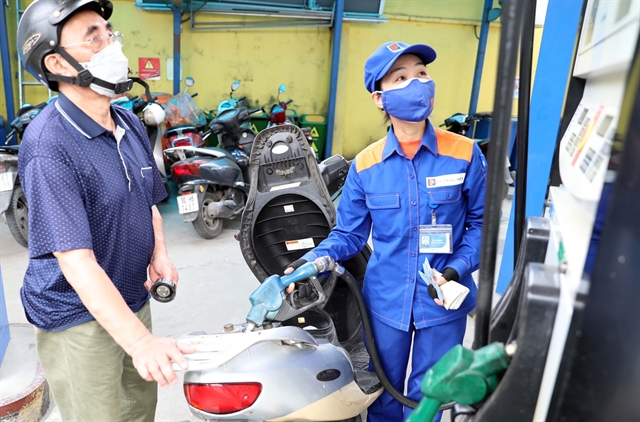
A customer buys petrol at a station in Hà Nội. VNA/VNS Photo Trần Việt
HÀ NỘI — The Government has proposed a 2 per cent reduction in the value-added tax (VAT) for goods and services currently taxed at 10 per cent, lowering the rate to 8 per cent.
The proposal, which recommends maintaining this VAT reduction until December 31, 2026, was presented by Minister of Finance Nguyễn Văn Thắng during the ongoing National Assembly (NA) session.
The VAT reduction will not apply to sectors including telecommunications, financial services, banking, insurance, securities, real estate, metal products, mining (excluding coal) and items subject to special consumption tax (except for gasoline), according to the proposal.
Additionally, the State has proposed adding gasoline, washing machines, and microwave ovens to the list of goods eligible for the 2 per cent VAT reduction.
Despite gasoline being subject to a special consumption tax and oil being a refined petroleum product, the Government has proposed applying the 2 per cent VAT reduction to these items. This move comes in recognition of the significant role both gasoline and oil play in the economy and daily life.
According to the proposal, gasoline prices directly influence production costs, consumer prices, and overall macroeconomic stability.
Minister of Finance Nguyễn Văn Thắng said that the reduction will contribute to macroeconomic stability despite potential short-term revenue losses. He said the move would encourage business expansion, create jobs, and ultimately result in long-term economic benefits for the country.
The Ministry of Finance has projected that the reduction will lead to a decrease in state revenue by approximately VNĐ121.74 trillion (over US$4.69 billion) over the proposed period. This includes an estimated VNĐ39.54 trillion in the second half of 2025 and VNĐ82.2 trillion in 2026.
The policy is expected to lower the price of goods and services, thereby supporting consumer spending, stimulating consumption, and promoting business and production activities. This, in turn, is anticipated to create jobs, stabilise the macro economy, and drive economic growth.
For consumers, the 2 per cent VAT reduction will help reduce daily living and consumption costs. Meanwhile, businesses stand to benefit from lower product costs, improved competitiveness, expanded markets for consumption and production, and increased job opportunities.
Phan Văn Mãi, Chairman of the National Assembly Committee for Economic and Financial Affairs, said that a majority of National Assembly deputies support the Government’s proposal to expand VAT incentives. They viewed the move as essential to supporting businesses, maintaining macroeconomic stability, and promoting economic growth amid ongoing challenges.
However, Mãi noted that the committee has called on the Government to develop clear and practical measures to address potential complications during implementation, particularly in relation to goods and services excluded from the tax reduction.
The committee also emphasised that the rollout of the policy must be fair, transparent, and convenient for both taxpayers and regulatory authorities, he added.
Meanwhile, NA deputies stressed the need for a more comprehensive assessment of the policy’s impact on state budget revenues. They said the tax cut must align with medium-term fiscal goals, ensure public debt safety, and remain consistent with other tax policies, such as environmental protection and special consumption taxes.
Some deputies also suggested reviewing the list of goods excluded from the VAT reduction, particularly those affected by international trade conflicts and reciprocal tax measures from countries like the US. They said extending support to such sectors could help shield domestic businesses from external economic pressures.
Additionally, there were calls for the Ministry of Finance to consider expanding the VAT cut to cover all goods and services, especially if the revenue difference between included and excluded groups proves minimal. This, they argued, would enhance fairness in the tax system and simplify implementation for both consumers and businesses.— VNS
Source: VNS
Related News

CHARITY / EXHIBITION / OTHER EVENTS
INVESTMENT OPPORTUNITIES IN CA MAU PROVINCE: 96 PROJECTS AND 20 STRATEGIC PROJECTS
We are pleased to share with you information on investment projects currently seeking investors in Ca Mau Province. Should your esteemed company or association be interested, we kindly invite you to review the project information and complete the registration form via the links provided. The Ho Chi Minh City Investment and Trade Promotion Centre (ITPC) will consolidate the expressions of interest and facilitate connections with the leadership of Ca Mau Province at a meeting tentatively scheduled for 13 November 2026 in Ho Chi Minh City.

MEMBER CORNER / PROMOTIONS
BẰNG KIỀU LIVESHOW - A SYMPHONY OF LOVE UNDER THE GOLDEN GLOW
A masterclass in live music that takes the audience on a soulful journey through immortal love songs, guided by the peerless artistry and emotive storytelling of renowned singer Bằng Kiều. The highlight of the night is his seamless musical chemistry with special guest Triệu Hồng Ngọc, promising passionate and deeply resonant duets inside the magnificent Grand Ballroom.

INFRASTRUCTURE / CONSTRUCTION / LOGISTIC / PORT
ĐÀ NẴNG GREEN-LIGHTS US$105 MILLION THAI DEVELOPMENT DEAL
The central city has approved an investment proposal by Thailand’s WHA Group to develop infrastructure for the 400ha WHA Đà Nẵng Industrial Park project on two communes of Thăng Bình and Đồng Dương, with an investment of more than VNĐ2.7 trillion (US$105 million). The city said it approved WHA Industrial Development International's status as an investor in the project, which is expected to take place between 2027 and 2034.

VIETNAM ECONOMY INVESTMENT
MOBILE PHONE EXPORTS RISE 20% TO $51.8 BILLION IN FIRST NINE MONTHS
Exports of mobile phones and components rose 20 per cent year-on-year to nearly US$51.8 billion in the first nine months of 2026, with China, the US and Republic of Korea accounting for more than half of the total. Shipments to the three markets reached a combined $26.18 billion, or 50.6 per cent of total exports of the product group during the period, according to data from the Vietnam Department of Customs under the Ministry of Finance.

INFRASTRUCTURE / CONSTRUCTION / LOGISTIC / PORT
VIỆT NAM-CAMBODIA TRADE GATHERS PACE TOWARDS $20 BILLION TARGET
Trade between Việt Nam and Cambodia continues to grow, remaining a bright spot and a key pillar of bilateral cooperation as the two countries aim to raise two-way trade to US$20 billion in the coming years. After setting a record of more than $11.3 billion last year, bilateral trade reached about $8.7 billion in the first eight months of this year, up 8.3 per cent year on year.

VIETNAM ECONOMY INVESTMENT
FRUIT AND VEGETABLE EXPORTS POISED TO HIT $10 BILLION IN 2026
Fruit and vegetable exports are on track to reach nearly US$10 billion in 2026, after rising 19.9 per cent year on year to nearly US$7.4 billion in the first nine months, driven by strong seasonal demand and abundant tropical fruit supplies. The Ministry of Agriculture and Environment said the growth reflected stronger international demand for fresh produce and processed agricultural products.
Events Sponsors






















