Want to be in the loop?
subscribe to
our notification
Business News
GREEN LOGISTICS TRANSFORMING PERCEPTION INTO ACTION
The development of green supply chains and green logistics is no longer a distant future concern; it has become an urgent necessity for businesses today. Adopting green supply chain practices is essential for survival and growth in the modern market. Companies that are slow to embrace these sustainable practices risk facing significant challenges and may even be pushed out of the market.
Mr. Dao Trong Khoa, Vice Chairman of Vietnam Logistics Business Association (VLA), said that "green and resilience" are two important factors of any supply chain amid a global geopolitical turmoil, and the growing "go green" demands to reduce emissions from countries across the globe. In the world, many large logistics firms such as shipping lines and seaport operators have their roadmaps to reduce greenhouse gas emissions and convert to green energy earlier than nationally pledged roadmaps.
Currently, the transportation industry accounts for 24% of global emissions. Vietnam Logistics Report showed that up to 73.2% of businesses say that green logistics is part of their business strategies. Developing a green supply chain is also an essential change, associated with the net zero goal that Vietnam committed to at COP26.
Mr. Nguyen Quang Vinh, Vice President of the Vietnam Chamber of Commerce and Industry (VCCI), said that the survey conducted by the Vietnam Business Council for Sustainable Development (VBCSD) and VCCI reveals that transforming supply chains and value chains toward greater sustainability is a top priority for the international business community.
Green supply chain management is associated with its links management, including green design, green production, green operation, green procurement, green logistics and waste management. When those links are "green", companies will be able to improve production capacity and operating capacity while forming a green, sustainable ecosystem surrounding them, thus creating their competitive advantages and increasing their business adaptability, resilience and recovery in the face of market shocks.
In the coming time, VCCI will collaborate with agencies in the CSI Program Steering Committee to enhance the Corporate Sustainability Index (CSI), ensuring it remains contemporary and effective as a support tool for businesses. Additionally, VCCI will engage with business advisory councils in ASEAN to promote the CSI internationally. Following thorough consultations with businesses, VCCI will work with relevant agencies to establish the CSI as a national standard for widespread adoption across the business community, he added.
In applying the CSI Index, businesses should thoroughly review their sustainable development practices and integrate information as per the provided guidelines. This process enables them to assess their overall "health" and operational impacts, allowing them to develop targeted action plans. These plans should address weaknesses, leverage strengths, and enhance information preparation and reporting to attract investment capital more effectively and sustainably, he said.
Discussing solutions to foster green logistics, Mr. Tran Thanh Hai, Deputy Director of the Agency of Foreign Trade (AFT) under the Ministry of Industry and Trade, said it is essential to achieve a unified understanding of the logistics industry's role, as this is important for the effective and synchronized application of solutions. Without a shared perception among authorities at all levels - from central to local - trade associations, trade promotion agencies, companies, shippers and other stakeholders, effective solutions cannot be fully realized. A common understanding will foster the determination needed to enhance the logistics sector's impact.
At the same time, green transformation in the logistics industry needs to aim at energy transformation with energy-using vehicles, he added. This is still difficult and challenging for businesses. Currently, small passenger vehicles have initially switched to using renewable energy. However, large freight and transport vehicles have not yet converted to renewable energy.
“Businesses also need to improve efficiency and performance in the workplace. This factor also helps improve quick adaptability in the new context. Authorities and the Government need to facilitate trade, simplify administrative procedures and provide the best support for businesses in digital and green transformation," he added.
Representing business associations, Mr. Ngo Sy Hoai, Vice President and General Secretary of the Vietnam Timber and Forest Product (VIFOREST), pointed out that wood products are quite unique and characteristically bulkier than other products, resulting in very high ocean shipping costs. In some cases, the value of containerized cargoes is only equivalent to their shipping cost. Wood products are also very "sensitive" to the environment, therefore, forming green processing, green trade and green growth has also become very urgent today. As a result, green transformation in the logistics industry is a decision of success or failure for the wood industry.
As regards specific solutions, VLA Chairman Le Duy Hiep said that VLA has successfully won the right to host the Annual FIATA World Congress 2025 of the International Federation of Freight Forwarders Associations (FIATA). This is the largest and most important event of the global logistics industry, attracting the participation of thousands of businesses, experts and logistics industry leaders. from all over the world. The successful organization of this event will be a great opportunity to enhance the image and position of Vietnam's logistics industry in the international arena while also opening up many cooperation and business opportunities for domestic firms.
The National Strategy on Green Growth for the 2021-2030 period, with a vision to 2050, sets the goals: "Greening" economic sectors, speeding up economic restructuring associated with changing growth models, environmentally sustainable and socially equitable. It assigns tasks to relevant agencies to "develop green logistics", including green logistics centers and green ports.
To implement this strategy, the Prime Minister issued Decision 882/QD-TTg on ratification of the National Action Plan on Green Growth for the 2021-2030 period, of which the logistics service is one of 18 central themes of the plan.
Source: VCCI
Related News

CHARITY / EXHIBITION / OTHER EVENTS
INVESTMENT OPPORTUNITIES IN CA MAU PROVINCE: 96 PROJECTS AND 20 STRATEGIC PROJECTS
We are pleased to share with you information on investment projects currently seeking investors in Ca Mau Province. Should your esteemed company or association be interested, we kindly invite you to review the project information and complete the registration form via the links provided. The Ho Chi Minh City Investment and Trade Promotion Centre (ITPC) will consolidate the expressions of interest and facilitate connections with the leadership of Ca Mau Province at a meeting tentatively scheduled for 13 November 2026 in Ho Chi Minh City.

MEMBER CORNER / PROMOTIONS
BẰNG KIỀU LIVESHOW - A SYMPHONY OF LOVE UNDER THE GOLDEN GLOW
A masterclass in live music that takes the audience on a soulful journey through immortal love songs, guided by the peerless artistry and emotive storytelling of renowned singer Bằng Kiều. The highlight of the night is his seamless musical chemistry with special guest Triệu Hồng Ngọc, promising passionate and deeply resonant duets inside the magnificent Grand Ballroom.
INFRASTRUCTURE / CONSTRUCTION / LOGISTIC / PORT
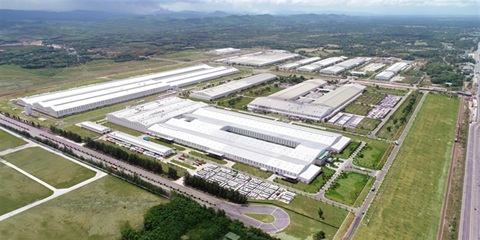
ĐÀ NẴNG GREEN-LIGHTS US$105 MILLION THAI DEVELOPMENT DEAL
The central city has approved an investment proposal by Thailand’s WHA Group to develop infrastructure for the 400ha WHA Đà Nẵng Industrial Park project on two communes of Thăng Bình and Đồng Dương, with an investment of more than VNĐ2.7 trillion (US$105 million). The city said it approved WHA Industrial Development International's status as an investor in the project, which is expected to take place between 2027 and 2034.
VIETNAM ECONOMY INVESTMENT
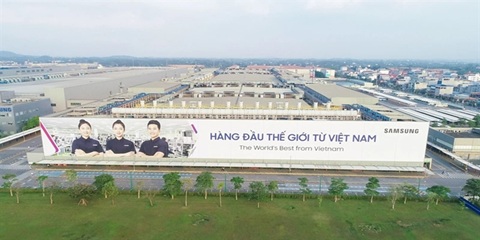
MOBILE PHONE EXPORTS RISE 20% TO $51.8 BILLION IN FIRST NINE MONTHS
Exports of mobile phones and components rose 20 per cent year-on-year to nearly US$51.8 billion in the first nine months of 2026, with China, the US and Republic of Korea accounting for more than half of the total. Shipments to the three markets reached a combined $26.18 billion, or 50.6 per cent of total exports of the product group during the period, according to data from the Vietnam Department of Customs under the Ministry of Finance.
INFRASTRUCTURE / CONSTRUCTION / LOGISTIC / PORT
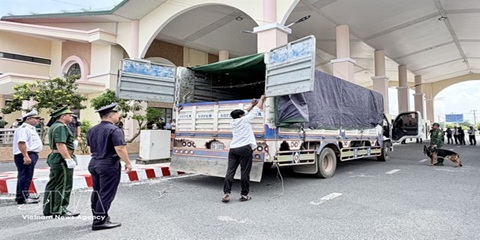
VIỆT NAM-CAMBODIA TRADE GATHERS PACE TOWARDS $20 BILLION TARGET
Trade between Việt Nam and Cambodia continues to grow, remaining a bright spot and a key pillar of bilateral cooperation as the two countries aim to raise two-way trade to US$20 billion in the coming years. After setting a record of more than $11.3 billion last year, bilateral trade reached about $8.7 billion in the first eight months of this year, up 8.3 per cent year on year.
VIETNAM ECONOMY INVESTMENT
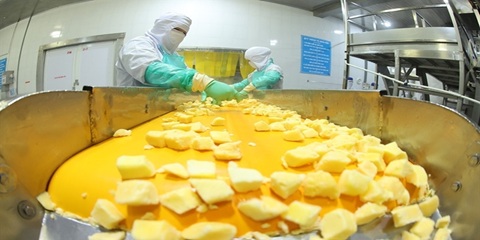
FRUIT AND VEGETABLE EXPORTS POISED TO HIT $10 BILLION IN 2026
Fruit and vegetable exports are on track to reach nearly US$10 billion in 2026, after rising 19.9 per cent year on year to nearly US$7.4 billion in the first nine months, driven by strong seasonal demand and abundant tropical fruit supplies. The Ministry of Agriculture and Environment said the growth reflected stronger international demand for fresh produce and processed agricultural products.
Events Sponsors






















