Want to be in the loop?
subscribe to
our notification
Business News
GREEN TRANSFORMATION IN LOGISTICS IS A SMART PATH TO SUSTAINABILITY
The green transformation in logistics has moved from being a mere trend to an unavoidable imperative. It affects not only a company’s competitiveness, but also its very survival.
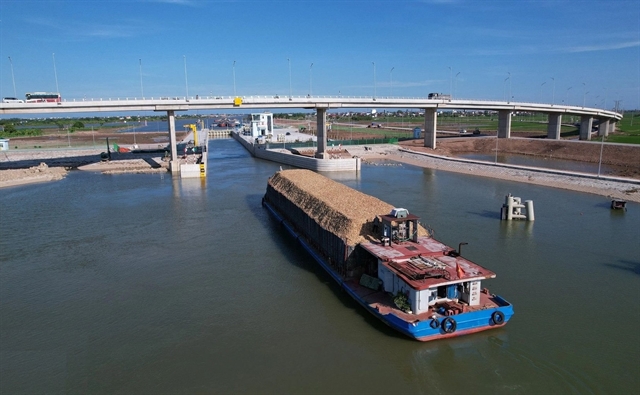
A view of Nghĩa Hưng Canal, dubbed the 'Panama Canal of Việt Nam'. — Photo vlr.vn
HÀ NỘI — Green transformation is not simply about environmental responsibility, but is also a smart approach to enhance competitiveness and ensure long-term survival in a rapidly evolving market landscape, according to experts.
The global economy is undergoing significant shifts. Trade routes are being restructured, supply chains reshaped and the demand for faster, more efficient logistics is growing.
Meanwhile, international regulations are tightening rapidly. From the European Union’s Fit for 55 Package, which aims to reduce carbon emissions drastically by 2030, to the International Maritime Organization (IMO)'s roadmap targeting carbon neutrality in shipping, logistics companies worldwide must 'green' their operations.
The green transformation in logistics has moved from being a mere trend to an unavoidable imperative. It affects not only a company’s competitiveness, but also its very survival.
According to Koen Soenens, board member of the Transportation and Logistics Sector Committee at the European Chamber of Commerce (EuroCham) in Việt Nam, the sector is under considerable pressure, especially as companies seek deeper integration with the European market.
As a representative from DEEP C Industrial Park and also representing the European business community operating in Việt Nam, Soenens also said logistics serves as the heart of the economy, connecting production, circulation and distribution. Yet, the industry must evolve rapidly to meet sustainable development goals.
European businesses operating in Việt Nam have begun adopting green initiatives, such as solar power installations in warehouses, eco-friendly delivery fleets and digital tools that optimise routes to reduce fuel consumption and emissions.
These efforts are not just temporary trends; they are strategic choices aimed at long-term efficiency and competitiveness, Soenens said.
However, challenges remain. Việt Nam’s logistics infrastructure is still fragmented, and inconsistent policies complicate widespread adoption of green practices.
Soenens has also stressed the importance of coordinated efforts among businesses, Government agencies and stakeholders to build a sustainable logistics ecosystem. With increased awareness, financing, skills development and policy alignment, Việt Nam can accelerate its green logistics transformation and establish a competitive edge internationally.
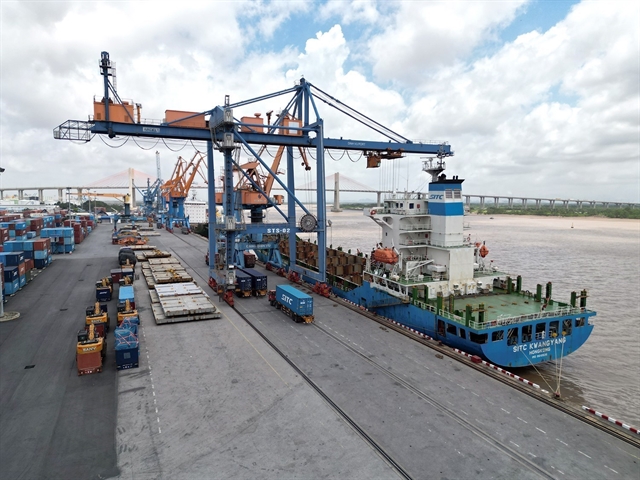
Đình Vũ Port in Hải Phòng, northern Việt Nam’s major customs gateway, illustrates how green logistics can drive regional economic growth. — VNA/VNS Photo
Hải Phòng, northern Việt Nam’s major customs gateway, illustrates how green logistics can drive regional economic growth. The city has sustained customs clearance growth above 10 per cent, positioning it as a crucial hub for future trade routes, including direct connections to northern Europe and the Mediterranean.
Trần Tiến Dũng, deputy chairman of the Vietnam Logistics Services Association and chairman of Hải Phòng Logistics Association, highlights the untapped potential of sea and rail transport in the region.
At present, road transport dominates, accounting for nearly 99 per cent of cargo movement and leading to inefficiencies and higher emissions.
To address this, Macstar Group has launched inland waterway transport routes linking Hải Phòng to Ninh Bình, significantly reducing transit times and expanding cargo capacity via the Nghĩa Hưng Canal, dubbed the 'Panama Canal of Việt Nam'. This waterway offers an open-airspace advantage, allowing larger vessels and more environmentally friendly transport options.
Macstar is also pioneering research into sustainable fuels like solar energy and green hydrogen for its fleet. Still, Dũng notes that Government support is crucial in issuing technical standards and guidelines to enable businesses to adopt these technologies on a larger scale.
Expanding beyond the Hải Phòng-Ninh Bình corridor, Macstar has introduced routes to Nghi Sơn and Vũng Áng, and plans to connect with Quảng Trị Province to facilitate trade with Laos via border gates. These initiatives represent a growing regional network prioritising efficiency and sustainability.
Australia’s green logistics journey also provides valuable insights for Việt Nam. Executive Director of the Australian Chamber of Commerce (AusCham) in Việt Nam Edwin Law explains that in Australia, green logistics is mandatory, not optional. Companies embed sustainability goals into their core strategies, investing in green transportation, renewable energy and environmentally friendly supply chains.
Technology plays a pivotal role. Australian firms use advanced digital platforms and automation to reduce energy consumption and costs while improving service quality. Many of these innovations have been successfully transferred to Việt Nam through partnerships and joint ventures.
Moreover, Vietnamese factories’ recent adoption of energy-saving measures and environmental standards signals a growing commitment to sustainability.
Law emphasised that such progress demonstrates Việt Nam’s dedication to net zero emissions, a goal achievable only through a collaborative ecosystem involving businesses, government and civil society.
Yap Kwong Weng, CEO of Vietnam SuperPort, a joint venture between Singapore’s YCH Group and Vietnam’s T&T Group, advocates for a multimodal, integrated logistics model to accelerate the green transformation.
Vietnam SuperPort combines air cargo terminals, bonded warehouses and cross-border transportation services to optimise efficiency and reduce environmental impacts.
Unlike conventional mass industrial parks, this approach leverages existing assets to create a structural advantage within regional supply chains. For example, where regulations permit, goods can be shipped directly from warehouse to aircraft, cutting transport time and emissions.
Vietnam SuperPort aims to achieve net zero emissions by 2040 through a roadmap that includes deploying renewable energy, automated warehouses, carbon-neutral materials and emissions-free operations. The company is partnering with international organisations like the International Finance Corporation to develop green infrastructure financing models, blending public and private funding sources.
However, Yap stressed that policy support and financial incentives are essential. Encouraging green finance mechanisms and blended finance structures will enable businesses to invest confidently in sustainable logistics solutions. — VNS
Source: VNS
Related News
MEMBER CORNER / PROMOTIONS
HCMC | CERTIFIED SUSTAINABILITY PROFESSIONAL (CSP) TRAINING | REGISTRATION OPEN
As sustainability becomes deeply embedded in corporate strategy and supply-chain operations across Vietnam, Hong Kong Business Association Vietnam is pleased to endorse the upcoming Certified Sustainability Professional (CSP) training program by the Asia Institute for Sustainability (AIS) - a premier internationally recognized ESG credential in Vietnam.
VIETNAM ECONOMY INVESTMENT
HCM CITY SAYS HOW IT PLANS TO ACHIEVE 10-11% ANNUAL EXPORT GROWTH FOR REST OF DECADE
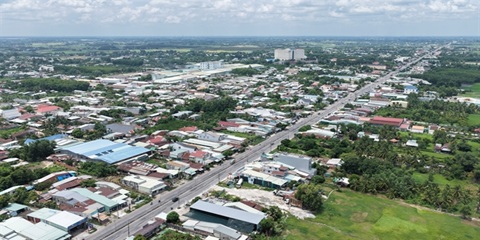
The southern economic hub aims to strengthen its role as the country’s largest import-export centre while developing into a regional transhipment centre in Southeast Asia, supported by green and digital transformation and a circular economy. HCM City has outlined measures to expand production capacity, cut logistics costs, diversify export markets, and help businesses meet increasingly stringent international standards as it targets average annual export growth of 10-11 per cent through 2030.
VIETNAM ECONOMY INVESTMENT
HCM CITY LEADS ECONOMIC RESTRUCTURING IN SOUTHEAST REGION
According to Associate Professor, Dr Vũ Tuấn Hưng, director of the Institute of Social Sciences of the Southern Region, the Southeast is a strategically important socio-economic space in Việt Nam’s development given its advantages in location, industry, trade, services, logistics, science and technology, urbanisation and human resources.
TECHNOLOGY
DIGITAL TRANSFORMATION TURNED INTO PRACTICAL TOOLS FOR PEOPLE, BUSINESSES
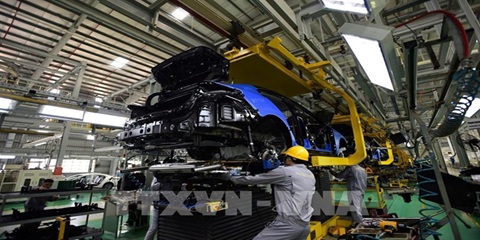
Việt Nam is moving its digital transformation agenda beyond policy frameworks and individual technology platforms towards practical applications that address everyday needs, as authorities seek measurable outcomes from science, technology and innovation. Under Politburo Resolution No. 57-NQ/TW issued on December 22, 2024, the implementation is increasingly shifting from simply completing assigned tasks towards developing concrete products and services for citizens and businesses.
TECHNOLOGY
APPLYING TECHNOLOGY FOR ECONOMIC TRANSFORMATION
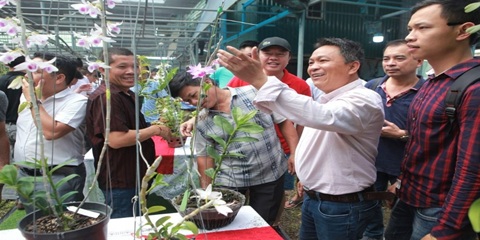
Having completed its new rural development program, Hanoi is shifting its focus toward improving development quality and building smart, sustainable rural areas. The transformation of Dong La orchid-growing village in An Khanh, a western commune of Hanoi, shows how digital technology is becoming a driver of production, market expansion, and higher incomes for local residents.
MEMBER CORNER / PROMOTIONS
VIGLACERA HONORED AS THE "LEADING GREEN INDUSTRIAL REAL ESTATE DEVELOPER 2026"
Organized by the Vietnam Investment Review, this prestigious awards program recognizes industry pioneers advancing eco-industrial parks, clean energy transition, and rigorous ESG standards. Outperforming competitors through a rigorous evaluation, Viglacera Corporation – JSC proudly ranked among the Top 5 highest-positioned enterprises in the Leading Green Industrial Real Estate Developers 2026 category, reinforcing its premier position in Vietnam’s industrial real estate sector.
Events Sponsors






















