Want to be in the loop?
subscribe to
our notification
Business News
HCM CITY LEADS AS SOUTHEAST REMAINS PRIME DESTINATION FOR FDI
HCM City led with US$6.2 billion, followed by Đồng Nai with US$1.8 billion and Tây Ninh with US$1.215 billion, emphasising the region’s standing as a key destination for international investors despite the structural changes in governance.
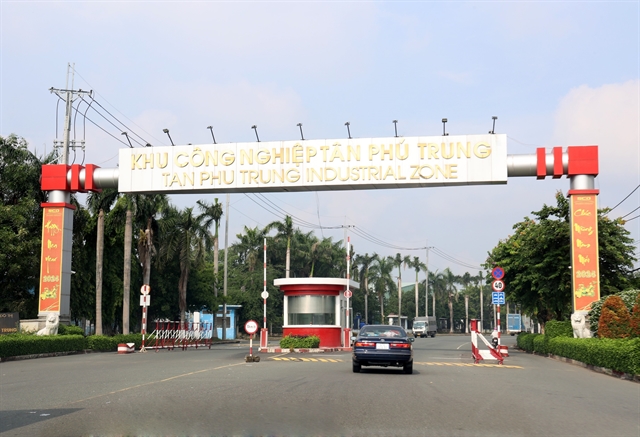
Tân Phú Trung Industrial Park in HCM City’s Củ Chi Commune, located near National Highway No.22, the arterial road connecting the city with Tây Ninh Province and the border area with Cambodia. VNA/VNS Photo
HCM CITY – Following the reorganisation of provinces and cities across the country, the southeast remains its most dynamic economic hub, with foreign direct investment inflows in the first seven months of this year running into billions of dollars.
HCM City led with US$6.2 billion, followed by Đồng Nai with US$1.8 billion and Tây Ninh with US$1.215 billion, emphasising the region’s standing as a key destination for international investors despite the structural changes in governance.
In Đồng Nai, the consistent strategy of selectivity in accepting investment remains unchanged.
The provincial Industrial Zones and Economic Zones Authority said that priority is given to large-scale projects with advanced technology and skilled labour, especially in supporting industries.
With 81 industrial zones and 63 industrial clusters, completed and planned, over more than 42,000ha of land, Đồng Nai remains one of the country’s main industrial hubs.
After more than 35 years of opening its doors to FDI, the province has become a bright spot on the international investment map with nearly 2,200 projects with capital exceeding $41.4 billion by investors from 51 countries and territories.
Major corporations such as Amata, C.P. (Thailand), Nestlé (Switzerland), Coherent, Cargill (the US) and Hyosung (South Korea) have an entrenched presence in Đồng Nai.
In the first seven months of 2025 Đồng Nai licensed 85 new projects with registered capital of more than $605 million, while 103 existing ones added over $943 million.
Chairman of the provincial People’s Committee, Võ Tấn Đức, promised continued assistance and the best conditions to investors with priority given to high-tech projects.
International investors point to Đồng Nai’s strategic location, steadily improving transport infrastructure and strong industry–services ecosystem as decisive advantages.
Tây Ninh Province has identified industrial infrastructure as a crucial driver of growth.
Its development plan for until 2030 lists 59 industrial parks, 82 industrial clusters, four international border gates, three border gate economic zones and one international port.
The province targets economic growth of 9–9.5 per cent in 2025 and in excess of 10 per cent in subsequent years.
Tây Ninh recently approved and granted construction permits for the Bình Hòa Nam No.1 Industrial Park in Đức Huệ Commune. Covering over 322ha with an investment of VNĐ3.9 trillion ($156 million) by Hoàn Cầu Long An Co., Ltd., the project is seen as a key driver to expand the province’s industrial space southwards, attract FDI and boost economic restructuring towards industrialisation and modernisation.
Huỳnh Văn Sơn, deputy chairman of the Tây Ninh People’s Committee, said investors in the province needed to focus on timely implementation and environmental protection.
He also instructed government departments and local authorities to work closely together so that the park could open soon, spurring trade, services, logistics, and labour training.
HCM City continues to hold the top position nationwide in attracting FDI.
As of July 29, its export processing and industrial zones alone had attracted $2.43 billion, contributing substantially to the total FDI of over $3.6 billion.
Remarkably, more than $1 billion came into high-tech projects, reflecting the city’s commitment to innovation-driven development.
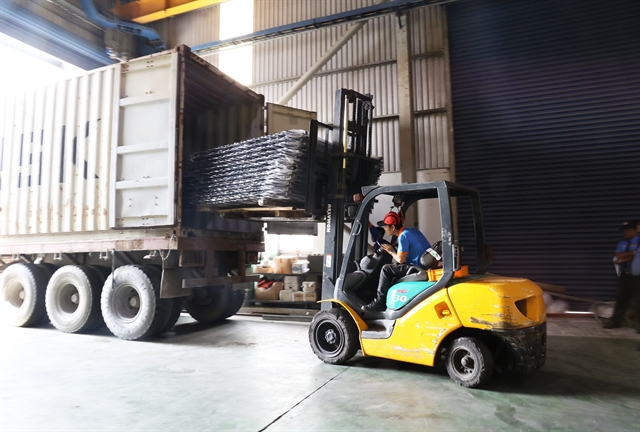
Logistics activities in HCM City's Tân Phú Trung Industrial Park. VNA/VNS Photo
Notable projects include a $42 million semiconductor equipment manufacturing plant by BE Semiconductor Industries N.V (the Netherlands) and a $48 million expansion by Amazon Data Services Việt Nam (the US).
People’s Committee chairman Nguyễn Văn Được said FDI remained a bright spot, proving the city’s strong appeal to global corporations.
To sustain growth, HCM City has been actively soliciting investment in Singapore, Malaysia and major international trade fairs, improving the business environment, upgrading infrastructure, and reducing dependence on tax incentives.
Experts said the revival of FDI flows stemmed from the city’s improved competitiveness and support policies.
On July 1 Bà Rịa – Vũng Tàu and Bình Dương provinces were merged with the city, increasing opportunities for creating inter-regional value chains linking industry, services and logistics.
The city targets $10.44 billion in FDI in 2025, with about $7 billion expected in the former HCM City area.
In the coming years, the city will focus on major programmes such as developing an international financial centre, completing its metro network and expanding its logistics and digital infrastructure to remain attractive to investors and reinforce its role as the nation’s growth locomotive.
With infrastructure advantages, international gateways and increasingly selective investment policies, the region is emerging as a magnet for multinational corporations.
This forms the foundation for sustainable growth and contributes to shaping the national investment strategy in an era of intensifying global competition. – VNS
Source: VNS
Related News

MEMBER CORNER / PROMOTIONS
BẰNG KIỀU LIVESHOW - A SYMPHONY OF LOVE UNDER THE GOLDEN GLOW
A masterclass in live music that takes the audience on a soulful journey through immortal love songs, guided by the peerless artistry and emotive storytelling of renowned singer Bằng Kiều. The highlight of the night is his seamless musical chemistry with special guest Triệu Hồng Ngọc, promising passionate and deeply resonant duets inside the magnificent Grand Ballroom.

INFRASTRUCTURE / CONSTRUCTION / LOGISTIC / PORT
ĐÀ NẴNG GREEN-LIGHTS US$105 MILLION THAI DEVELOPMENT DEAL
The central city has approved an investment proposal by Thailand’s WHA Group to develop infrastructure for the 400ha WHA Đà Nẵng Industrial Park project on two communes of Thăng Bình and Đồng Dương, with an investment of more than VNĐ2.7 trillion (US$105 million). The city said it approved WHA Industrial Development International's status as an investor in the project, which is expected to take place between 2027 and 2034.

VIETNAM ECONOMY INVESTMENT
MOBILE PHONE EXPORTS RISE 20% TO $51.8 BILLION IN FIRST NINE MONTHS
Exports of mobile phones and components rose 20 per cent year-on-year to nearly US$51.8 billion in the first nine months of 2026, with China, the US and Republic of Korea accounting for more than half of the total. Shipments to the three markets reached a combined $26.18 billion, or 50.6 per cent of total exports of the product group during the period, according to data from the Vietnam Department of Customs under the Ministry of Finance.

INFRASTRUCTURE / CONSTRUCTION / LOGISTIC / PORT
VIỆT NAM-CAMBODIA TRADE GATHERS PACE TOWARDS $20 BILLION TARGET
Trade between Việt Nam and Cambodia continues to grow, remaining a bright spot and a key pillar of bilateral cooperation as the two countries aim to raise two-way trade to US$20 billion in the coming years. After setting a record of more than $11.3 billion last year, bilateral trade reached about $8.7 billion in the first eight months of this year, up 8.3 per cent year on year.

VIETNAM ECONOMY INVESTMENT
FRUIT AND VEGETABLE EXPORTS POISED TO HIT $10 BILLION IN 2026
Fruit and vegetable exports are on track to reach nearly US$10 billion in 2026, after rising 19.9 per cent year on year to nearly US$7.4 billion in the first nine months, driven by strong seasonal demand and abundant tropical fruit supplies. The Ministry of Agriculture and Environment said the growth reflected stronger international demand for fresh produce and processed agricultural products.
GARMENT / TEXTILE
TEXTILE EXPORTS FACE DUAL CHALLENGES OF SUSTAINING ORDERS AND BOOSTING EFFICIENCY AMID GROWING COMPETITION
Data shows that the textile and garment sector maintained its growth momentum in the first nine months of this year. The industry's total export turnover reached an estimated US$35.721 billion in the first nine months of this year, up 3.3 per cent year-on-year. Despite posting encouraging export figures, Vietnamese textile and garment enterprises continue to navigate unpredictable market variables.
Events Sponsors






















