Want to be in the loop?
subscribe to
our notification
Business News
HCM CITY LEADS REGIONAL PUSH FOR INTEGRATED LOGISTICS NETWORK
The Southeastern Key Economic Region is considered the most dynamic growth engine of Việt Nam.
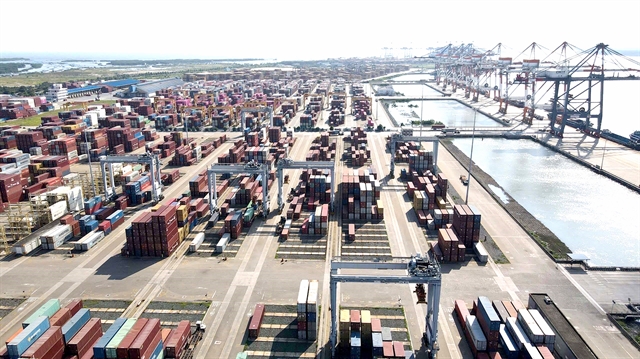
The Cái Mép- Thị Vải seaport complex in HCM City. VNA Photo
HCM CITY – The Southeastern Key Economic Region — originally comprising HCM City, Đồng Nai, Bình Dương, and Bà Rịa - Vũng Tàu — is considered the most dynamic growth engine of Việt Nam.
Despite its inherent advantages in seaports, industrial zones, and transport corridors, the region has long grappled with fragmented logistics infrastructure and weak inter-provincial coordination.
The recent administrative merger offers a unique opportunity to establish a unified, synchronised logistics system, turning this coastal region into a high-performing hub for trade, investment, and marine economy.
Following the merger with Bình Dương and Bà Rịa-Vũng Tàu, HCM City now boasts a 110-kilometre-long coastline, providing direct access to international maritime routes and elevating its potential as a maritime logistics centre of regional significance.
Its natural land area has expanded to nearly 9,820 km², transforming the city from an inland economic nucleus into a coastal metropolis.
This geographic repositioning enables a seamless economic corridor connecting Cần Giờ, Cái Mép - Thị Vải, and Vũng Tàu — integrating production, logistics, services, tourism, and energy sectors.
Cần Giờ is expected to serve as a key transhipment point between the city centre and international ports, forming the starting node of a future maritime logistics ecosystem.
Associate Professor Dr Nguyễn Ngọc Vinh, Deputy Director of the Institute for Regional Research and Development Consulting under the University of Economics in the city, emphasised the strategic alignment of major ports.
“The Cát Lái and Cái Mép - Thị Vải clusters now belong to the same logistics corridor.
"Cái Mép, with capacity for vessels over 150,000 DWT, connects directly to trans-Pacific shipping lanes, while Cát Lái and the inland container depots (ICDs) act as collection and redistribution hubs within the region,” he said.
Crucial infrastructure projects are currently being deployed, such as Ring Road 4 — which links Long Thành International Airport with Cái Mép Port — passing through several key economic zones.
Previously, Bà Rịa - Vũng Tàu Province allocated over VNĐ7.6 trillion (US$298 million) for port access roads, laying the groundwork for an extended urban space and a potential future free trade zone.
With a population of nearly five million and an area exceeding 10,000 km² after the merger, Đồng Nai has become the second-largest domestic market in the South, after the city.
The province is home to a dense network of industrial parks and national transport routes, which form the backbone of its logistics infrastructure.
The presence of Phước An Port, Long Bình ICD, and multiple highways — as well as the Hoa Lư border gate facilitating trade with Cambodia — all contribute to Đồng Nai’s strategic position.
Experts believe that the integration of Đồng Nai with Bình Phước can create a powerful "logistics belt" that not only connects domestic production areas but also links inland provinces with global markets, reducing congestion and enhancing supply chain fluidity across southern Việt Nam.
Regional logistics powerhouse
Beyond administrative reform, the new regional structure is expected to attract significant foreign investment in logistics infrastructure.
The corridor between Đồng Nai and Đắk Nông will become a crucial trade axis for agricultural products, construction materials, and industrial goods destined for key ports such as Cát Lái and Cái Mép.
Specialised logistics hubs are expected to emerge in areas like Châu Đức, Tân Uyên, or Long Khánh, where geographical advantages and transport connectivity can be maximised.
These centres will not only facilitate goods flow across provinces but also support the development of integrated supply chains, reinforcing Đồng Nai’s role as a “super logistics centre”.
According to experts, the southeastern coastal region of the city holds vast potential for marine economy development — spanning from ecological conservation and seafood processing to seaport services and marine tourism. Spatial functional zoning may include: ecological conservation and tourism areas such as Cần Giờ, Long Hải, and Lộc An; aquaculture and seafood processing in Cần Giờ - Long Điền - Đất Đỏ; port logistics and supporting industries in Cái Mép - Thị Vải - Phú Mỹ; and luxury coastal urban resorts in Vũng Tàu and Hồ Tràm.
These diverse sectors are expected to generate thousands of direct and indirect jobs, improve livelihoods in coastal communities, and attract large-scale foreign direct investment in ports, logistics, biotechnology, and marine services.
Trần Quốc Thắng, Director of Deloitte Việt Nam’s Tax Advisory, underlined that integrated spatial planning between Cần Giờ and the former Bà Rịa - Vũng Tàu province is a strategic breakthrough.
“By leveraging each locality’s comparative strengths and developing cross-border infrastructure, we can build a sustainable and competitive marine economy in the South,” he said, adding that authorities must enhance inter-provincial coordination and offer attractive investment incentives.
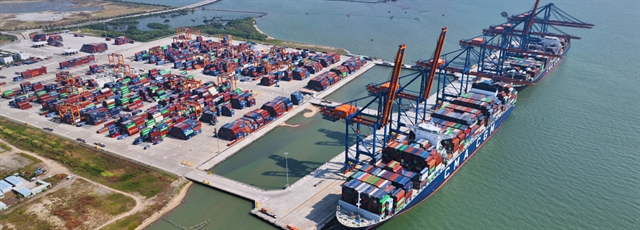
Gemalink International Port – the only deep-water port within the Cái Mép – Thị Vải seaport complex. Photo gml.gemadept.com.vn
Multi-modal and smart logistics
The future of logistics in the region also lies in multimodal transport. A combination of road, rail, and inland waterway systems will reduce cost and time while enhancing resilience and flexibility.
The Biên Hòa - Vũng Tàu railway, once completed, will serve as a vital artery for rapid container transport from Đồng Nai’s industrial zones to seaports.
Inland waterway routes along the Đồng Nai and Bé rivers will also be revitalised under new master plans.
A unified logistics system combining container cargo, bulk freight, and express parcels will enable businesses to switch delivery modes quickly and cost-effectively.
E-commerce enterprises are expected to benefit from improved same-day delivery capability, creating new consumer habits and boosting service competitiveness.
Local authorities in Đồng Nai are also planning to expand industrial parks and build modern warehouses to meet domestic and international market demand.
Simplified administrative procedures following the merger are expected to create a more attractive business environment for investors.
Experts forecast that improved logistics infrastructure and integrated planning will help attract more FDI, especially in manufacturing, high-tech industries, and global supply chains.
With coordinated governance, cross-border potential, and growing investment, the newly enlarged Đồng Nai is poised to become a national model for integrated, green, and efficient logistics development. – VNS
Source: VNS
Related News
MEMBER CORNER / PROMOTIONS
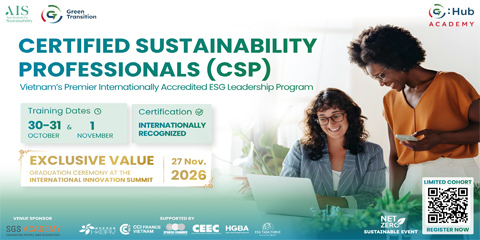
HCMC | CERTIFIED SUSTAINABILITY PROFESSIONAL (CSP) TRAINING | REGISTRATION OPEN
As sustainability becomes deeply embedded in corporate strategy and supply-chain operations across Vietnam, Hong Kong Business Association Vietnam is pleased to endorse the upcoming Certified Sustainability Professional (CSP) training program by the Asia Institute for Sustainability (AIS) - a premier internationally recognized ESG credential in Vietnam.
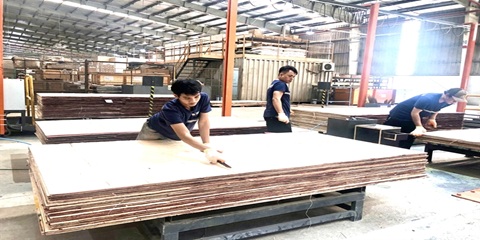
VIETNAM ECONOMY INVESTMENT
HCM CITY SAYS HOW IT PLANS TO ACHIEVE 10-11% ANNUAL EXPORT GROWTH FOR REST OF DECADE
The southern economic hub aims to strengthen its role as the country’s largest import-export centre while developing into a regional transhipment centre in Southeast Asia, supported by green and digital transformation and a circular economy. HCM City has outlined measures to expand production capacity, cut logistics costs, diversify export markets, and help businesses meet increasingly stringent international standards as it targets average annual export growth of 10-11 per cent through 2030.
VIETNAM ECONOMY INVESTMENT
HCM CITY LEADS ECONOMIC RESTRUCTURING IN SOUTHEAST REGION
According to Associate Professor, Dr Vũ Tuấn Hưng, director of the Institute of Social Sciences of the Southern Region, the Southeast is a strategically important socio-economic space in Việt Nam’s development given its advantages in location, industry, trade, services, logistics, science and technology, urbanisation and human resources.
TECHNOLOGY
DIGITAL TRANSFORMATION TURNED INTO PRACTICAL TOOLS FOR PEOPLE, BUSINESSES
Việt Nam is moving its digital transformation agenda beyond policy frameworks and individual technology platforms towards practical applications that address everyday needs, as authorities seek measurable outcomes from science, technology and innovation. Under Politburo Resolution No. 57-NQ/TW issued on December 22, 2024, the implementation is increasingly shifting from simply completing assigned tasks towards developing concrete products and services for citizens and businesses.
TECHNOLOGY
APPLYING TECHNOLOGY FOR ECONOMIC TRANSFORMATION
Having completed its new rural development program, Hanoi is shifting its focus toward improving development quality and building smart, sustainable rural areas. The transformation of Dong La orchid-growing village in An Khanh, a western commune of Hanoi, shows how digital technology is becoming a driver of production, market expansion, and higher incomes for local residents.
MEMBER CORNER / PROMOTIONS
VIGLACERA HONORED AS THE "LEADING GREEN INDUSTRIAL REAL ESTATE DEVELOPER 2026"
Organized by the Vietnam Investment Review, this prestigious awards program recognizes industry pioneers advancing eco-industrial parks, clean energy transition, and rigorous ESG standards. Outperforming competitors through a rigorous evaluation, Viglacera Corporation – JSC proudly ranked among the Top 5 highest-positioned enterprises in the Leading Green Industrial Real Estate Developers 2026 category, reinforcing its premier position in Vietnam’s industrial real estate sector.
Events Sponsors






















