Want to be in the loop?
subscribe to
our notification
Business News
HCM CITY PROMOTES KEY TRANSPORT PROJECTS
At a cost of nearly VNĐ3 trillion (US$133 million), the Thủ Thiêm 2 Bridge with a length of 1,465m and six lanes started construction in early 2015 and will be completed in April 2018 under build-transfer (BT) model. The bridge will link districts 1 and 2 in order to create development for the Thủ Thiêm Urban area and reduce traffic congestion.
In mid-2015, the municipal People’s Committee accepted to arrange 72 plots of land for resettling people who had been removed to build the connecting road between Võ Văn Kiệt Boulevard and HCM City – Trung Lương Highway Express in Tân Kiên Commune, Bình Chánh District. The project was started on October 2015 with investment of the first phase around VNĐ1.6 trillion ($71 million), excluding expenditure for ground clearance. The project was expected to be constructed within 20 months.
This road is expected to connect all transport to the highway with a fast road.
It also completes the city’s modern transport system through the city from Cát Lái intersection in Hà Nội Highway, beginning point of HCM City – Long Thành – Dầu Giây Highway Express, through East-West Highway (Võ Văn Kiệt Boulevard) and to HCM City - Trung Lương Highway Express.
The project creates a good connection through the southeast provinces – HCM City – Mekong Delta.
One of the intersections with the most traffic congestion is that of Southern Sài Gòn Boulevard, Nguyễn Văn Linh Boulevard and Nguyễn Hữu Thọ Street.
To cope with this congestion, the city authorities have agreed to invest VNĐ839 billion ($37.3 million) for the first phase of the project to ease traffic here. There will be two 480m tunnels built in the intersection.
After five years of delay, a flyover road Bình Tiên through Võ Văn Kiệt Boulevard and Tàu Hũ and Đôi canals, linking districts 6 and 8, was finally approved with total investment of VNĐ3.5 trillion ($155 million) during 2016-2020. The project was approved in 2010 but due to limitations of land compensation, it had been delayed.
The flyover road is expected to ease traffic congestion from downtown to southern Sài Gòn urban area when series of bridges, such as Nguyễn Tri Phương, Nguyễn Văn Cừ, Kênh Tẻ, Y, Chà Và, are overloaded.
Other transport projects, such as one more exit from Nguyễn Văn Cừ bridge to Võ Văn Kiệt Boulevard, were kicked off in 2016 to ease congestion from District 8 and Bình Chánh to District 5 and other downtown districts.
The project to link Phạm Văn Đồng street with the intersection of Gò Dưa and National Highway No 1 was also approved to complete Belt road No 2.
Despite the fact that many important transport projects had been kicked off, HCM City still faces difficulties in exchanging land to transport infrastructure construction.
Under regulation, HCM City must have a clean land fund to bid. Money from such bidding will be invested for transport infrastructure. However, due to limitations of capital, HCM City hasn’t been able to create its own clean land fund. Exploitation of land along new roads faces the same problem as local authorities do not have money for compensation.
Many enterprises are ready to pay money for land compensation, but the municipal authorities are not allowed to appoint them to exploit such lands and these clean lands must be bid.
“Such a legal frame work has restricted attracting social investment for transport,” Bùi Xuân Cường, director of the municipal Transport Department was quoted as saying in the Thời báo Kinh tế Việt Nam (Việt Nam Economic Times) newspaper.
There are so many other important transport infrastructure projects still waiting due to limitation of funds, land and an out-of-date legal framework, such as a VNĐ9.5 trillion ($422 milllion) project to expand national road No 22 to link HCM City and Tây Ninh province, rapid and green bus in Mai Chí Thọ and Võ Văn Kiệt boulevards, VNĐ1.75 trillion ($78 million) for underground parking plots in Lê Văn Tám Park, VNĐ740 billion ($33 million) underground parking in Trồng Đồng Theatre in District 3, and VNĐ3.2 trillion ($142 million) for Hoa Lư Stadium.
Source: VIR
Related News

MEMBER CORNER / PROMOTIONS
HCMC | CERTIFIED SUSTAINABILITY PROFESSIONAL (CSP) TRAINING | REGISTRATION OPEN
As sustainability becomes deeply embedded in corporate strategy and supply-chain operations across Vietnam, Hong Kong Business Association Vietnam is pleased to endorse the upcoming Certified Sustainability Professional (CSP) training program by the Asia Institute for Sustainability (AIS) - a premier internationally recognized ESG credential in Vietnam.
VIETNAM ECONOMY INVESTMENT
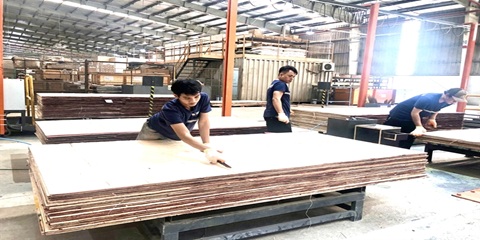
HCM CITY SAYS HOW IT PLANS TO ACHIEVE 10-11% ANNUAL EXPORT GROWTH FOR REST OF DECADE
The southern economic hub aims to strengthen its role as the country’s largest import-export centre while developing into a regional transhipment centre in Southeast Asia, supported by green and digital transformation and a circular economy. HCM City has outlined measures to expand production capacity, cut logistics costs, diversify export markets, and help businesses meet increasingly stringent international standards as it targets average annual export growth of 10-11 per cent through 2030.
VIETNAM ECONOMY INVESTMENT
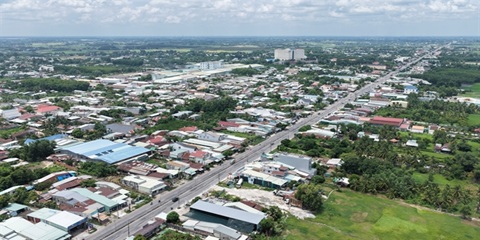
HCM CITY LEADS ECONOMIC RESTRUCTURING IN SOUTHEAST REGION
According to Associate Professor, Dr Vũ Tuấn Hưng, director of the Institute of Social Sciences of the Southern Region, the Southeast is a strategically important socio-economic space in Việt Nam’s development given its advantages in location, industry, trade, services, logistics, science and technology, urbanisation and human resources.
TECHNOLOGY
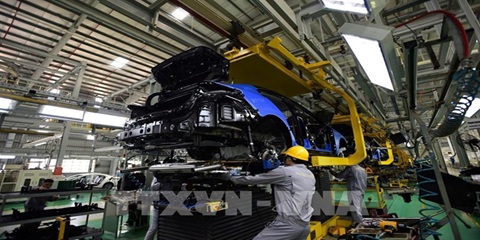
DIGITAL TRANSFORMATION TURNED INTO PRACTICAL TOOLS FOR PEOPLE, BUSINESSES
Việt Nam is moving its digital transformation agenda beyond policy frameworks and individual technology platforms towards practical applications that address everyday needs, as authorities seek measurable outcomes from science, technology and innovation. Under Politburo Resolution No. 57-NQ/TW issued on December 22, 2024, the implementation is increasingly shifting from simply completing assigned tasks towards developing concrete products and services for citizens and businesses.
TECHNOLOGY
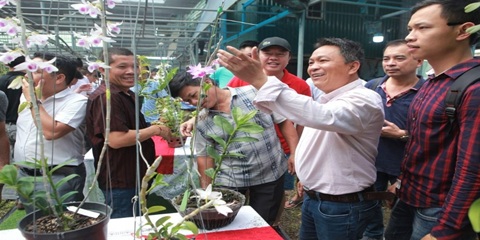
APPLYING TECHNOLOGY FOR ECONOMIC TRANSFORMATION
Having completed its new rural development program, Hanoi is shifting its focus toward improving development quality and building smart, sustainable rural areas. The transformation of Dong La orchid-growing village in An Khanh, a western commune of Hanoi, shows how digital technology is becoming a driver of production, market expansion, and higher incomes for local residents.

MEMBER CORNER / PROMOTIONS
VIGLACERA HONORED AS THE "LEADING GREEN INDUSTRIAL REAL ESTATE DEVELOPER 2026"
Organized by the Vietnam Investment Review, this prestigious awards program recognizes industry pioneers advancing eco-industrial parks, clean energy transition, and rigorous ESG standards. Outperforming competitors through a rigorous evaluation, Viglacera Corporation – JSC proudly ranked among the Top 5 highest-positioned enterprises in the Leading Green Industrial Real Estate Developers 2026 category, reinforcing its premier position in Vietnam’s industrial real estate sector.
Events Sponsors






















