Want to be in the loop?
subscribe to
our notification
Business News
HO CHI MINH CITY TARGETS FOUR SEMICONDUCTOR PROJECTS THIS YEAR
Ho Chi Minh City will focus on attracting at least four high-added-value foreign investment projects in the semiconductor industry, with a focus on cooperation with AMD, Nvidia, and Qualcomm.

Ho Chi Minh City targets to engage four semiconductor projects this year. Photo: Le Toan
This is part of the semiconductor industry development strategy and the human resource development programme for the Vietnamese semiconductor industry in Ho Chi Minh City, issued in early March by Ho Chi Minh City People's Committee.
It aims to effectively implement the semiconductor industry development strategy and the human resource development programme for the semiconductor industry and core digital technologies such as AI, cloud computing, the Internet of Things, Big Data, and Blockchain, making the city a leading centre in this industry.
According to the plan, Ho Chi Minh City will focus on attracting at least four high-added-value foreign ventures in the semiconductor industry, with a focus on implementing cooperation with major technology corporations such as AMD, NVIDIA, and Qualcomm.
Regarding human resources, the city aims to train and enrol a minimum of 3,000 undergraduates, 300 master's students, and 40 doctoral students, and to graduate a minimum of 1,400 undergraduates, 110 master's students, and six doctoral students.
In addition, at least 300 workers will receive advanced skills training courses to meet the demand of semiconductor businesses.
In the area of attracting experts and fostering research collaboration, the city aims to invite at least 10 experts and scientists from both within and outside the country to participate in teaching and research at R&D centres, universities, and research institutes in the city.
The city also aims to support at least 10 startups in the semiconductor and digital technology sectors; sign at least two international cooperation memoranda of understanding; and implement at least two R&D projects with foreign partners.
In 2026, it plans to organise four major events, including the Vietnam Semiconductor Industry Exhibition, the Autumn Economic Forum 2026, and international conferences at the Ho Chi Minh City High-Tech Park and the Vietnam National University.
To achieve these goals, Ho Chi Minh City will implement a comprehensive set of solutions, including the development of policies to support semiconductor businesses, investment incentives, equipment cost support, human resource development, and the promotion of innovative startups.
Regarding infrastructure, it will build an internationally standardised research centre for digital transformation and green transformation in the high-tech park; invest in a microchip laboratory at Saigon University; and simultaneously build a national-level shared semiconductor laboratory at the Vietnam National University Ho Chi Minh City.
In addition, the city will develop a high-performance computing centre at Quang Trung Software Park to serve chip design and AI applications.
Simultaneously, the city aims to expand the high-tech park, forming a semiconductor technology complex, and implement the "Science and Technology City - North Ho Chi Minh City" project, covering approximately 1,000 ha in Binh Duong ward, creating an innovation hub for the key economic region.
In human resource training and development, the city will study the establishment of a Microchip Design Human Resource Development Fund (worth $5 million) to provide scholarships and research support for postgraduate students. It will also operate a digital profile platform to connect online labour supply and demand between universities and businesses, helping to forecast future human resource needs in the city's semiconductor market.
Source: VIR
Related News
MEMBER CORNER / PROMOTIONS
A CULINARY MASTERPIECE
Don't need a special occasion to treat yourself to a perfect Chinese dining experience. This October, Ngan Dinh Restaurant introduces an exquisite three-dish menu, promising to satisfy diners who appreciate culinary innovation and refined flavors. Enjoy 20% OFF a glass of house red/white wine, or Imported German Veltins Draught Beer/Maisel's Weisse Dunkel when ordering any of the above dishes!

MEMBER CORNER / PROMOTIONS
ONE YEAR OF PRIME MOMENTS — LET’S CELEBRATE!
Olivia’s Prime Saigon is turning one, and we’d love to celebrate this special milestone with you! Order any featured steak size and enjoy all its designated complimentary pasta, side dishes and sauces — with a combined value of up to 80% of your steak price! Thank you for being part of our journey. Here’s to great steaks, wonderful company, and many more prime moments together!

MEMBER CORNER / PROMOTIONS
SENTRYSAFE - PROTECT WHAT MATTERS MOST
From cash, important documents and records to valuable belongings, a quality safe gives you greater peace of mind against unexpected risks. SentrySafe - a trusted safe brand from the USA, suitable for homes, offices and various storage needs. Contact Sen Wai Vietnam for expert advice and to find the right safe for your needs.

MEMBER CORNER / PROMOTIONS
50% DISCOUNT FOR HKBAV MEMBER: EUGENE ONEGIN - EIFMAN BALLET OF ST. PETERSBURG WORLD TOUR 2026
Adapted from the classic novel in verse by acclaimed Russian poet Alexander Pushkin, Eugene Onegin explores timeless themes of love, pride, choices, and irreversible regret. Eifman's distinctive language of psychological ballet is brought to life through Tchaikovsky's music alongside contemporary rock by Alexander Sitkovetsky, creating an extraordinary artistic experience.
MEMBER CORNER / PROMOTIONS
COSMOPARK – ENERGY ADVANTAGES FOR POWER-INTENSIVE INDUSTRIES
As global corporations place increasing emphasis on energy security, renewable energy adoption, and carbon emissions reduction, electricity is no longer viewed merely as a component of technical infrastructure. For high-tech projects, data centers, and large-scale manufacturing facilities, reliable energy infrastructure has become a critical factor in investment location decisions.
VIETNAM ECONOMY INVESTMENT
FOREIGN INVESTORS TO BE WIDENED FOR MARKET ACCESS
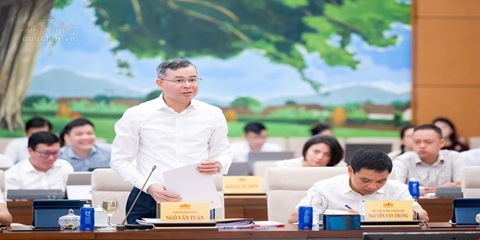
Vietnam is moving to widen market access, improve investment incentives, and streamline procedures, with greater support tied to investors’ actual commitments and results, as part of the law on amending and supplementing a number of articles of the Law on Investment. The proposal was mentioned at the sixth session of the National Assembly Standing Committee in Hanoi on September 30, on amending the Law on Investment.
Events Sponsors






















