Want to be in the loop?
subscribe to
our notification
Business News
HOSPITALITY TURNS HEADS OF JAPANESE INVESTORS
While tourism and hospitality are brought low by the COVID-19 pandemic, this is a good time for foreign investors, including Japanese ones to stock up on hotels going on sale on the low.
At the afternoon in a weekend of early-August, Tran Quang Hoi, director of Ecobuy, a consultant firm specialising business plan control and M&A support for Japanese partners, was constantly chatting with overseas clients looking for investment opportunities in Vietnam, even amidst the difficulties caused by the COVID-19 pandemic.
“The pandemic cannot stop the investment. In addition to the processing and manufacturing industry, hospitality is emerging as a promising sector for investors, and we have received hundreds of orders recently, instead of the dozens in the same period last year,” asserted Hoi.
According to Ecobuy, this is a good chance for both local and foreign investors to pour into hospitality, which had been abandoned in the past months, pushing owners to the point where they cannot sustain losses any longer. Seeing the potential of this sector, a lot of Japanese investors including Supper Hotel, Kuretakesou Inn, Toyoko Inn, Daiichi Jyutaku, Watabe, Sakura, and Azumaya are looking for hospitality projects to acquire.
"They are interested in projects under construction or finished, or operating with hundreds of bedrooms in Hanoi, Ho Chi Minh City, and popular tourism locations,” Hoi added.
Meanwhile, according to Sohovietnam Real Estate Consulting JSC, the demand for buying hospitality projects is increasing. Particularly, investors are looking to put an estimated VND8-10 trillion ($347.83-434.8 million) into hotels and resorts.
“Hospitality is still a spotlight of Vietnam, the profitability of these projects is certain, especially those that are bought cheap,” a Japanese investor asserted.
According to Savills Vietnam, the performance of hotels has been hugely impacted by COVID-19. Average occupancy has dropped to approximately 20 per cent across the first half, which has put financial pressure on hotel owners, especially at new hotels.
“Most investors are approaching this sector now expecting to pick up a few distressed assets and hold them until the market bounces back after the pandemic. However, no one is prepared to sell at a loss even now, as the market still offers multiple options to restructure debts for owners to overcome their momentary difficulties. We have not seen many completed mergers and acquisitions (M&A) deals in the hotel sector since the beginning of the year,” Hoang Nguyet Minh, associate director of investment, Savills Hanoi told VIR.
Most developers are looking for land developments at present so that they can wait out market recovery. Land prices remain unchanged since before COVID-19.
While there are operating hotels available for sale, the pricing is still high, and whoever acquires the hotels now might just take on the challenges shouldered by the current owner, with prospects bleak at least till the end of the year. The upside of M&A during the pandemic is that good hotels would not be on sale if there was no novel coronavirus, so investors can potentially find high-value assets in the 3-5-star segment.
“The hospitality market cannot get by with just domestic travellers, especially as the market has been growing strongly in Vietnam in recent years. However, as soon as COVID-19 is under control, Vietnam can reopen international flights, and hospitality will be the first sector to recover and even grow stronger,” Minh from Savills Vietnam asserted.
Source: VIR
Related News

CHARITY / EXHIBITION / OTHER EVENTS
INVESTMENT OPPORTUNITIES IN CA MAU PROVINCE: 96 PROJECTS AND 20 STRATEGIC PROJECTS
We are pleased to share with you information on investment projects currently seeking investors in Ca Mau Province. Should your esteemed company or association be interested, we kindly invite you to review the project information and complete the registration form via the links provided. The Ho Chi Minh City Investment and Trade Promotion Centre (ITPC) will consolidate the expressions of interest and facilitate connections with the leadership of Ca Mau Province at a meeting tentatively scheduled for 13 November 2026 in Ho Chi Minh City.
MEMBER CORNER / PROMOTIONS
BẰNG KIỀU LIVESHOW - A SYMPHONY OF LOVE UNDER THE GOLDEN GLOW
A masterclass in live music that takes the audience on a soulful journey through immortal love songs, guided by the peerless artistry and emotive storytelling of renowned singer Bằng Kiều. The highlight of the night is his seamless musical chemistry with special guest Triệu Hồng Ngọc, promising passionate and deeply resonant duets inside the magnificent Grand Ballroom.
INFRASTRUCTURE / CONSTRUCTION / LOGISTIC / PORT
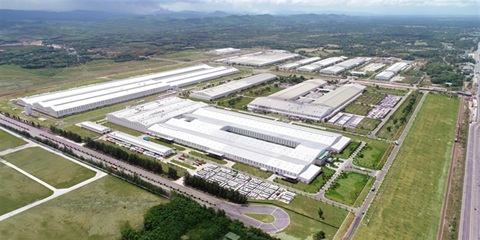
ĐÀ NẴNG GREEN-LIGHTS US$105 MILLION THAI DEVELOPMENT DEAL
The central city has approved an investment proposal by Thailand’s WHA Group to develop infrastructure for the 400ha WHA Đà Nẵng Industrial Park project on two communes of Thăng Bình and Đồng Dương, with an investment of more than VNĐ2.7 trillion (US$105 million). The city said it approved WHA Industrial Development International's status as an investor in the project, which is expected to take place between 2027 and 2034.
VIETNAM ECONOMY INVESTMENT
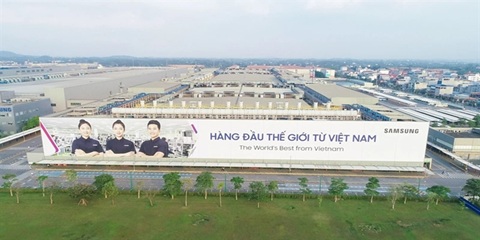
MOBILE PHONE EXPORTS RISE 20% TO $51.8 BILLION IN FIRST NINE MONTHS
Exports of mobile phones and components rose 20 per cent year-on-year to nearly US$51.8 billion in the first nine months of 2026, with China, the US and Republic of Korea accounting for more than half of the total. Shipments to the three markets reached a combined $26.18 billion, or 50.6 per cent of total exports of the product group during the period, according to data from the Vietnam Department of Customs under the Ministry of Finance.
INFRASTRUCTURE / CONSTRUCTION / LOGISTIC / PORT
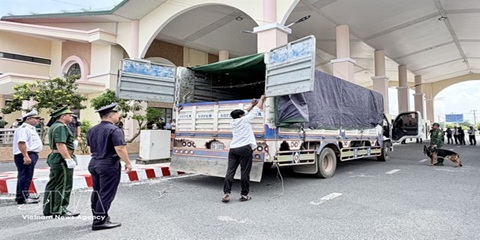
VIỆT NAM-CAMBODIA TRADE GATHERS PACE TOWARDS $20 BILLION TARGET
Trade between Việt Nam and Cambodia continues to grow, remaining a bright spot and a key pillar of bilateral cooperation as the two countries aim to raise two-way trade to US$20 billion in the coming years. After setting a record of more than $11.3 billion last year, bilateral trade reached about $8.7 billion in the first eight months of this year, up 8.3 per cent year on year.
VIETNAM ECONOMY INVESTMENT
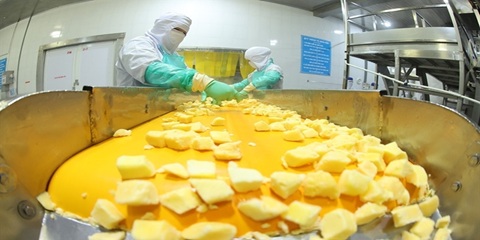
FRUIT AND VEGETABLE EXPORTS POISED TO HIT $10 BILLION IN 2026
Fruit and vegetable exports are on track to reach nearly US$10 billion in 2026, after rising 19.9 per cent year on year to nearly US$7.4 billion in the first nine months, driven by strong seasonal demand and abundant tropical fruit supplies. The Ministry of Agriculture and Environment said the growth reflected stronger international demand for fresh produce and processed agricultural products.
Events Sponsors






















