Want to be in the loop?
subscribe to
our notification
Business News
HOW DEEP C INDUSTRIAL ZONES BECOME INVESTORS’ CHOICE
Founded in 1997 in Dinh Vu peninsula of Hai Phong, DEEP C Industrial Zones has established itself as one of the biggest industrial real estate developers in Vietnam. The group is derived from a successful partnership between Rent-A-Port - A Belgian company specialized in industrial zones, renewable energy and marine infrastructure development, and Hai Phong People’s Committee. For the past 22 years, DEEP C has turned the once deserted area mainly used for fishing into a fully-functioning industrial zone cluster equipped with state-of-the-art utilities system meeting international standards.
DEEP C Industrial Zones consist of five sub projects in Hai Phong and Quang Ninh, with approximately 3,400 ha of industrial land. Driven by the mission to ease the operations of foreign investors, DEEP C has been offering flexibility to choose between different options: including industrial land for lease, Ready-built-factory, Logistics warehouse, Built-To-Suit solutions, and Offices for lease. The diversification in product range allows DEEP C to foster all kinds of industries and match any investors’ manufacturing scale.
To date, DEEP C has attracted 100-plus projects funded by multinational enterprises from USA, Japan, Germany, South Korea, etc. with a total investment of over US$3.5 billion. Prominent investors in DEEP C include Bridgestone, JX Nippon Oil & Energy, Chevron, PV Oil, C. Steinweg and Flat Group.
Logistically, all zones within DEEP C cluster are perfectly located in the heart of northern infrastructure development where an international deep sea port, airports, inland waterway systems and expanded expressway networks converge together at one point. As such, tenants in DEEP C automatically enjoy logistics advantages with prime location and excellent connectivity, not to mention the proximity to China - Vietnam’s largest trade partner and key export market.
Recently, DEEP C started a new venture toward sustainable development, gearing up to become the first truly eco-industrial park in Vietnam with the focus on producing its own electricity from solar, wind, and waste-to-energy. In this era when sustainable development has become the focal global trend, the group has taken on the shared responsibility to reduce the burden on the environment and protect future generations. Notably, energy will be generated from solar panels installed on tenant rooftops, allowing them a financial compensation. Excessive electricity will be stored and used to power hybrid barges sailing on the Hanoi-Hai Phong inland waterway. Currently, DEEP C is running the only ISO certified waste water treatment plant in North Vietnam, ensuring water released from the park to the river is treated and not harmful to the environment.
Further, the group is pursuing a circular economy within the industrial cluster, a relatively new concept in Vietnam which serves the green way by recycling defunct products. To turn ideas into action, DEEP C has teamed up with Dow Chemical to build Vietnam’s first road using recycled plastic in DEEP C industrial zones. The first one kilometer segment, to be completed in September, will divert nearly four metric tons of flexible packaging – the equivalent of roughly one million pieces of flexible wrappers. Upon completion, the new road will be tested by the Vietnam Maritime University prior to expanding the project throughout the complex. The project aimed to advance a circular economy in Vietnam through the development of roads made with recycled plastic and more importantly, divert post-use flexible packaging from becoming litter or entering a landfill, while also creating more durable, longer-lasting roads.
DEEP C expects to give a vivid demonstration that plastic waste can become useful, not only as construction material, but also as an energy source. The group is going through an early preparation stage for its waste-to-energy plant project. The energy released during the incinerating process of waste can be used to produce both steam and electricity which will be consumed by tenants.
The implementation of current projects is only the start as more initiatives and plans are yet to be revealed. The group is convinced that this development pathway will not only provide efficient solutions for environment protection, but also create an environment where tenants can achieve their social responsibility goals and on top of that, flourish without burdening future generations.
Source: VCCI
Related News

INFRASTRUCTURE / CONSTRUCTION / LOGISTIC / PORT
VIỆT NAM-CAMBODIA TRADE GATHERS PACE TOWARDS $20 BILLION TARGET
Trade between Việt Nam and Cambodia continues to grow, remaining a bright spot and a key pillar of bilateral cooperation as the two countries aim to raise two-way trade to US$20 billion in the coming years. After setting a record of more than $11.3 billion last year, bilateral trade reached about $8.7 billion in the first eight months of this year, up 8.3 per cent year on year.
TECHNOLOGY
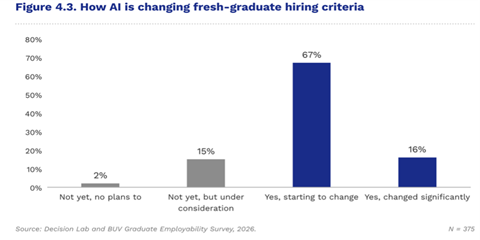
AI BEGINNING TO RESHAPE RECRUITMENT CRITERIA
Digital literacy is the only capability area in which fresh graduates meet employers’ expectations, according to a new report. Yet, it is also the standard rising fastest, as businesses increasingly expect new hires to use AI effectively in the workplace. Some 83 per cent of employers say AI has changed, or is beginning to change, their hiring criteria, while 94 per cent report higher expectations for digital and AI capabilities than they had two to three years ago.

INFRASTRUCTURE / CONSTRUCTION / LOGISTIC / PORT
ĐÀ NẴNG GREEN-LIGHTS US$105 MILLION THAI DEVELOPMENT DEAL
The central city has approved an investment proposal by Thailand’s WHA Group to develop infrastructure for the 400ha WHA Đà Nẵng Industrial Park project on two communes of Thăng Bình and Đồng Dương, with an investment of more than VNĐ2.7 trillion (US$105 million). The city said it approved WHA Industrial Development International's status as an investor in the project, which is expected to take place between 2027 and 2034.

VIETNAM ECONOMY INVESTMENT
MOBILE PHONE EXPORTS RISE 20% TO $51.8 BILLION IN FIRST NINE MONTHS
Exports of mobile phones and components rose 20 per cent year-on-year to nearly US$51.8 billion in the first nine months of 2026, with China, the US and Republic of Korea accounting for more than half of the total. Shipments to the three markets reached a combined $26.18 billion, or 50.6 per cent of total exports of the product group during the period, according to data from the Vietnam Department of Customs under the Ministry of Finance.

VIETNAM ECONOMY INVESTMENT
FRUIT AND VEGETABLE EXPORTS POISED TO HIT $10 BILLION IN 2026
Fruit and vegetable exports are on track to reach nearly US$10 billion in 2026, after rising 19.9 per cent year on year to nearly US$7.4 billion in the first nine months, driven by strong seasonal demand and abundant tropical fruit supplies. The Ministry of Agriculture and Environment said the growth reflected stronger international demand for fresh produce and processed agricultural products.
GARMENT / TEXTILE
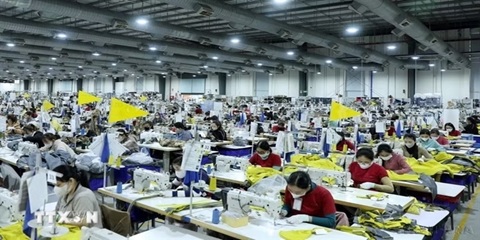
TEXTILE EXPORTS FACE DUAL CHALLENGES OF SUSTAINING ORDERS AND BOOSTING EFFICIENCY AMID GROWING COMPETITION
Data shows that the textile and garment sector maintained its growth momentum in the first nine months of this year. The industry's total export turnover reached an estimated US$35.721 billion in the first nine months of this year, up 3.3 per cent year-on-year. Despite posting encouraging export figures, Vietnamese textile and garment enterprises continue to navigate unpredictable market variables.
Events Sponsors






















