Want to be in the loop?
subscribe to
our notification
Business News
INDUSTRIAL RECOVERY POWERS ECONOMIC GROWTH
This growth significantly outpaces earlier forecasts and marks a sharp turnaround from the downturn in 2023, when global uncertainties, falling orders and rising input costs hampered industrial performance.
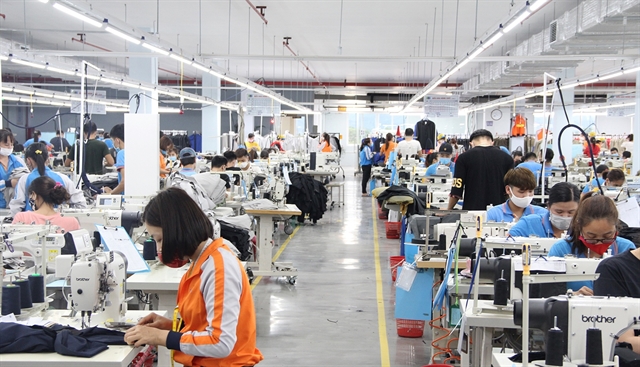
A garment company at an industrial park in Bắc Giang Province. — Photo baochinhphu.vn
HÀ NỘI — Việt Nam’s industrial sector has shown impressive signs of revival, driving growth in trade, consumption and exports to reinforce the foundations for sustainable economic development.
According to the Ministry of Industry and Trade’s report, Index of Industrial Production (IIP) in the second quarter increased by 8.8 per cent compared to the same period in 2024.
This growth significantly outpaces earlier forecasts and marks a sharp turnaround from the downturn in 2023, when global uncertainties, falling orders, and rising input costs hampered industrial performance.
This recovery has focused on the processing and manufacturing sector with a robust growth rate of 10.8 per cent. As a key contributor to the GDP and a major employer, this sector has not only delivered high value-added output but also drove export earnings.
“The recovery also reflects the tireless efforts of the business community and the Government's adaptive and determined economic management,” said Mai Thu Hiền, deputy director of the Department of Planning and Finance under the Ministry of Industry and Trade.
Several industrial sub-sectors have posted growth performances, including motor vehicle manufacturing (34.3 per cent), leather and related products (16.8 per cent), rubber and plastic products (16.1 per cent), garment production (15.7 per cent), transport equipment (14.1 per cent), and food processing (8.8 per cent)
Key products' output followed suit such as automobile (up by 70.3 per cent), television (25.6 per cent), leather footwear (11.5 per cent), and rolled steel (13.8 per cent).
This industrial boom has not been confined to traditional manufacturing hubs like HCM City, Bình Dương, or Bắc Ninh.
Other provinces have emerged as new industrial growth centres, including Phú Thọ (up 46.7 per cent), Nam Định (29.6 per cent), Bắc Giang (28.1 per cent), Bắc Kạn (23.6 per cent), and Hà Nam (22.5 per cent).
This geographic spread of growth helps reduce pressure on urban centres, while fostering inclusive economic development across the country.
Additionally, the industrial revival is closely tied to effective government policies. Stimulus packages, interest rate cuts, streamlined administrative procedures, and increased public investment have improved the business climate, enabling companies to overcome headwinds.
Efforts to ease credit access and enhance logistics infrastructure have reduced costs for businesses and boosted competitiveness. Meanwhile, many firms have accelerated their shift toward green, digital, and automated production models.
The adoption of technologies such as AI, automation, and smart supply chain systems has not only raised productivity but also reduced dependence on imported raw materials. It has also helped Vietnamese companies capitalise on new-generation free trade agreements (FTAs) like the European Union-Việt Nam FTA (EVFTA) and the Comprehensive and Progressive Agreement for Trans-Pacific Partnership (CPTPP).
In the first five months of 2025, total import-export turnover hit US$355.79 billion, a 15.7 per cent increase over the same period last year. Of which, exports of processed industrial goods alone accounted for nearly 85 per cent of this figure. Retail sales of goods and services also rose by 7.9 per cent, pointing to a sustained rebound in domestic demand.
These figures confirmed that market demand is recovering steadily, helping to create a new growth cycle between production, consumption and exports.
However, the industry still faces external risks. Deputy Minister of Industry and Trade Nguyễn Sinh Nhật Tân cautioned about potential disruptions from US trade policy shifts, EU technical and environmental standards and geopolitical instability, including tensions in Ukraine and the Middle East, which may affect global supply chains and input costs.
To tackle these challenges, the Government has been leveraging the advantages of FTAs and implementing a series of strategic resolutions - namely Resolutions 57, 59, 66, and 68 - focusing on industrial development, institutional reform, science and technology advancement, and strengthening the private sector.
The ministry is also collaborating with local authorities to develop eco-industrial parks and encouraging investment in renewable energy and clean technologies.
“Eco-industrial parks will help businesses meet international standards and create long-term added value,” said Tân. “This will enhance the global competitiveness of Việt Nam's industry sector.”
With current momentum, Việt Nam’s ambitious target of 8 per cent GDP growth in 2025 appears within reach. — VNS
Source: VNS
Related News

CHARITY / EXHIBITION / OTHER EVENTS
INVESTMENT OPPORTUNITIES IN CA MAU PROVINCE: 96 PROJECTS AND 20 STRATEGIC PROJECTS
We are pleased to share with you information on investment projects currently seeking investors in Ca Mau Province. Should your esteemed company or association be interested, we kindly invite you to review the project information and complete the registration form via the links provided. The Ho Chi Minh City Investment and Trade Promotion Centre (ITPC) will consolidate the expressions of interest and facilitate connections with the leadership of Ca Mau Province at a meeting tentatively scheduled for 13 November 2026 in Ho Chi Minh City.

MEMBER CORNER / PROMOTIONS
BẰNG KIỀU LIVESHOW - A SYMPHONY OF LOVE UNDER THE GOLDEN GLOW
A masterclass in live music that takes the audience on a soulful journey through immortal love songs, guided by the peerless artistry and emotive storytelling of renowned singer Bằng Kiều. The highlight of the night is his seamless musical chemistry with special guest Triệu Hồng Ngọc, promising passionate and deeply resonant duets inside the magnificent Grand Ballroom.
INFRASTRUCTURE / CONSTRUCTION / LOGISTIC / PORT
ĐÀ NẴNG GREEN-LIGHTS US$105 MILLION THAI DEVELOPMENT DEAL
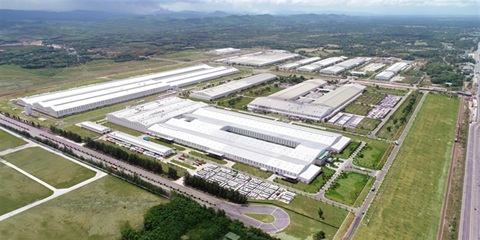
The central city has approved an investment proposal by Thailand’s WHA Group to develop infrastructure for the 400ha WHA Đà Nẵng Industrial Park project on two communes of Thăng Bình and Đồng Dương, with an investment of more than VNĐ2.7 trillion (US$105 million). The city said it approved WHA Industrial Development International's status as an investor in the project, which is expected to take place between 2027 and 2034.
VIETNAM ECONOMY INVESTMENT
MOBILE PHONE EXPORTS RISE 20% TO $51.8 BILLION IN FIRST NINE MONTHS
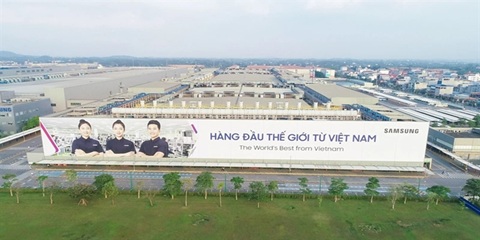
Exports of mobile phones and components rose 20 per cent year-on-year to nearly US$51.8 billion in the first nine months of 2026, with China, the US and Republic of Korea accounting for more than half of the total. Shipments to the three markets reached a combined $26.18 billion, or 50.6 per cent of total exports of the product group during the period, according to data from the Vietnam Department of Customs under the Ministry of Finance.

INFRASTRUCTURE / CONSTRUCTION / LOGISTIC / PORT
VIỆT NAM-CAMBODIA TRADE GATHERS PACE TOWARDS $20 BILLION TARGET
Trade between Việt Nam and Cambodia continues to grow, remaining a bright spot and a key pillar of bilateral cooperation as the two countries aim to raise two-way trade to US$20 billion in the coming years. After setting a record of more than $11.3 billion last year, bilateral trade reached about $8.7 billion in the first eight months of this year, up 8.3 per cent year on year.
VIETNAM ECONOMY INVESTMENT
FRUIT AND VEGETABLE EXPORTS POISED TO HIT $10 BILLION IN 2026
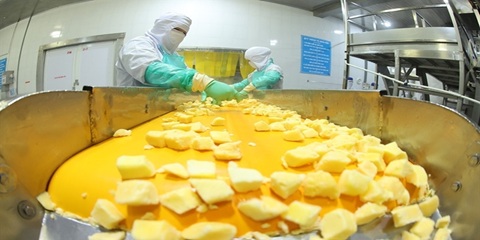
Fruit and vegetable exports are on track to reach nearly US$10 billion in 2026, after rising 19.9 per cent year on year to nearly US$7.4 billion in the first nine months, driven by strong seasonal demand and abundant tropical fruit supplies. The Ministry of Agriculture and Environment said the growth reflected stronger international demand for fresh produce and processed agricultural products.
Events Sponsors






















