Want to be in the loop?
subscribe to
our notification
Business News
INTER-PROVINCIAL HIGHWAYS CREATE LEVERS FOR LOCALITIES
Interprovincial highway projects will help engage more foreign capital following the merger of localities in Vietnam.
In late March, Lam Dong People’s Committee approved construction of the Bao Loc-Lien Khuong Expressway project under a public-private partnership model.
The scheme has a total funding of $780 million, with state budget funding accounting for 44 per cent of the total in Phase 1. The remaining $400 million will be mobilised by the investor.
The committee has decided to select the investor through a domestic open bidding process. The investor proposing the initiative will be entitled to incentives following current regulations. The selection process is expected to take place this year.
“This is one of three sections of Dau Giay-Lien Khuong Expressway. The project will not only enhance connectivity with the national transportation system but also reduce travel time between the Central Highlands and the southern key economic region, as well as economic and industrial centres along National Highway 20,” said Tran Duc Loc, vice chairman of Lam Dong Urban Development Planning Association.
Earlier this year, Lam Dong and Khanh Hoa provinces sought approval of the Dalat-Nha Trang Expressway plan.
The expressway is a proposed build-operate-transfer highway venture aiming to connect the popular tourist destinations of Dalat and Nha Trang. It would be part of the eastern portion of the North-South Expressway.
According to the plan, the undertaking would have an 80.8 km-long four-lane with an estimated total financial backing of more than $1 billion to shorten the travel time between the two tourism cities by two hours. Over $700 million of capital will come from the state budget, while the developer will raise the rest.
“Inter-provincial highways facilitate faster and more reliable transportation of goods and people, which is crucial for businesses that rely on efficient supply chains and logistics. It will also help to reduce transportation costs, making businesses more competitive and profitable,” said Yoshihiro Wake, an expert from Abeam Consulting Vietnam.
“Highway infrastructure often leads to the development of industrial parks and zones, which are attractive locations for foreign investment due to their access to transportation and logistics,” he added.
Many experts believe that interprovincial expressway projects will help establish a backbone transportation axis for expanding provinces and cities. They open up new development spaces, unlock resources, and create strong momentum for local development, particularly in attracting foreign funding.
For instance, after Ho Chi Minh City incorporates Binh Duong and Ba Ria-Vung Tau provinces, it will cover an area of 6,500 square kilometres, providing space for large-scale infrastructure ventures that connect urban and rural areas and develop industrial, residential, commercial, and tourism zones.
Ho Chi Minh City will be able to efficiently connect suburban areas with the city centre through new transportation routes and modern infrastructure initiatives. With its strategic location in the southeast region, Ho Chi Minh City could become a vital trade gateway, connecting not only domestically but also with international markets, particularly in ASEAN and East Asia.
Currently, the city and Binh Duong province have a relatively well-connected transportation network, with key national highways and bridges linking the two localities. However, transportation connectivity between Ho Chi Minh City and Ba Ria-Vung Tau remains limited, with travel between the two often taking considerable time, especially during holidays, due to traffic congestion.
To address this, key infrastructure projects are being implemented, including Ho Chi Minh City-Moc Bai, Ho Chi Minh City-Chon Thanh, and Ben Luc-Long Thanh expressways, and the expansion of Ring Road 2.
Alongside vertical-axis expressways, the southeast region is also developing numerous ring roads and expressways to establish a robust transportation framework. The most notable is Ring Road 3, passing through mega-urban areas planned for merger, including the expansions of Ho Chi Minh City, Dong Nai, and Tay Ninh localities.
“The merger of localities also facilitates the implementation of interprovincial transportation infrastructure projects. Previously, local roads funded by local budgets were fragmented due to limited financial resources, leading to small-scale, prolonged ventures that caused monetary waste and delayed effectiveness,” said Nguyen Hong Chung, general secretary of the Vietnam Industrial Park Finance Association.
“Now, with the larger scale of a province and prioritised central funding, the selection of priority routes is optimised, investments are faster, and projects are completed efficiently. Combined with new approaches and mechanisms, fragmented and small-scale investments will be significantly reduced,” Chung added.
Source: VIR
Related News
MEMBER CORNER / PROMOTIONS
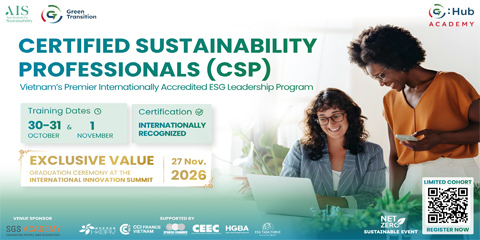
HCMC | CERTIFIED SUSTAINABILITY PROFESSIONAL (CSP) TRAINING | REGISTRATION OPEN
As sustainability becomes deeply embedded in corporate strategy and supply-chain operations across Vietnam, Hong Kong Business Association Vietnam is pleased to endorse the upcoming Certified Sustainability Professional (CSP) training program by the Asia Institute for Sustainability (AIS) - a premier internationally recognized ESG credential in Vietnam.
VIETNAM ECONOMY INVESTMENT
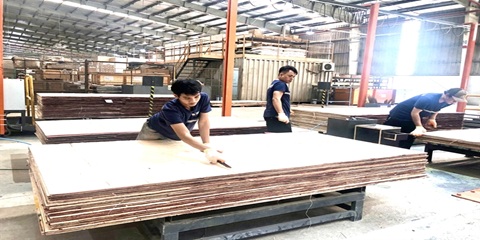
HCM CITY SAYS HOW IT PLANS TO ACHIEVE 10-11% ANNUAL EXPORT GROWTH FOR REST OF DECADE
The southern economic hub aims to strengthen its role as the country’s largest import-export centre while developing into a regional transhipment centre in Southeast Asia, supported by green and digital transformation and a circular economy. HCM City has outlined measures to expand production capacity, cut logistics costs, diversify export markets, and help businesses meet increasingly stringent international standards as it targets average annual export growth of 10-11 per cent through 2030.
VIETNAM ECONOMY INVESTMENT
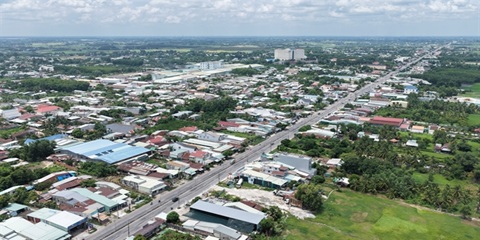
HCM CITY LEADS ECONOMIC RESTRUCTURING IN SOUTHEAST REGION
According to Associate Professor, Dr Vũ Tuấn Hưng, director of the Institute of Social Sciences of the Southern Region, the Southeast is a strategically important socio-economic space in Việt Nam’s development given its advantages in location, industry, trade, services, logistics, science and technology, urbanisation and human resources.
TECHNOLOGY
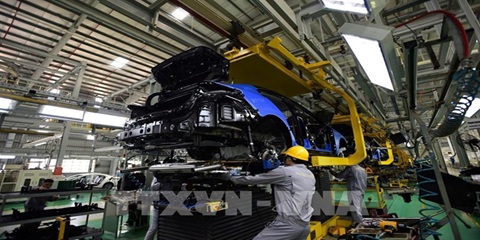
DIGITAL TRANSFORMATION TURNED INTO PRACTICAL TOOLS FOR PEOPLE, BUSINESSES
Việt Nam is moving its digital transformation agenda beyond policy frameworks and individual technology platforms towards practical applications that address everyday needs, as authorities seek measurable outcomes from science, technology and innovation. Under Politburo Resolution No. 57-NQ/TW issued on December 22, 2024, the implementation is increasingly shifting from simply completing assigned tasks towards developing concrete products and services for citizens and businesses.
TECHNOLOGY
APPLYING TECHNOLOGY FOR ECONOMIC TRANSFORMATION
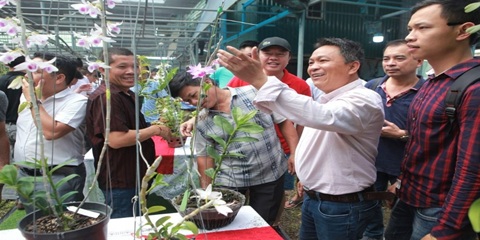
Having completed its new rural development program, Hanoi is shifting its focus toward improving development quality and building smart, sustainable rural areas. The transformation of Dong La orchid-growing village in An Khanh, a western commune of Hanoi, shows how digital technology is becoming a driver of production, market expansion, and higher incomes for local residents.

MEMBER CORNER / PROMOTIONS
VIGLACERA HONORED AS THE "LEADING GREEN INDUSTRIAL REAL ESTATE DEVELOPER 2026"
Organized by the Vietnam Investment Review, this prestigious awards program recognizes industry pioneers advancing eco-industrial parks, clean energy transition, and rigorous ESG standards. Outperforming competitors through a rigorous evaluation, Viglacera Corporation – JSC proudly ranked among the Top 5 highest-positioned enterprises in the Leading Green Industrial Real Estate Developers 2026 category, reinforcing its premier position in Vietnam’s industrial real estate sector.
Events Sponsors






















