Want to be in the loop?
subscribe to
our notification
Business News
INVESTORS GRAPPLE WITH PPP WASTE PROJECTS
Athough investors have options to fund development of waste treatment plant projects under the public-private partnership model, experience and awareness are still weak.
Haiphong Economic Zones Management Authority is set to begin the process of selecting investors for a waste-to-energy scheme in the northern port city. The project will cost VND2.5 trillion ($100 million) and covers over 10 hectares in the city’s Dinh Vu-Cat Hai Economic Zone.
Featuring two incinerators, two emission processing facilities, and one turbine for electricity generation, the plant will have a daily processing capacity of 1,000 tonnes of domestic waste to generate 20MW of power. It will have a duration of 30 years from the date of signing the land lease, and Haiphong authorities want it to come into operation in December 2025.
Le Trung Kien, director of Haiphong Economic Zones Management Authority, said that the city expects it to be a key project for Haiphong. “We offer the opportunity for both domestic and foreign investors to develop it. To select a prestigious investor, the city is calling for consultant contractors to build a bidding document model and then select potential ones,” Kien said. “We have published the information about the bidding on the national bid network and will complete the bidding document to select the consultant contractors soon.”
Other localities such as Tien Giang, Binh Thuan, Danang, Phu Quoc, and Khanh Hoa are calling for investors to implement waste treatment projects. Tien Giang is looking for developers for its $26.3 million Tan Lap 1 plant, which would be the largest of its kind in the Mekong Delta province. Under a plan approved by the provincial people’s committee, the facility will cover 13.66ha on an existing landfill in Tan Phuoc district, with a designed capacity of 750 tonnes of waste per day. The project will be implemented over 50 years.
Besides this, Tien Giang also has plans to organise bidding to select investors for the Long Chanh solid waste treatment plant. Some interested domestic parties are paying attention, and expect that the province will consider extending the construction timeline for ventures and have a mechanism to support investment.
Current ventures are operated by a public-private partnership (PPP) model, in which the state will be responsible for establishing the buried area and hiring operational units. Private investors will be responsible for collecting and treating waste.
While private sector participation can bring effectiveness thanks to investment in modern equipment and professional management process, the process suffers from some barriers during the process.
“Awareness about the importance of PPPs is only focused on central offices, which have experience in implementing them. However, the awareness and managing capacity at the local level is limited,” said Nguyen Viet Long, consulting partner at EY Consulting Vietnam in May.
Localities also face difficulties in building facilities, appraising investors’ financial capacity, and are also disadvantaged in building up and managing PPP contracts.
“In addition, the legal framework for collecting, delivering, and recycling waste has yet to be completed. There is a lack of detailed guides relating to the economic and technical norms and the price units to collect, deliver, and treat waste,” Long added.
The Ministry of Natural Resources and Environment is coordinating with authorised agencies of the Ministry of Planning and Investment, and other relevant ministries and sectors to review activities for domestic solid waste treatment facilities as a basis for detailed instructions on investment according to the PPP method in household solid waste treatment.
As of the end of 2023, Vietnam had over 1,700 solid waste treatment facilities, including 467 incinerators, 38 compost production lines, and about 1,200 landfills. Some treatment complexes or treatment facilities have applied incineration combined with energy recovery to generate electricity or incineration combined with landfill and composting.
Vietnam currently has four waste-to-power plants operating, and another 15 facilities being constructed. In January, a high-tech facility was inaugurated in Thuan Thanh township in the northern province of Bac Ninh.
The plant, involving cooperation between Thuan Thanh Environment JSC and Japan’s JFE Engineering Corporation, has a total investment of $74 million, a capacity of 600 tonnes of solid waste, and generation of 13.5MW of electricity daily. It is estimated that it will add about 100 million kWh each year to the national grid.
Sorce: VIR
Related News

CHARITY / EXHIBITION / OTHER EVENTS
INVESTMENT OPPORTUNITIES IN CA MAU PROVINCE: 96 PROJECTS AND 20 STRATEGIC PROJECTS
We are pleased to share with you information on investment projects currently seeking investors in Ca Mau Province. Should your esteemed company or association be interested, we kindly invite you to review the project information and complete the registration form via the links provided. The Ho Chi Minh City Investment and Trade Promotion Centre (ITPC) will consolidate the expressions of interest and facilitate connections with the leadership of Ca Mau Province at a meeting tentatively scheduled for 13 November 2026 in Ho Chi Minh City.

MEMBER CORNER / PROMOTIONS
BẰNG KIỀU LIVESHOW - A SYMPHONY OF LOVE UNDER THE GOLDEN GLOW
A masterclass in live music that takes the audience on a soulful journey through immortal love songs, guided by the peerless artistry and emotive storytelling of renowned singer Bằng Kiều. The highlight of the night is his seamless musical chemistry with special guest Triệu Hồng Ngọc, promising passionate and deeply resonant duets inside the magnificent Grand Ballroom.
INFRASTRUCTURE / CONSTRUCTION / LOGISTIC / PORT
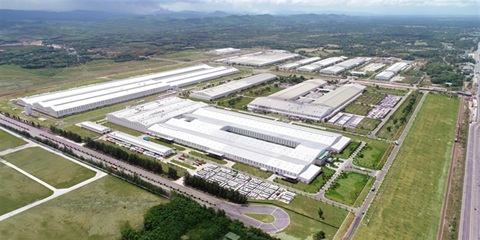
ĐÀ NẴNG GREEN-LIGHTS US$105 MILLION THAI DEVELOPMENT DEAL
The central city has approved an investment proposal by Thailand’s WHA Group to develop infrastructure for the 400ha WHA Đà Nẵng Industrial Park project on two communes of Thăng Bình and Đồng Dương, with an investment of more than VNĐ2.7 trillion (US$105 million). The city said it approved WHA Industrial Development International's status as an investor in the project, which is expected to take place between 2027 and 2034.
VIETNAM ECONOMY INVESTMENT
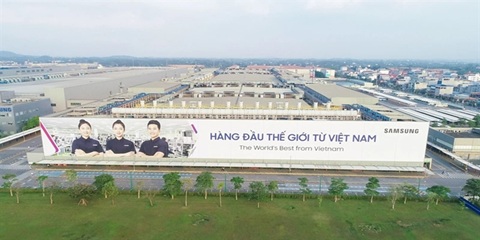
MOBILE PHONE EXPORTS RISE 20% TO $51.8 BILLION IN FIRST NINE MONTHS
Exports of mobile phones and components rose 20 per cent year-on-year to nearly US$51.8 billion in the first nine months of 2026, with China, the US and Republic of Korea accounting for more than half of the total. Shipments to the three markets reached a combined $26.18 billion, or 50.6 per cent of total exports of the product group during the period, according to data from the Vietnam Department of Customs under the Ministry of Finance.
INFRASTRUCTURE / CONSTRUCTION / LOGISTIC / PORT
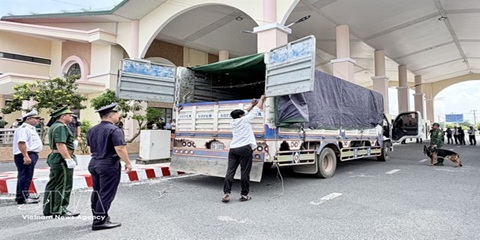
VIỆT NAM-CAMBODIA TRADE GATHERS PACE TOWARDS $20 BILLION TARGET
Trade between Việt Nam and Cambodia continues to grow, remaining a bright spot and a key pillar of bilateral cooperation as the two countries aim to raise two-way trade to US$20 billion in the coming years. After setting a record of more than $11.3 billion last year, bilateral trade reached about $8.7 billion in the first eight months of this year, up 8.3 per cent year on year.
VIETNAM ECONOMY INVESTMENT
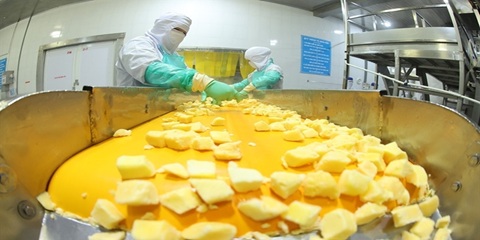
FRUIT AND VEGETABLE EXPORTS POISED TO HIT $10 BILLION IN 2026
Fruit and vegetable exports are on track to reach nearly US$10 billion in 2026, after rising 19.9 per cent year on year to nearly US$7.4 billion in the first nine months, driven by strong seasonal demand and abundant tropical fruit supplies. The Ministry of Agriculture and Environment said the growth reflected stronger international demand for fresh produce and processed agricultural products.
Events Sponsors






















