Want to be in the loop?
subscribe to
our notification
Business News
JAPANESE FDI SUPPORTS GREEN TRANSITION IN VIỆT NAM'S MANUFACTURING SECTOR
Việt Nam has become an important market and strategic manufacturing base in Southeast Asia for Japanese investors.
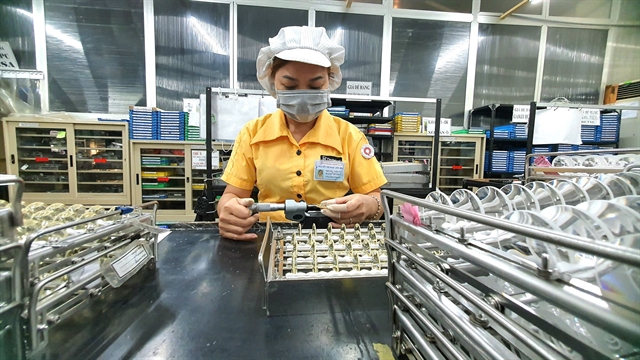
A worker checking products at a plant of R Technical Research Vietnam Co., Ltd., in Hoà Bình Commune, Phú Thọ Province. — VNS Photo Ly Ly Cao
HCM CITY — Japanese Foreign Direct Investment (FDI) is strengthening Việt Nam's manufacturing capacity and accelerating the green transition, as more Japanese companies expand production and adopt sustainable industrial solutions.
Việt Nam has become an important market and strategic manufacturing base in Southeast Asia for Japanese investors, reflecting their long-term confidence in the country’s economic potential and sustainable growth prospects.
Investment cooperation has been a key pillar of Việt Nam-Japan economic ties. According to the Vietnam Trade Promotion Agency under the Ministry of Industry and Trade, Japan has more than 5,800 active investment projects in Việt Nam, with total registered capital exceeding US$81 billion.
Free trade agreements (FTAs) have also created favourable conditions for businesses in both countries through tariff reductions, rules of origin, and trade facilitation, opening up opportunities for deeper participation in regional production networks and supply chains.
Major Japanese companies, including Honda, Panasonic, Kao Vietnam and Sumitomo, have maintained and expanded their operations in Việt Nam. Meanwhile, new Japanese investment is flowing into industrial parks, supporting greener manufacturing and the adoption of more sustainable production solutions.
A recent example is Japanese group Oji’s launch of construction of a new aseptic carton packaging factory under its Oji Liquid Pak (OLP) brand. The project, with an investment of $110 million, is located in Long Thanh High-Tech Park in Đồng Nai Province.
The investment demonstrates Oji Liquid Pak’s long-term commitment to Việt Nam and reinforces the country’s role as a strategic manufacturing and supply hub for the group in Southeast Asia.
It is also expected to support the region’s shift towards circular packaging solutions that meet evolving policy requirements.
Nguyễn Quốc An, deputy head of the Đồng Nai Industrial and Economic Zones Authority (DNIEZA), said large-scale projects like this would contribute to local industrial development, strengthen domestic production capacity and help Vietnamese businesses participate more deeply in regional supply chains.
The authority pledged to support investors throughout project implementation, provide timely guidance and coordinate efforts to resolve difficulties so that projects can proceed in line with regulations and begin operations as soon as possible.
Oji Liquid Pak General Director Kestutis Sliuzas said manufacturing industries, including packaging, were moving towards new standards that combine state-of-the-art recyclable materials and packaging, efficiency, and food safety.
The new factory will combine food packaging production with research and development, technical services, and the installation and maintenance of Japanese machinery and equipment. These activities are expected to contribute to a modern industrial environment with higher quality and added value.
Japanese investment also covers research and development in natural sciences, machinery repair and maintenance, equipment installation, and the import, export, and distribution of goods in accordance with Vietnamese law.
Trần Việt Hà, deputy head of the HCM City Export Processing and Industrial Zones Authority (HEPZA), said the authority was working to help investors start projects sooner after registration and reduce procedures related to planning and construction.
HEPZA aims to resolve matters within its authority directly and coordinate with other agencies on issues requiring inter-agency cooperation. It is also shifting from a focus on administrative procedures to monitoring projects throughout their life cycle, from investment preparation to operation.
These efforts align with Politburo Resolution No. 10-NQ/TW, dated June 8, 2026, on developing the foreign-invested economy. The resolution shifts Việt Nam's investment attraction strategy towards quality rather than quantity, prioritising high technology, innovation, workforce development and technology transfer.
The policy direction reflects Việt Nam's ambition to move beyond labour-intensive assembly towards becoming a technology-driven investment destination that generates higher added value and supports sustainable industrial growth. — VNA/VNS.
Source: VNS
Related News
MEMBER CORNER / PROMOTIONS
WINDSOR BLACK FRIDAY DEAL: 4 DAYS ONLY | 27 – 30 NOVEMBER 2026
Your next stay in Ho Chi Minh City just got more rewarding! Make the most of Windsor Plaza Hotel’s exclusive Black Friday offer. Whether you're planning a business trip or a relaxing city getaway, enjoy a comfortable stay with special rates available for 4 days only. Don't miss this limited-time offer! Book directly at www.windsorplazahotel.com and enjoy exclusive Black Friday rates.

MEMBER CORNER / PROMOTIONS
FESTIVE SEASON 2026 AT HOIANA RESORT & GOLF
Let the festivities begin, woven with coastal charm. This season, "From the Sea to the Season" invites you to celebrate togetherness in all its vibrant forms. Savour festive feasts, feel the rhythm of live music, discover captivating entertainment and gather with loved ones for a season filled with laughter, shared pleasures and unforgettable celebrations.
PROPERTY / INDUSTRIAL ZONE
HẢI PHÒNG EARMARKS 466 HECTARES OF INDUSTRIAL LAND FOR PRIORITY BUSINESSES
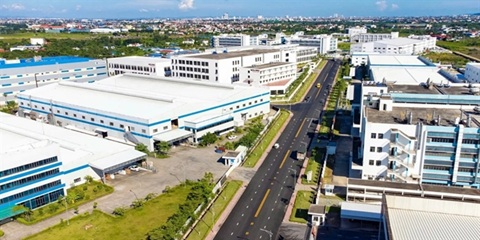
The northern port city of Hải Phòng has earmarked 465.89 hectares of industrial land for high-tech firms, small and medium-sized enterprises (SMEs) and innovative start-ups across 32 industrial parks, the city's Economic Zones Management Board said on Tuesday. The land allocation is intended to help priority business groups secure production sites and expand operations in the city.
VIETNAM ECONOMY INVESTMENT
VIỆT NAM SEEKS INVESTMENT IN HIGH-QUALITY, LOW-EMISSION RICE VALUE CHAIN
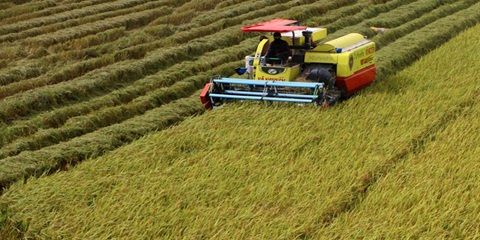
Việt Nam is seeking to attract more foreign investment to develop high-quality, low-emission rice value chain which is expected to support the country’s transition towards greener and more sustainable agriculture. The push is highlighted at a forum on foreign direct investment (FDI) promotion in agriculture and rural development held in Cần Thơ City on November 23, as part of the second Vietnam International Rice Industry Festival 2026 organised by the Ministry of Agriculture and Environment and the Cần Thơ People's Committee.
VIETNAM ECONOMY INVESTMENT
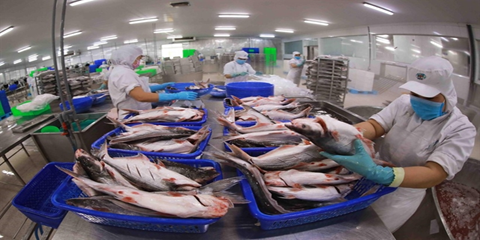
RISING PANGASIUS PRICES BRING HIGHER PROFITS, BUT STABLE SUPPLY NEEDED
Prices of raw pangasius in the Mekong Delta are rising, bringing higher profits to fish farmers. To sustain growth and maintain its export market share in 2027, this billion-dollar industry needs to secure a stable supply of raw materials, strengthen disease control and increase the value of processed products. Pangasius farmers in several provinces across the Mekong Delta are welcoming record-high prices for market-ready fish, currently at around VNĐ38,000 (US$1.50) per kilogramme after recent periods of market volatility.
GARMENT / TEXTILE
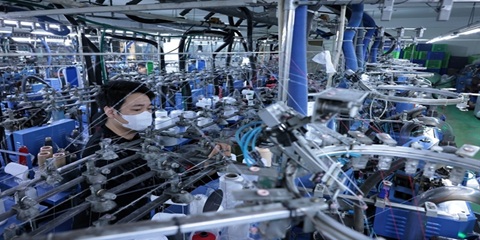
SUSTAINABLE PRODUCTION ESSENTIAL FOR VIỆT NAM'S TEXTILE AND GARMENT INDUSTRY
Việt Nam's National Action Plan on Sustainable Production and Consumption for 2021-2030, approved under Prime Ministerial Decision 889/QD-TTg issued on June 24, 2020, targets a 7-10 per cent reduction in raw material, fuel and supply consumption from 2026 to 2030 across key manufacturing industries, including textiles and garments.
Events Sponsors